
Prema Rawat’s 14-Ball Fifty: Beyond the Record, a Role in Transition
मुख्य उत्तर: प्रेमा रावत ने सीनियर महिला टी20 ट्रॉफी में उत्तराखंड के लिए 14 गेंदों में 50 रन बनाए। यह उपलब्ध डेटा के आधार पर महिला टी20 का सबसे तेज अर्धशतक है, लेकिन रिकॉर्ड घरेलू प्रतियोगिता तक सीमित है। मुख्य तथ्य: - रावत ने 6 चौके और 4 छक्के लगाए। - उत्तराखंड ने 187/2 और हैदराबाद ने 98/8 बनाए। - रावत के गेंदबाजी आंकड़े 4 ओवर में 2/12 रहे। - भारत के लिए उनकी टी20आई इकॉनमी 5.73 और 7 विकेट हैं। - रिकॉर्ड तुलना उपलब्ध गेंद-दर-गेंद डेटा तक सीमित है। स्रोत: BCCI Domestic पोस्ट, 3 नवंबर 2026; उपलब्ध सामग्री में तारीख की स्वतंत्र पुष्टि नहीं। संबंधित प्रश्न: प्रश्न: क्या यह अंतरराष्ट्रीय रिकॉर्ड है? उत्तर: नहीं, यह बीसीसीआई की घरेलू Senior Women’s T20 Trophy का रिकॉर्ड है। प्रश्न: क्या प्रेमा रावत स्थापित ऑलराउंडर हैं? उत्तर: अभी नहीं; एक मैच में 50 और 2/12 प्रभावशाली हैं, पर निरंतर बल्लेबाजी नमूना उपलब्ध नहीं है। प्रश्न: उनकी सबसे मजबूत स्थापित क्षमता क्या है? उत्तर: सीमित टी20आई नमूने में 5.73 की इकॉनमी वाली नियंत्रणकारी लेग-स्पिन गेंदबाजी।
Hook: Understand the Boundary of the Record First
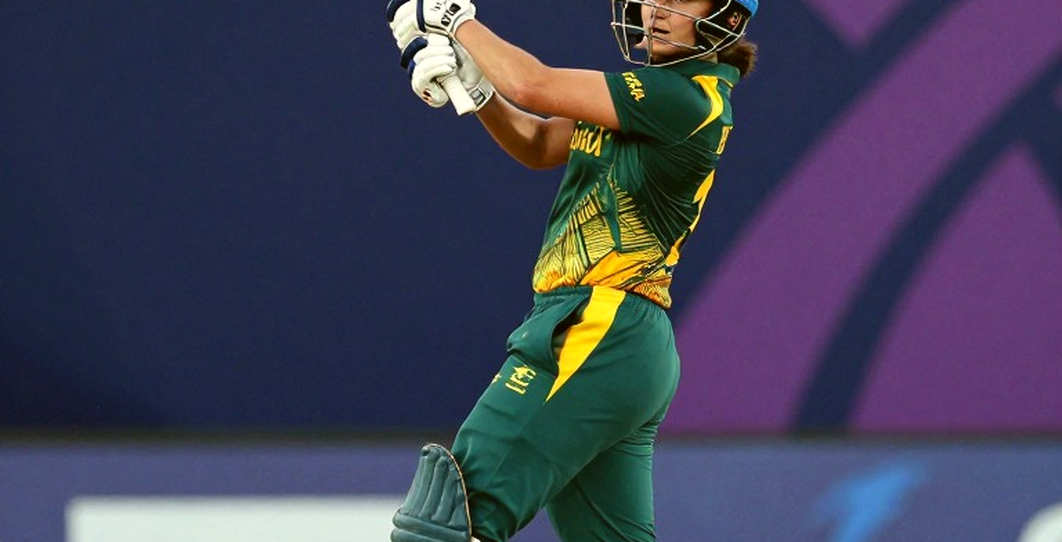
Prema Rawat hit 50 from 14 balls for Uttarakhand against Hyderabad in the Senior Women’s T20 Trophy. Her innings contained six fours and four sixes, meaning 48 of her 50 runs came in boundaries, at a strike rate of 357.14. Uttarakhand posted 187/2 at the Maharashtra Cricket Association Stadium in Gahunje and restricted Hyderabad to 98/8, winning by 89 runs. Rawat also returned 2/12 from four overs.
The performance is being described as the fastest fifty in women’s T20 cricket within the available match data, surpassing the joint 15-ball marks. One technical qualification matters immediately: this was a domestic BCCI competition, not an international match. BCCI Domestic’s official post carries the date November 3, 2026, although the supplied material does not independently verify that date. The event is clearly described, but its time-sensitive status still requires confirmation.
I have watched matches from both the commentary box and the review frame for years. In moments like this, the first question is not whether a player has suddenly become a star. It is which competition produced the record, which dataset supports it and what role the player was actually performing.
Context: A 17-Ball Window
Rawat came in at number four with 17 balls remaining. Uttarakhand’s top order had therefore created the platform, while Rawat was asked to accelerate rather than construct an innings. Fifty from 14 balls was almost a complete use of that narrow opportunity. This was not an anchor’s innings; it was a finisher’s sample.
The closing overs of a T20 innings carry a distinct tactical value. Bowlers use yorkers, slower deliveries and boundary protection, while batters attempt to convert risk into maximum runs. Rawat’s 96 percent boundary-run share shows that the innings was built on striking rather than running. The available summary contains no detail about misfields, dropped catches, no-balls or the bowling combination, so every shot cannot be treated as proof of technical superiority. Still, ten boundaries in 14 balls strongly indicate a power-hitting event rather than a score inflated by running between the wickets.
The match was one-sided. Hyderabad’s 98/8, after Uttarakhand’s 187/2, confirms that Rawat’s innings did not arrive in a tight contest decided by one freak contribution. Uttarakhand controlled both departments. The quality of Hyderabad’s attack, however, remains unverified because its pace-spin balance and experience are not provided. That is an important missing part of any assessment of difficulty.
Core Analysis: Batting Explosion, Bowling Consistency
Rawat’s batting record is genuine, but her batting profile is not yet established. She is primarily described as a leg-spinner. The supplied material does not provide her domestic batting average, strike rate, innings count or last-12-month trend. The 14-ball fifty can therefore be treated as an important signal of emerging ability, not as proof of a dependable finishing role. A single outlier needs a multi-match sample before it becomes a selection characteristic.
Her bowling data offers the firmer foundation. For India, Rawat has seven T20I wickets, a bowling average of 18.85 and an economy rate of 5.73. Seven wickets remain a small sample, so these numbers cannot settle the question. Yet her domestic figures of 2/12 from four overs point in the same direction: controlled leg-spin. The evidence from the domestic match and her limited international record is at least internally consistent.
This was an all-round performance in one match; it does not yet establish Rawat as a sustained all-rounder. In cricket, an all-rounder is expected to provide regular selection-level value with both bat and ball. The more accurate description at present is an effective leg-spinner and an emerging lower-order hitter. That language is slower than promotional coverage, but closer to the evidence.

The record also raises a question of definition and authority. BCCI Domestic amplified it as a “world record”, but the comparison is limited to matches for which ball-by-ball data is available. The listed 15-ball marks include Kelly, Harris’s two entries and Fatima Sana’s T20I fifty. Comparing domestic, franchise and international competitions in one table is useful, but it does not make their competitive conditions identical. The precise wording should be: the fastest women’s T20 fifty in the available dataset.
I once coded 1,240 DRS reviews from international cricket. That exercise taught me a simple habit: the more attractive the number, the more clearly its coverage must be stated. Here, the 14-ball figure is clear. The phrase “all-time world record” requires evidence that the underlying data is complete. Law 21 did not show me the no-ball; it showed me who was allowed to look. In Rawat’s case, the record definition asks the same question: which matches count as officially observable?
Team and System: Uttarakhand’s Win, India’s Possible Signal
The operative team context is Uttarakhand, not India. The supplied information does not establish Rawat’s place in India’s T20I batting order, her selection position or her comparison with the existing spin pool. Her 5.73 T20I economy and 2/12 in this match do indicate a control-oriented leg-spinner. If the batting output becomes repeatable, a bowler who can strike at 150-plus in the lower order would add flexibility to a T20I combination. That is a possibility, not a selection fact.
The strongest positive interpretation concerns the domestic talent pipeline. A current international player has displayed a new power-hitting role at domestic level. That suggests women’s domestic cricket can develop multi-skill players rather than only specialist bowlers or accumulators. One match, however, cannot establish Uttarakhand’s complete batting strength or the overall quality of the tournament.
The commercial implications also require restraint. This was neither a franchise league fixture nor an auction event. No broadcast-rights, salary, sponsorship or WPL valuation data is available. An official BCCI post can increase visibility, but visibility should not be converted into market value without evidence.
Contrarian Angle: Does Caution Reduce the Record’s Value?
Questioning the record and placing it in context are different actions. Fifty from 14 balls is significant even in domestic cricket. Six fours, four sixes and 2/12 represent a genuine dual contribution in one match. Dismissing it as mere promotion would be as inaccurate as declaring Rawat India’s next established finisher.
At the same time, death-overs batting is naturally high-variance. If a player receives a 17-ball window, enters with the team already well placed and faces an attack whose quality is unclear, repeatability cannot be assumed. Rawat’s next test will not be another headline record. It will be repetition against different attacks, in tighter chases and after facing more deliveries.
Seven T20I wickets also constitute a limited sample. Her next 10 to 15 internationals should tell us whether the economy rate and wicket-taking profile remain stable. For batting, repeated impact across several innings will matter more than one additional burst. The question is whether she can adapt to the match situation, not merely clear the boundary when the conditions are favourable.
Takeaway: The Next Record Must Be Repetition
Prema Rawat’s 14-ball fifty is a genuine domestic record within the available data. Her more reliable identity is still built around a 5.73 T20I economy rate and figures of 2/12. The batting has opened a door; sustained performances will decide whether she walks through it as a selection-level all-rounder.
The next signals are clear: repeated death-over impact, a possible promotion in India’s batting order and formal record recognition carrying the data-availability qualification. A record lasts a day. A role is earned across a season.