
After Eden Park loss, India eye a winning finish — but the fifth T20I is a dead rubber where rotation and workload are the real stakes
**पांचवां भारत बनाम न्यूज़ीलैंड T20I कब और क्यों मायने रखता है?** यह पांच मैचों की द्विपक्षीय T20I सीरीज़ का अंतिम मुक़ाबला है, जो न्यूज़ीलैंड में खेला जाएगा। भारत ने पहले तीन मैच जीतकर सीरीज़ 3-0 कर ली थी; चौथे T20I में न्यूज़ीलैंड ने एडन पार्क पर जीत हासिल की और भारत चेज़ में लड़खड़ाया। स्कोरलाइन 3-1 है, इसलिए पांचवां मैच सीरीज़ का नतीजा नहीं बदल सकता — यह एक 'डेड रबर' है। **डेड रबर में असली दांव क्या हैं?** तीन: (1) स्कोरलाइन की प्रतिष्ठा — 4-1 बनाम 3-2; (2) आईसीसी T20I रैंकिंग अंक, जो डेड रबर पर भी लागू होते हैं; (3) रोटेशन और बेंच का मूल्यांकन, जो इस मुक़ाबले से मिलने वाली सबसे उपयोगी जानकारी है। **सबसे बड़ा व्यावहारिक जोखिम क्या है?** चौथे और पांचवें T20I के बीच सिर्फ़ एक दिन का अंतराल है। यह 24–48 घंटे का टर्नअराउंड तेज़ गेंदबाज़़ों के लिए चोट-जोखिम बढ़ाता है और चयन को फ़ॉर्म से हटाकर वर्कलोड प्रबंधन की ओर धकेलता है। **क्या एडन पार्क की हार भारत की चेज़िंग समस्या साबित करती है?** नहीं। यह एक मैच, एक मैदान और एक परिस्थिति का डेटा पॉइंट है। किसी भी तकनीकी निष्कर्ष के लिए कम से कम तीन पारियों का नमूना ज़रूरी है। **श्रेयस अय्यर के 'सीखने की प्रक्रिया' वाले बयान को कैसे पढ़ें?** यह भावनात्मक संकेत है, तकनीकी नहीं। इसमें कोई रणनीतिक विवरण नहीं है — न चरण, न गेंदबाज़़, न शॉट चयन। **मिचेल संतनर की भूमिका क्या है?** वे न्यूज़ीलैंड के कप्तान हैं और प्रमुख बाएं हाथ के ऑर्थोडॉक्स स्पिनर भी। डेड रबर उनके लिए कम जोखिम वाला नेतृत्व-परीक्षण है। **क्या 'न्यूज़ीलैंड की वापसी' का नैरेटिव सही है?** यह एक जीत पर आधारित है जबकि भारत 3-1 से आगे है। एक छोटे घरेलू मैदान की जीत को 'मोमेंटम' नहीं माना जा सकता, क्योंकि मोमेंटम मापने योग्य चर नहीं है। **पांचवें मैच का स्थल कौन-सा है?** उपलब्ध रिपोर्ट में यह स्पष्ट रूप से दर्ज नहीं है। मैदान की पुष्टि होने तक रणनीतिक निष्कर्ष स्थगित रखे जाने चाहिए। **अस्वीकरण:** यह सामग्री केवल खेल-सूचना संदर्भ के लिए है, किसी भी प्रकार की सट्टेबाज़ी सलाह या सिफ़ारिश नहीं है। कई तथ्य अनंतिम हैं और ICC/ESPNcricinfo जैसे आधिकारिक स्रोतों से सत्यापित किए जाने चाहिए।
The fifth and final match of the five-match bilateral T20I series will be played on New Zealand soil, and the single most important fact about it is that the series has already been decided. India won the first three matches to take the series; in the fourth T20I the hosts hit back at Eden Park and forced India to stumble in the chase, taking the scoreline to 3-1. That means the fifth match cannot, under any scenario, change the series result. The side that has already won the series lifts the trophy regardless of the final scoreline.
That is why this is not a decider in the traditional sense but a dead rubber — a fixture with no bearing on the series outcome. But a dead rubber is not a meaningless fixture. Such matches carry their own significance, and that significance lies less in the result than in the information they generate: selection, rotation, workload and bench strength.
First, the state of the series
According to the available report, India won the first three T20Is to seal the series, and New Zealand won the fourth. Eden Park in Auckland is known for its short straight boundaries — often around 55 metres — and historically it is a ground where runs flow and chasing is considered relatively easier. In the fourth match India's batting stumbled while pursuing a target, and that became the first occasion in the series on which the home side won a game.
It must be stated plainly that the available material does not confirm which phase India's chase broke down in — powerplay, middle overs or death overs. The basic three-phase structure of a T20I is powerplay (overs 1–6), middle phase (overs 7–15) and death overs (16–20). The phrase 'stumbled in the chase' points to a failure in the second innings, but identifying the phase is inference, not fact.
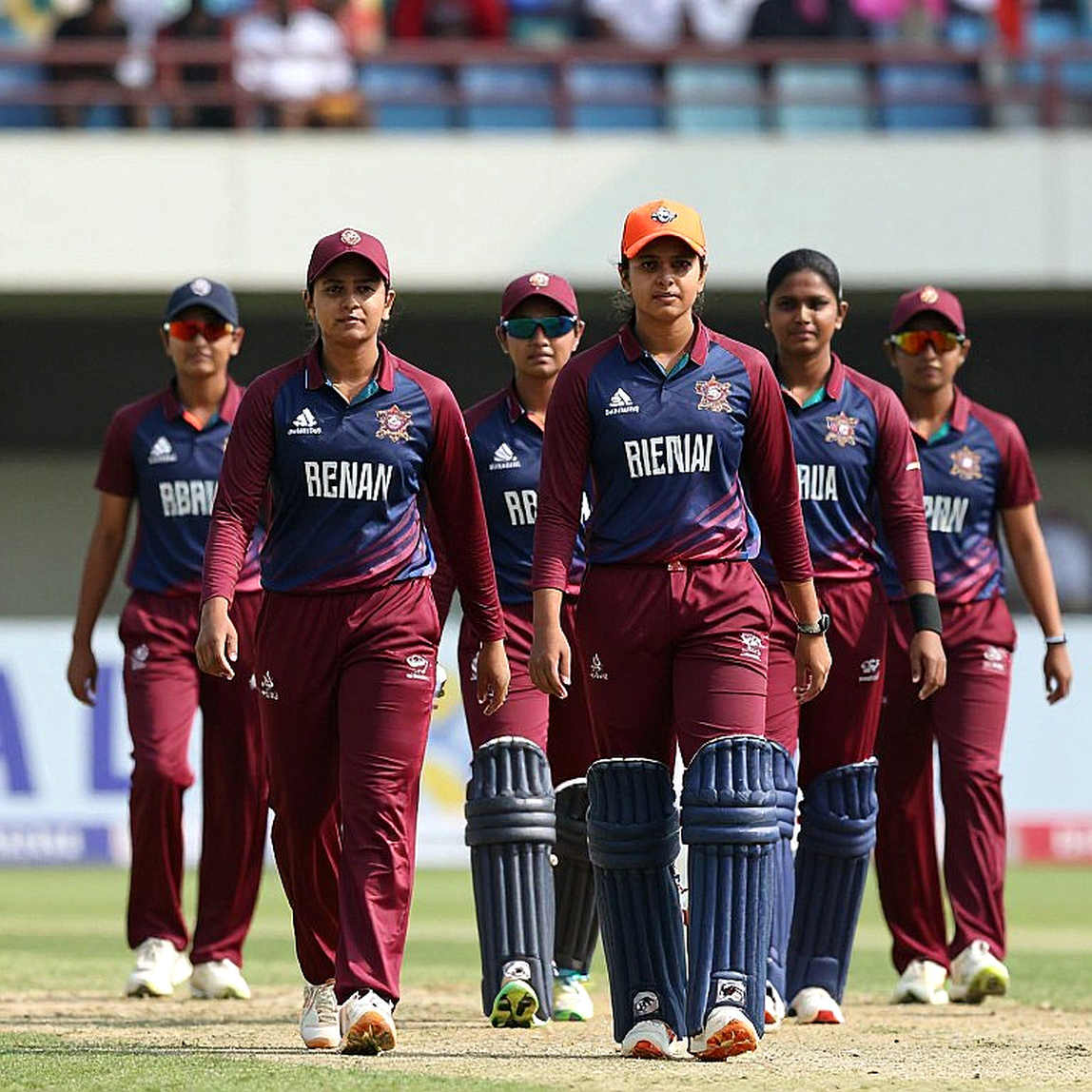
Similarly, the venue for the fifth T20I is not explicitly stated in the available report. This uncertainty should not be hidden, because ground size and character directly shape T20I strategy. If the fifth match is also at a ground with short boundaries, the pressure on fast bowlers' economy will be different; if it is a larger ground, spin's role changes. Until the venue is confirmed, any tactical conclusion should be held back — that is the professional approach.
What the real stakes are in a dead rubber
Even with the series settled, three concrete incentives remain. First, the prestige of the scoreline — the difference between 4-1 and 3-2 is small in sporting terms but is magnified enormously in cricket's narrative machinery. Second, ICC T20I ranking points, which apply to dead rubbers too, and are the only formal competitive stake left in this match. Third, and most important, the selection and rotation experiment.
For India this match is a bench examination. For a side widely regarded as having the deepest bench in the world, a dead rubber is the rare window in which reserve players can get genuine match time without pressure. Which reserve player performed under pressure — not the result — is the real signal that will emerge.
For New Zealand the equation is inverted. They lost the first three, then won one. A 3-2 scoreline will read better to them than 4-1, but that difference is a difference in the language of review, not in the quality of cricket. One home win, at a ground with short boundaries, does not fundamentally change their standing in this series.
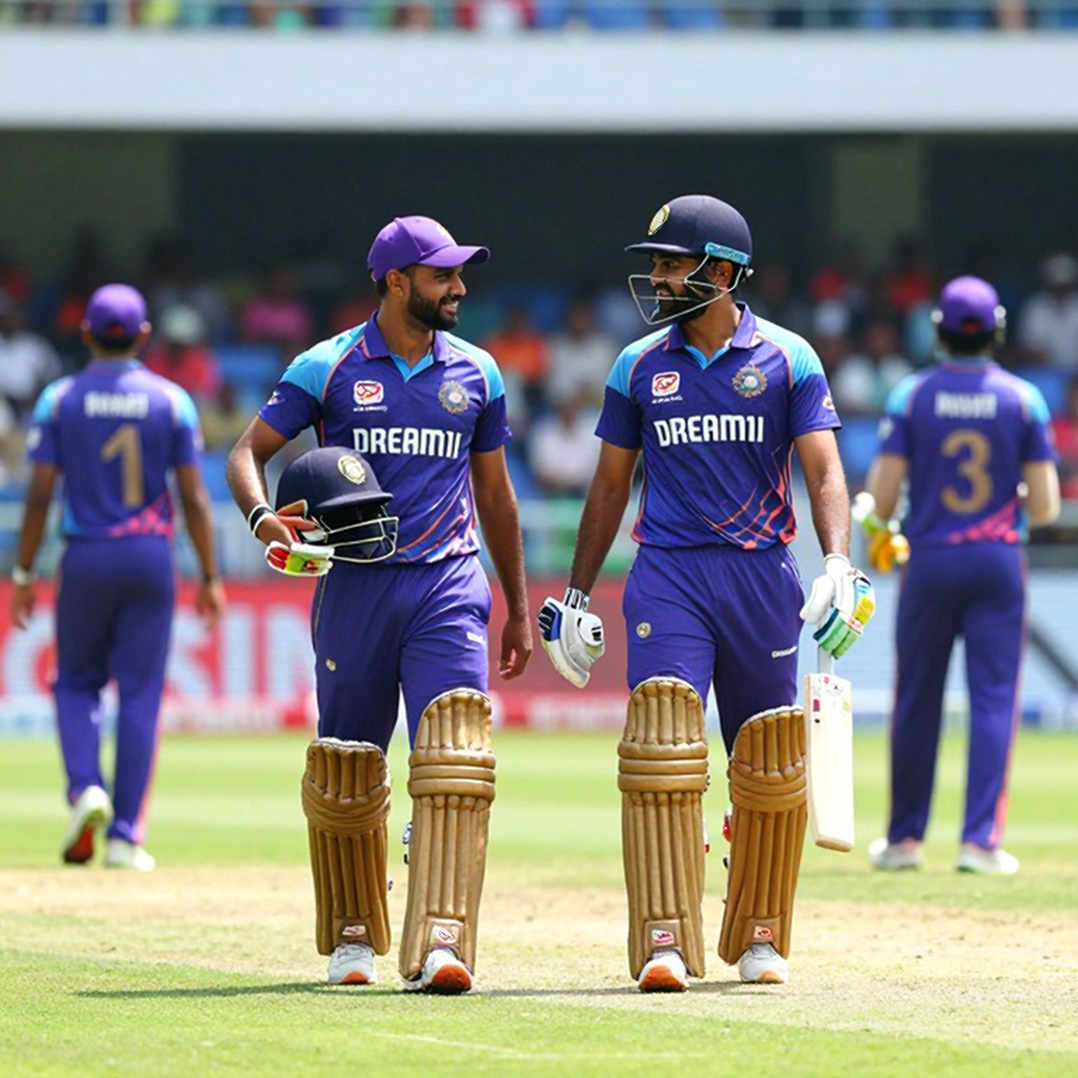
The Eden Park defeat: do not turn one match into a structural flaw
The biggest analytical danger around the fourth T20I defeat is treating a single result as a structural verdict on India's chasing ability. That is methodologically wrong. One ground, one day, one set of conditions — the sample is far too small for any lasting conclusion, and drawing one would violate the basic rules of cricket analysis.
The opposite error is equally bad — dismissing the defeat entirely as coincidence. The right approach is to treat it as one data point and wait for the next two or three innings before making any technical judgement. At a small ground like Eden Park, bowlers have little margin for error and batters get an edge; a failed chase there may be a story about the geometry of the ground rather than about a team's technique.
One more thing must be recorded: the available report contains no information on weather, dew or DLS (Duckworth-Lewis-Stern). Evening fixtures in New Zealand are commonly dew-affected, and batting second tends to become easier — but because that information is not in the report, it cannot be written as fact. It is merely a factor to watch after the toss.
The schedule is the biggest story
The most concrete and most under-discussed piece of information in this report is that there is only a one-day gap between the fourth and fifth T20Is. A turnaround of roughly 24 to 48 hours inside a five-match series severely compresses recovery, travel and net-session time. In practice the effect is direct: selection begins to be driven not by form but by workload management.
This is the biggest risk for fast bowlers. In fast bowling, the recovery window is the binding constraint, and in a match with no bearing on the series, playing a frontline quick in both games is a decision that naturally invites scrutiny. If it happens, it should be read as a deliberate, monitored decision rather than a coincidence — and reviewed accordingly.
It is also worth understanding that boards generally do not announce rotation as 'rest', because that would signal the fixture is low in importance. Internally the reason is workload; externally the language is 'combination' or 'opportunity'. Recognising that gap is part of reading cricket journalism properly.
Shreyas Iyer's comment: sentiment, not technique
The available report records one comment from Shreyas Iyer, framed as a 'learning curve'. Reading that comment as technical analysis would be a mistake. It is the standard vocabulary players use after a defeat to protect both themselves and the team. It contains no concrete tactical information — not which phase failed, not against which bowler, not which shot selection was wrong.
Treat it as a sentiment signal, not a technical one. Comments of this kind are usually given in a mixed-zone or press-conference setting where a player is asked for an immediate reaction, and their analytical weight is correspondingly low.
Understanding Iyer's role matters more than the comment. In this Indian T20I side his job is middle-order run acceleration, where the key metrics are strike rate against spin between overs 7 and 15, and boundary-hitting at the death. 'Stumbling in the chase' implicates exactly that role — but the report does not say what his individual contribution in that match was. So he can be neither blamed nor exonerated. That is the honest position.
Mitchell Santner: captaincy and spin, a double load
New Zealand's captaincy sits with Mitchell Santner — that much is clear from the available report. His dual role is tactically significant: he is both captain and frontline left-arm orthodox spinner. At a ground with Eden Park's short straight boundaries, defending an economy rate as a finger spinner is structurally harder — a real tactical tension, though the fifth-match venue is unconfirmed.
A dead rubber is a low-cost leadership audition. With the series settled, New Zealand's management can observe how Santner's T20 leadership performs under pressure without paying a large price. That information is useful for planning their next global-event cycle. Evaluating captaincy in low-stakes fixtures is sensible practice for any board.
But a clear limit must also be drawn: drawing international-level conclusions about any player from this match would rest on extremely weak evidence. One innings or one spell in a dead rubber is among the weakest evidence classes in cricket analytics.
The team landscape: depth versus experience
India's greatest strength is widely accepted to be bench depth. In practice this means that even a rotated XI in a dead rubber remains a competitive XI. Reserve batters are players who would be first choices for many other nations; the bowling pool has adequate pace and spin options. New Zealand's depth, by contrast, is limited — the drop-off after the top order is steep, pace bowling depends on a small core, and the spin load rests mainly on Santner.
The consequence is direct: India will extract more information from this dead rubber, New Zealand less. For India the match is an audition; for New Zealand it is primarily a matter of prestige.
New Zealand's real structural risk is not at match level but generational. The core is veteran-heavy in several slots, and retirement pressure will build over the next 24 to 36 months. That will not be decided by this match's result, but this match's selection can offer a signal about which direction the management is heading.
One more thing is under-appreciated: India have won this series on New Zealand soil. In any tier assessment, that achievement carries more weight than the dead-rubber result. But the reverse is also true — inflating that win into 'India have solved New Zealand conditions' would also be wrong, because bilateral T20I series have limited predictive value for ICC events on neutral venues.
Rotation: what the XI will reveal, not the result
The most useful information from the fifth T20I will come not from the scoreline but from the structure of the XI. If there are three or more changes from the fourth match, it will confirm that rotation and workload are the priority. If changes are minimal, it will suggest the team is placing scoreline prestige above workload.
Such signals do not stay confined to one match. Rotation patterns in home series become a forecast for future tours. So the toss and the XI announcement should be treated as a data point, not routine procedure.
New Zealand's XI, meanwhile, will reveal how much the management prioritises 3-2. If they field their best available XI, it signals they treat the scoreline as a reputational matter. If they experiment, it signals they are looking ahead.
The 'fightback' headline versus the data
Headlines have centred New Zealand's 'fightback'. That headline rests on a single match. India lead 3-1 after three consecutive wins. One home ground, one short boundary, one win — this is not evidence of momentum by any measure, because momentum is not a measurable variable. It is the natural tendency of sports journalism: live coverage must generate tension to retain readers. Recognising this matters so that the tension is not mistaken for a genuine signal.
Similarly, the fifth-match result is likely to be over-interpreted in both directions. A 4-1 finish does not prove India are unbeatable; 3-2 does not prove they are vulnerable. Neither scoreline changes the real story of the series — India's dominance across the first three matches.
The commercial side: a structure of asymmetric value
The commercial logic of this fixture is asymmetric. In New Zealand the series is a modest domestic product; in India it is the inventory that the Indian broadcast market supports. That asymmetry, rather than competitive merit, explains why five-match bilateral T20I series persist. An India away tour is a high-value asset for a host board, which is why the series is stretched to five matches.
But commercial logic and competitive reality should be kept apart. A standout performance in this dead rubber may raise a player's franchise-market appeal far more than it improves their international standing. The two curves are not the same and should not be written into the same column.
It should also be recorded that engagement is lower for a match played after the series is decided. That is a structural argument against the long bilateral series that boards nonetheless maintain for revenue reasons, even as their sporting value declines.
Risks and uncertainties: what we do not know
Professional honesty requires listing what is not available in this report. The fifth-match venue is unconfirmed. There is no information on the toss, weather or dew. There is no scorecard data, no recent form, no spin-versus-pace splits, no home-versus-away record for any player. There is no pre-announced team combination. No source name or author byline is recorded either.
The consequence is that any conclusion built on this material is necessarily provisional. Filling what cannot be known with speculation is not analysis; it is construction. This report therefore presents every inference with its confidence level attached.
Conclusion: what this match will actually yield
The fifth T20I is a low-stakes fixture in terms of outcome but a useful one in terms of information. Three things will emerge: how far India's bench can perform under match pressure; which board prioritises workload over scoreline prestige; and how New Zealand's leadership behaves in a low-risk fixture.
What this match will not yield is a verdict on which of the two teams is better. The series has already answered that — India are ahead after winning three matches, and that is the central truth of the series. The fifth match's result will neither change nor confirm it. Treating it as an information-gathering exercise is the correct lens.
Every debate attached to this match — chasing ability, captaincy, 'momentum' — must pass one test: does the claim survive contact with the available evidence? Where there is no evidence, the most professional answer is to say clearly that there is no evidence.