
The Pink Jersey and the Empty Column: Pakistan Changed Colour in Lahore, the Scorecard Did Not
**मुख्य उत्तर:** पाकिस्तान की पुरुष क्रिकेट टीम ने लाहौर के गद्दाफी स्टेडियम में इंग्लैंड के ख़िलाफ़ एकदिवसीय मैच में पारंपरिक हरे की जगह गुलाबी किट पहनी थी, क्योंकि वह मुक़ाबला स्तन कैंसर जागरूकता को समर्पित था। रंग-परिवर्तन का क्रिकेट से कोई तकनीकी कारण नहीं था और खेलने की किसी शर्त में बदलाव नहीं हुआ। **मुख्य तथ्य:** - यह पाकिस्तान–इंग्लैंड–श्रीलंका तीन-देशीय एकदिवसीय ट्राई-सीरीज़ का चौथा मैच था, जो पीसीबी के सामाजिक उत्तरदायित्व कार्यक्रम के तहत आयोजित हुआ। - मैदान पर गुलाबी स्टंप लगे थे और स्टेडियम की सजावट भी गुलाबी थी; प्रतिभागियों ने गुलाबी रिबन पहने। - इंग्लैंड के खिलाड़ियों, मैच अधिकारियों और कमेंटेटरों ने अभियान में शिरकत की; इंग्लैंड द्वारा किट बदलने की पुष्टि नहीं है। - पीसीबी के मुख्य परिचालन अधिकारी सुमैर अहमद सईद ने इसे संस्थागत ज़िम्मेदारी बताया; एकमात्र नामित साझेदार पिंक रिबन ब्रेस्ट कैंसर ट्रस्ट अस्पताल था। - यह इसी अभियान का पहला एकदिवसीय संस्करण था; पिछला संस्करण टी-20 में चला था और 'पहली बार' का दावा केवल एकदिवसीय पर लागू है। **स्रोत:** पीसीबी-आधारित समाचार रिपोर्ट; प्रकाशन तिथि उपलब्ध नहीं। मैच का स्कोर, परिणाम, दर्शक-संख्या या प्रसारण-आँकड़ा उपलब्ध नहीं; किसी स्वतंत्र स्वास्थ्य-क्षेत्र स्रोत से पुष्टि नहीं हुई। **संबंधित प्रश्न-उत्तर:** प्रश्न: क्या गुलाबी जर्सी का मैच के नतीजे या खेलने की शर्तों पर कोई असर पड़ा? उत्तर: नहीं — कपड़े और स्टंप का रंग बदलने से गेंद का विनिर्देश, फ़ील्डिंग प्रतिबंध, बॉल-ट्रैकिंग या डीआरएस संचालन में कोई बदलाव नहीं होता। प्रश्न: क्या यह पाकिस्तान का पहला 'पिंक मैच' था? उत्तर: नहीं — यह पहला एकदिवसीय संस्करण था; इससे पिछले वर्ष यही अभियान टी-20 प्रारूप में चलाया गया था। प्रश्न: क्या अभियान के प्रभाव का कोई मापित आँकड़ा उपलब्ध है? उत्तर: नहीं — आधिकारिक बयान में स्क्रीनिंग लक्ष्य, धन-प्रतिबद्धता या केपीआई जैसा कोई माप नहीं दिया गया, इसलिए प्रभाव का आकलन अपर्याप्त जानकारी के कारण संभव नहीं है।
I start in the scorer. The report that reached my desk from Gaddafi Stadium, Lahore, carried fifteen information points and not one run. No score, no result, no innings, no toss, no attendance figure. Only a colour — pink. Pakistan walked out against England that evening in pink instead of their traditional green; the stumps were pink, the stadium dressing was pink, and the story that recorded all of it carried an interrogative headline: why pink?
Since 2026 my habit has been to look first for the column with a number in it. That evening the column was empty. Which is the most honest starting point this story has. A cricket match happened, a social campaign happened, and the text in front of me contained no cricket at all. When the record is this thin, the work becomes: first state what the record contains, then what can be extracted from it, then what cannot. I will follow that order.
— Root: 2026 scorer. That year I logged 1,140 overs of Hyderabad's home matches at Uppal and sketched all nine fielders on graph paper at the start of every over. Six hundred and forty maps by March 2026. Those maps taught me something that still holds: colour, shape and position are data — but only when a second measure sits beside them. A colour alone is a photograph.
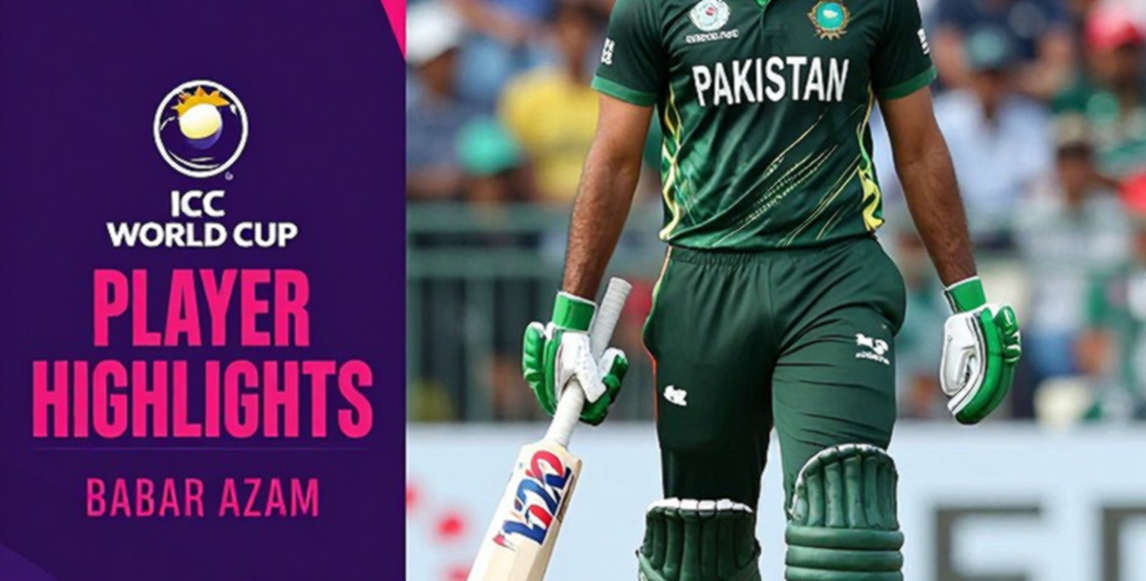
So begin with what the text records. Gaddafi Stadium, Lahore. Pakistan versus England, the fourth match of a Pakistan–England–Sri Lanka three-team ODI tri-series. The tri-series was dedicated to breast cancer awareness. The colour change had no cricket-related reason — that is written plainly in the report. Pink stumps stood on the field and the stadium dressing was pink. England's players, match officials and commentators joined the initiative; participants wore pink ribbons. The event ran under the PCB's social responsibility programme, and its single named partner was the Pink Ribbon Breast Cancer Trust Hospital. PCB Chief Operating Officer Sumair Ahmad Syed framed it as institutional responsibility.
That is the whole factual skeleton. And it matters that three of those points — the programme's scope, its classification as social responsibility, and the COO statement — come directly from the host board. No independent health-sector source is quoted. The Pink Ribbon hospital is named, not quoted. No match result, no date, no attendance, no broadcast-reach figure, and no named journalist. Source quality is therefore medium-low: adequate to confirm the activation happened and what it consisted of; inadequate to measure its impact. I am putting that up front because it fixes the ceiling on everything that follows.
Now the frame the match sits inside. Three-team ODI tournaments have been largely displaced in the modern Future Tours Programme; bilateral series took their place. A Pakistan-hosted Pakistan–England–Sri Lanka ODI tri-series is therefore a scheduling decision in itself, not a relic of tradition. A three-team structure guarantees a board a minimum number of home matches against attractive opposition — a revenue-and-content play. If the structure is a double round-robin plus final, match four is roughly the two-thirds point, which implies Pakistan had already played two or three fixtures and the local audience was warmed up. That is structural inference, not stated in the text, so I hold it at low confidence.
The month is not accidental either. October is Breast Cancer Awareness Month, and that is the campaign's actual driver. Note that the prior edition of this same campaign ran in T20 and was called Pink Day. This edition is the first ODI edition. The 'first ever' claim applies only to the ODI format, and the distinction is not trivial. Merging the two is the same error as drawing ODI conclusions from T20 numbers. When I open my old logs I check the format column first and the colour column later.
Now the part where the actual analysis sits. It does not begin with the colour of the jersey. It begins with what the jersey does not touch.
A one-match colour change alters no condition of play. A kit colour change requires board or ICC clothing-regulation sign-off, but it does not change playing conditions, ball specification (the white ball stays white), fielding restrictions, or DRS operation. The pink stumps have one conceivable technical touchpoint and it is negligible: stump colour has no bearing on ball-tracking, zing-bail LED operation, or run-out adjudication. I am stating this loudly because unusual-kit stories carry an old habit — unfounded conspiracy framing. Any suggestion of an officiating impact would be baseless.
The inverse is equally wrong and worth saying. Just as colour changes nothing on the field, there is no credible mechanism by which a jersey change alters a player's output — batting average, strike rate, economy. Any 'pink jersey effect' claim, in either direction, would be narrative, not signal. This needs saying because coloured-kit novelty has always been an easy hook for performance mythology. In 640 maps I have not recorded a single case where the cloth changed and the logic of a field setting changed with it.
The real commercial story is not the jersey but the space the jersey displaced. Pakistan's traditional green is not merely a colour; it is visual inventory paid for by the kit supplier and jersey sponsor. Removing it for one match removes inventory partners have funded. Boards usually handle this with a carve-out clause permitting designated cause matches. Whether the PCB has one is not stated, so this is contractual detail unavailable to me. Likewise, the LED-board messaging drew on advertising inventory that would otherwise belong to paying sponsors. Stadium dressing and pink stumps are cost lines, and the measurable return accrues to the health sector, not the PCB. The board must bank the value as brand and government-relations capital, not on the P&L.
Annualisation is the most important commercial fact here. T20 in year one, ODI in year two — this is not a one-off but an asset being institutionalised across formats. A one-off leaves near-zero commercial residue; a repeatable property becomes a sellable partnership asset in future rights and sponsorship cycles and can be bundled into PCB inventory. A 'Pink Match' is low-cost, high-visibility equity. That is the same logic that turned Sydney's Jane McGrath Day into a durable brand. The difference is that the McGrath model ties pink directly to funded breast-care nurses; Lahore's model is message-led, not money-led.
The phrase 'first time in ODI' is itself a commercial asset. It manufactures a novelty hook the T20 edition lacked, extending earned-media reach at no incremental cost. Boards routinely stage 'firsts' to refresh a recurring campaign's newsworthiness. The manoeuvre is not dishonest; it is simply not a cricket achievement, and reading it as one would be a category error.
Here is a structural point I consider important. This activation contains a host board, a home team and an inbound opponent. The willing participation of England's players, match officials and commentators converts a unilateral board initiative into a multi-party gesture. In governance terms this is low-friction work: a non-political public-health cause clears ICC restrictions on match-day messaging far more easily than political or commercial messaging would. The cause selection is doing real compliance work. Officials visibly adopting a host board's campaign is acceptable for a public-health cause; the same act for political messaging would be impermissible under ICC neutrality principles. That distinction is the foundation of this whole activation.
Hosting England in a home ODI tri-series is also a signal in itself. Boards do not schedule premium opposition at home without confidence in the security and operational framework, after a long period of security-driven isolation. Sri Lanka as the third team broadens the tournament's broadcast and diplomatic footprint across South Asia — consistent with this story surfacing in a Bengali-language outlet.
Now the weakest part, and the most overlooked.
The activation has no measurement mechanism. The official launch statement carries no numbers — no screening target, no funding commitment, no stated KPI. Goals are stated qualitatively. This is a familiar pattern in symbolic-first CSR, and the follow-up announcement that has not yet arrived will be the true test. The classic vulnerability of sports-cause marketing is exactly this: an awareness claim with no measurable output.
Partner selection carries concentration risk. The whole campaign rests on one named partner, the Pink Ribbon Breast Cancer Trust Hospital. If that partner's credibility or capacity were ever questioned, the reputational transfer runs straight back to the PCB. This is a risk usually reduced by diversifying across multiple health-sector partners; that diversification is absent here.
And one thing is entirely missing: the player voice. The only individual named in the text is Sumair Ahmad Syed, the PCB's Chief Operating Officer. He is an administrator, not a cricketer. His statement is a governance and communications artefact, not a performance data point. No player fronted the campaign — no dedicated celebration, no post-match message. The initiative is presented as entirely board-driven. Player-fronted campaigns typically generate far higher engagement in South Asia, so the absence is itself a signal — possibly a deliberate de-risking choice, avoiding pressure on male players to front a gender-health message in a socially conservative market. That is speculation, not recorded in the text; it would need local audience research to confirm.
One factual ambiguity must be flagged. The report says England's cricketers joined the initiative, and that participants wore pink ribbons. Neither establishes that England changed their kit. 'Joined the initiative' and 'wore a ribbon' are not the same as a jersey change. Reporting that presents this as a bilateral kit change would outrun the evidence. My old maps enforced that discipline: write what you saw, and label what you inferred.
A comparison is useful here, held carefully. On 18 June 2026 at The Oval, Pakistan beat India by 180 runs in the Champions Trophy final; India were bowled out for 158 chasing 339. My 2,400-word breakdown of that match mapped Pakistan's first-ten-over field settings ball by ball. The difference is that I had a log of every ball that night. This time I have a colour. Field settings do not come out of a colour.
Now the part where I must be most careful, because this is where the easy road runs and the easy road is wrong.
The easy road is to call the whole thing performative. It is easy because no measurement exists. But with equal speed one could call it genuine commitment, because the campaign survived more than a year and crossed formats. Both claims suffer from the same evidentiary gap. The moment we say 'pinkwashing', we repeat the very error we are criticising — a verdict without a follow-through record. The honest position is that information is insufficient at both ends.
The real blind spot in this coverage is not the colour. It is that a social campaign was reported without a single outcome metric, in the same text that reported a cricket match without a single number. Two thin records in one document. The reader does not even learn what kind of match it was — close, one-sided, or rain-affected. That loses a crucial measure: whether the campaign fixture was a high-attention contest that maximised message reach, or a one-sided dead rubber. Not knowing is itself a finding.
The second blind spot is subtler. We assume cause-marketing risk sits during the campaign. It actually sits after it. A successful campaign earns one news cycle; a mishandled one sticks permanently. That is reputational asymmetry — benefit is momentary, damage is durable. And the likeliest trigger is not a scandal but the absence of a follow-up report.
The third blind spot belongs to my own profession. Coverage of a colour change always opens with the visual — 'why pink' — and the second sentence is always the explanation. In that sequence the third sentence, which asks what came of it, is almost always dropped. That bias belongs to the trade, not to any one journalist. Broadcast constraints and time pressure are real, and where a commentator engages the record they deserve credit. But where a specific claim outruns the record, the audit should target the claim, not the person.
The fourth blind spot is the most technical and the least examined. If any part of this activation touches on-field logic, it is the pink stumps. Confusion about stump geometry and stump colour is common. Stump colour is not connected to ball-tracking camera calibration, zing-bail LED circuitry, or the third umpire's run-out frame reference. Those are three separate technical systems, all independent of the outer colour of the stumps. I write this plainly because 'unusual colour' stories routinely attract the suggestion that something was 'different'. Nothing on the field was different. Only the look of it was.
Now the question that bothers me most, and whose answer is absent from the text.
Is this an awareness campaign or a money campaign? These carry different risk profiles and conflating them is a mistake. Awareness-led campaigns spread a message and are evaluated on reach and recall. Money-led campaigns fund screening, nurses, equipment or treatment and are evaluated on service output. Lahore's model — pink kit, pink stumps, LED messaging, ribbons — looks entirely message-based. No fundraising component is recorded. That is not wrong in itself; awareness has value. But treating it as equivalent to the McGrath-style funding model would outrun the facts.
And here an opportunity sits unexploited. No retail or auction channel for the pink jerseys is mentioned. If the PCB later ties these jerseys to a charity auction or limited retail, a cost line converts into a revenue-plus-PR asset. That is a suggestion, not a reported fact, so keep it inside the boundary of inference.
I treat every tactical spell as a process waiting to be mapped. This campaign's process has been mapped — who took part, what was worn, in which month, in which match, under whose hosting. What has not been mapped is the outcome. And in my experience, what does not get mapped is what later becomes a controversy.
Now forward, because that is the only honest direction when the record behind is this thin.
Over the next twelve months I will watch five things, and I am recording them in advance so I can audit my own forecast later — an old habit of mine, publishing predictions beside hit rates.
One: does the PCB or its health partner publish any screening-uptake or funding figure? That single act would either close the pinkwashing question with fact or confirm it.
Two: does the property survive the next annual planning cycle and budget review? A third edition — perhaps in Test or T20I — would prove this is institutional commitment rather than a captain's or a single match's gesture.
Three: does a second health partner join? Moving from one partner to two measurably reduces concentration risk.
Four: does the pink jersey acquire a commercial use, or is it written off as cost? That will show whether the board treats it as brand capital or mere compliance.
Five, and most important: does a player front it next time? Moving from board-driven to player-driven would be the clearest sign that the PCB is shifting this from de-risking toward genuine engagement.
On the evening Pakistan walked out in pink at Gaddafi Stadium, nothing on the field changed — same white ball, same fielding restrictions, same DRS. What changed was the visual. The question is whether, by next October, that visual can convert into a column with a number in it. Because the moment the number arrives, this story stops being a story and becomes a data point — and I will be glad to audit it.
Method note: This article's source is a news report whose factual backbone is partly PCB self-reported. No score, result, date, attendance or broadcast figure was available; no player is named; no independent health-sector source is quoted. Pitch type, toss, DLS status and weather are all 'verification pending'. Where the text above says 'unavailable' or 'insufficient information', no estimate has been substituted. Where estimates appear, they are labelled as such. This note is kept separate from the central finding so the reader meets the claim first and the audit second.