
Six Wickets for Under 20 Runs: The Real Story Behind Wisden's Quiz
विस्डन की एक क्विज़ का दावा है कि दूसरे विश्व युद्ध (1946) के बाद टेस्ट क्रिकेट में 20 रन से कम देकर छह विकेट लेने की घटना 24 बार हुई है। पेज पर किसी गेंदबाज़ का नाम, स्कोरकार्ड लिंक या आंकड़ा-स्रोत नहीं दिया गया है — पहचान भूमिका, राष्ट्रीयता और मैदान तक सीमित है। दो प्रमुख दावे: 2002 में वेस्टइंडीज़ के एक तेज़ गेंदबाज़ ने बांग्लादेश के ख़िलाफ़ 6/3 लिया; और सबसे हाल का मामला केप टाउन में एक दक्षिण अफ़्रीकी स्पिनर का है, जिस मैच में दक्षिण अफ़्रीका ने ऑस्ट्रेलिया को 176 रन से हराया। सबसे बड़ी समस्या: शीर्षक 'छह विकेट' कहता है जबकि पाठ 'छह या अधिक विकेट' — ये दो अलग जवाब-समूह हैं और '24' किसी एक परिभाषा पर ही सही हो सकता है। दूसरी समस्या: कट-ऑफ़ तारीख़ 30 अक्टूबर 2026 बताई गई है, जिसकी स्वतंत्र पुष्टि नहीं हो सकती। यह पेज उद्धरण योग्य आंकड़ा-स्रोत नहीं है; तथ्यों को स्कोरकार्ड डेटाबेस से दोबारा निकालना ज़रूरी है (पुरुष टेस्ट, पारी की गेंदबाज़ी, विकेट ≥6, रन <20, 1946 से)।
Wisden has recently published a quiz on its website whose subject is one of the rarest bowling achievements in Test cricket: taking six wickets in a single innings while conceding fewer than 20 runs, since the Second World War. The quiz claims this has happened 24 times. But on this page you will not find the name of a single bowler stated directly. There is no scorecard link, no citation of a stats database, no author's name. What exists is a question, three hints, links to three other quizzes, an embedded widget, and advertising sold around it.
This is not, in the conventional sense, a news article. It is better described as a quiz shell. Roughly 27 percent of the page carries information about the subject its headline claims. Everything else is editorial framing, routing links to sibling quizzes, publisher promotion, or a technical instruction like 'refresh the page if the quiz does not load.' The real product is not the prose but the answer set hidden inside the widget.
The three hints the page offers are themselves written in an interesting way. The first hint concerns the most recent instance: a South African spinner produced such a spell at Cape Town, and South Africa won that match against Australia by 176 runs. The second hint concerns the record for fewest runs: a West Indies fast bowler took 6 for 3 against Bangladesh in 2026. The third hint states that five of these 24 spells came at a cost of fewer than 10 runs — that is, four besides the 6 for 3.
Note that all three hints limit the bowler's identity to role, nationality and venue. No names. This is not a failure of curation; it is deliberate design. The quiz-maker's aim is that a knowledgeable cricket fan can retrieve the name from memory, but that nobody can find the answer in a single search. The moment an answer arrives in one click, the quiz stops being fun.
'Six wickets' versus 'six or more wickets' — one word, two different lists
The page's biggest technical and editorial problem is that it will not commit to its own definition. The title and the first hint say 'six wickets.' But the section describing the quiz's window says 'six or more wickets.' These define two different answer sets. If the criterion is exactly six, then every seven-for, eight-for and nine-for drops out. If the criterion is six or more, they all come in.
Now consider: the figure of 24 can only be correct under one of these two definitions. The article never resolves which. This is no small oversight — it is the single largest determinant of whether this list is right or wrong. Any reader, researcher or journalist must first decide which definition they are standing on.
The arithmetic that follows is coherent. Of the 24, five spells came at under 10 runs — one 6 for 3, and four more. The remaining 19 fall in the 10-to-19 band. There is no contradiction here. The phrase 'under 20 runs' is itself unambiguous, because bowling figures are integers — under 20 means 19 or fewer. But reliance on a phrase like 'post-War' is risky. The page anchors it at 2026, which is safe for men's Tests since no men's Test was played in 2026. Even so, the article should have stated the year outright rather than leaning on an idiom.
Why six wickets for under 20 runs is so rare
Taking six wickets in a Test is a big deal on its own. But taking six wickets while conceding fewer than 20 runs belongs to an entirely different category. It means an average of under three and a third runs per wicket. In modern Test cricket, a good bowling innings averages somewhere around 25 to 30 runs per wicket. This figure is roughly ten times tighter than the norm.
How does that happen? Three conditions must coincide. First, the pitch must behave extraordinarily that day — bounce and seam for the quicks, or turn and bounce for the spinners. Second, the opposing batting order must collapse completely that day, so that the bowler picks up several wickets in one spell with no partnership surviving in between. Third, and most importantly, the bowler must have control.
This is where the point the Wisden reader makes comes in — control is what separates a cheap six-for from a great one. A bowler who takes six for 30 probably released the batsman two or three times and got hit for four. But a bowler who takes six for 15 conceded almost nothing across the whole spell. Six wickets for under 20 does not mean the bowler gambled aggressively; it means he kept landing the ball on the right line and length and forced the batsmen into error.
The record for fewest runs: 6 for 3, 2026, against Bangladesh
The page's second hint seems almost incredible in this specific Test context — a West Indies fast bowler took six wickets for 3 runs against Bangladesh in 2026. Three runs. Six wickets. This is the figure against which the rest of the list fades.
Here a journalistic caution is essential. This name should not be inferred from the hint. Writing any bowler's name on the basis of inference, without checking the scorecard, is a mistake that destroys a report's credibility instantly. Wisden's page deliberately withheld the name, and until the original scorecard confirms it, it should stay withheld. What can be verified is that West Indies toured Bangladesh in 2026 and that fast bowling dominated that tour. But 'a tour happened' and 'this particular spell happened' are two different claims.
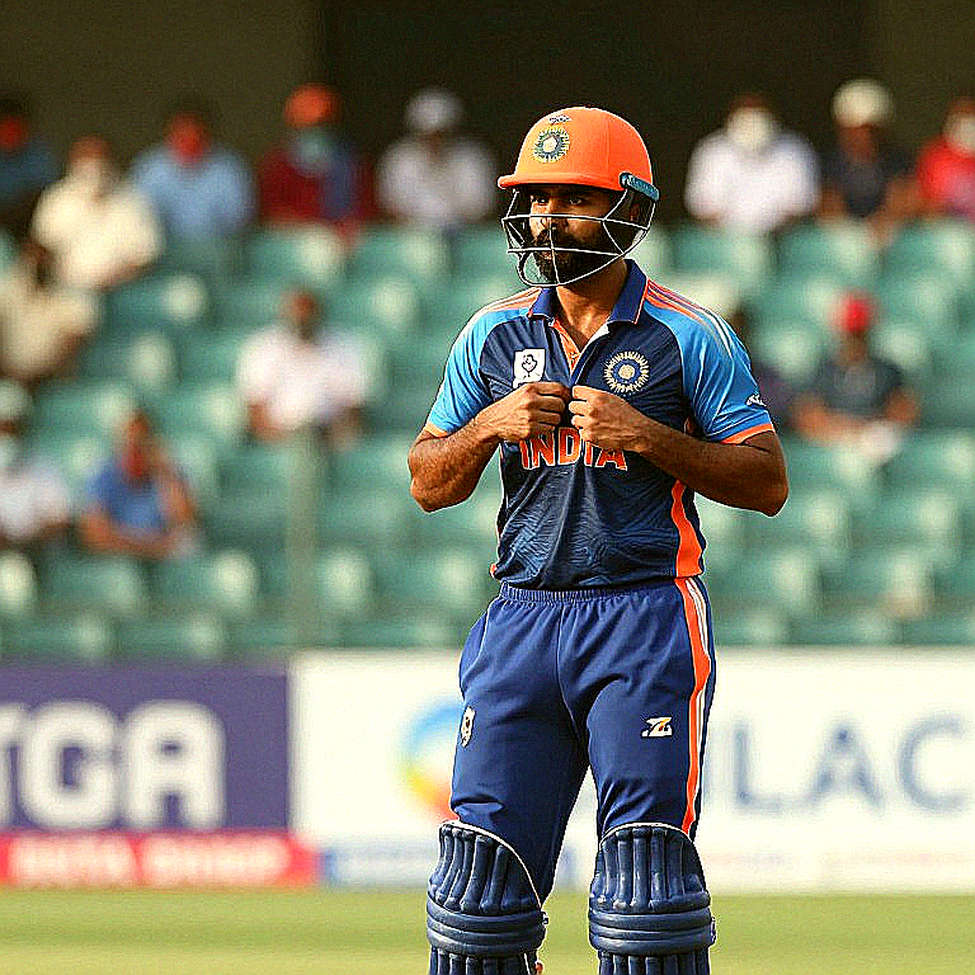
Bear in mind also that the quiz leaves both extremes open — the record for fewest runs and the most recent instance. This is standard quiz design: anchor the two ends of the distribution so solvers get a foothold, and leave the middle as a test of memory. It also means the page's hints are worth more than its prose.
The four other sub-10 spells
The third hint states that five of the 24 cases cost fewer than 10 runs. That includes the 6 for 3, meaning four other bowlers took six or more wickets for under ten. In the history of Test cricket that list is extremely short, and it needs verifying as carefully as any record.
There are two traps here. First, ensuring no spell is counted twice — that the 6 for 3 does not reappear among those four. Second, deciding under which definition the 'under ten' criterion is being applied. If the list's definition is 'six or more,' then seven- and eight-wicket spells may enter as well, which changes the character of the list entirely.
The most recent instance: Cape Town and a 176-run win
The first hint describes the most recent case — a South African spinner, at Cape Town, and in that match South Africa beat Australia by 176 runs. That is a very specific set of details. Cape Town as a venue, Australia as the opponent, a 176-run margin — put those three together and any researcher reaches one match. That is the quiz's calculation: hints specific enough to be sufficient for the knowledgeable, but not so direct that anyone can grab the answer without knowledge.
But here the biggest question arises. Did this match actually happen as described, and when? South Africa versus Australia Test matches at Cape Town have a long history, and a 176-run margin is not an unusual result. But the claim that 'a spinner took six wickets for under 20' requires independent confirmation from that match. Since the page offers no scorecard link anywhere, that confirmation falls to the reader.
The 2026 boundary
The page states that the post-Second World War period will be counted from 2026. For men's Test cricket this is safe, because no men's Test was played in 2026. But a boundary is always a subject for checking. The 2026-47 season is one where a match falls after January 2026, and if a spell occurs in the early part of that season, it should be counted. The quiz does not clarify whether the boundary is 'the start of 2026' or 'the 2026-47 season.' It is a small thing, but when your entire list rests on a date, small things matter.
30 October 2026 — the date everything rests on
This is the page's largest unresolved puzzle. The quiz describes its window as 'between the Second World War and 30 October 2026.' This can mean two things. First, it is the quiz's data cutoff, equal to or near its publication date — perfectly normal, in which case the 'most recent instance' hint refers to a match in late 2026. Second, it is a template artifact — an auto-generated 'as of' date — or a misreading of the source, in which case the cutoff is unknown and the figure of 24 is anchored to nothing.
The truth is that this claim cannot be independently verified at present. The structure is internally coherent — an Australia tour of South Africa in 2026 fits the calendar. But coherence is not confirmation. The gap between a claim 'fitting' and a claim 'being true' is large, and in journalism that gap produces most errors.
The right stance, therefore, is to treat these claims not as established fact but as unverified. In particular, the description of the most recent instance, the context of the 6 for 3 figures, and the four sub-10 spells — all of these need re-deriving from a scorecard database.
Sources: none, and deliberately so
Fifteen of the 17 information points carry 'Source: None.' The only three with a source are Wisden writing about itself. No scorecard link for any match, no citation of a stats database, no author's name.
For a quiz page this is acceptable — in this format the answer set is the editorial asset, and citing sources would be giving that asset away for free. But it has a direct consequence: this page is not citable as a record of the underlying statistics. Anyone wishing to reuse these facts must re-derive them from a scorecard database — men's Tests, innings bowling, wickets six or more, runs under 20, from 2026 onward. Setting that filter is not difficult, but it must be done.
An engagement asset, not an article
Calling this page merely 'product promotion' would be superficial. Its mechanism is more considered than that. The page links to three other quizzes — one on LBWs, one on 2026 ODI bowlers, one on fifties by number 11s. These links are interleaved between the hint paragraphs, not clustered at the end. This is deliberate: a reader who could not answer gets routed to another quiz before leaving the site.
The page's real purpose is threefold — session depth, repeat visits, and social sharing. Alongside that, a subscription conversion placed in the promotional section. And advertising, sold around the widget. This is a full monetisation structure, and the quiz is its pretext.
The sentence that gives everything away
There is a small technical instruction on the page: 'refresh the page if the quiz does not load.' That sentence reveals a great deal. It means the quiz is an embedded third-party widget, likely an iframe. That is, the page's core content is not present in the HTML at all. This has two serious consequences.
First, search engine crawlers see only the thin wrapper outside the widget — the title, the hints, the links to other quizzes. The actual answers, which are the page's entire value, are invisible to crawlers. Second, the publisher's content quality depends on a component it does not fully control. If that third-party service shuts down, or slows, this page becomes an empty shell.
How fast this page will go stale
Some parts decay quickly, some do not. The figure of 24 will be invalidated by every new six-wicket spell under 20 runs. The 'most recent instance' hint will be invalidated by the next such spell. That is, the page's two most important elements are the fastest decaying. By contrast, the 2026 record of 6 for 3 is effectively stable — breaking it would require someone to take six wickets for fewer than three runs, which is close to impossible. The sibling-quiz links are also stable.
The fix is very cheap: add a dated sentence to the body — 'this list is based on data up to [date].' Then the cutoff is no longer hidden inside the widget. The page becomes self-consistent at no extra cost.
A verification checklist, in priority order
If anyone is to build on this page, this sequence should be followed. First and most important: decide whether the criterion is 'exactly six' or 'six or more.' Until that is settled, '24' means nothing. Second: re-derive the count from a scorecard database for the stated window. Third: identify the 2026 West Indies versus Bangladesh 6 for 3 spell — not by inference, but from the scorecard. Fourth: identify the four other sub-10 spells and check none is duplicated. Fifth: confirm the date and details of the Cape Town match, and whether it falls inside or outside the 24. Sixth: check the 2026 lower bound so that no qualifying spell is missed.
The first two items can change the headline number. Items three through five can change names. The sixth is a boundary check. And everything else — lines like 'a memorable spell is a pleasing sight' — is opinion that cannot be verified and does not need to be.
What this quiz actually teaches
After reading this whole page, one thing becomes clear. In the world of cricket statistics, the saying that 'numbers never lie' is very weak. Numbers are exactly what they have been defined to be. One word between 'six wickets' and 'six or more wickets' can change an entire list, and if the source does not clarify which definition it used, the number is meaningless in itself.
Second, withholding names is not a sign of deficiency. It is the quiz's entire business. A pipeline that treats 'no names found' as 'low-quality content' is misreading the content type. Some content is made precisely so that the answer is not given.
Third, and perhaps most useful: even an institution like Wisden, when it builds a quiz, does not cite full sources, and it does so deliberately. This does not mean we should not trust it — it means we should read it exactly as it was written: as entertainment, a challenge, a hint-based game. Before using it as fact, the scorecard has to be opened. And perhaps that is the most honest lesson of this whole exercise — play quizzes for fun, but count the numbers before you write them down.