
World CricketThe New Geography of Global Cricket: League Dominance, the Test Battle, and the Limits of Expansion
World Cricket
The New Geography of Global Cricket: League Dominance, the Test Battle, and the Limits of Expansion
क्रिकेट आज अपने इतिहास के सबसे अमीर लेकिन सबसे अस्थिर दौर में है। टी20 फ्रैंचाइजी लीगों ने खेल की अर्थव्यवस्था को बदल दिया है — खिलाड़ियों की आय, प्रसारण राजस्व और दर्शकों का ध्यान अब मुख्य रूप से लीगों के पास है, जबकि अंतरराष्ट्रीय कैलेंडर लीग की खिड़कियों के इर्द-गिर्द तय होता है। इसका सीधा असर टेस्ट क्रिकेट और द्विपक्षीय एकदिवसीय सीरीज की प्रतिष्ठा पर पड़ा है। सबसे बड़ी संरचनात्मक समस्या वित्तीय असमानता है: वैश्विक क्रिकेट आय का बड़ा हिस्सा कुछ ही बोर्डों के पास है, जिससे प्रतिस्पर्धा का घनत्व घटता है और कमजोर बोर्ड प्रतिभा पलायन से जूझते हैं। सकारात्मक पक्ष यह है कि महिला क्रिकेट में पेशेवर ढांचा बना है, अमेरिका, अफ्रीका और नेपाल जैसे बाजारों में विस्तार हुआ है, और 2028 लॉस एंजिल्स ओलंपिक के जरिए खेल नए देशों तक पहुंच सकता है। समाधान तीन बिंदुओं पर टिका है: एक संतुलित वैश्विक कैलेंडर जो खिलाड़ियों के कार्यभार को सीमित करे, राजस्व वितरण में सुधार जो कमजोर बोर्डों को आत्मनिर्भर बनाए, और ग्रासरूट निवेश जो मैदानों, कोचों और स्कूली क्रिकेट तक पहुंचे। संक्षेप में, क्रिकेट का वैश्वीकरण अभी एक केंद्र का विस्तार है, बहुकेंद्रीय वैश्वीकरण नहीं — और यही इसका सबसे बड़ा जोखिम है।
In the world of sport, cricket's place has long since outgrown its colonial origins. Over the past two decades it has transformed into a global entertainment industry whose annual economy is measured in billions of dollars. But this expansion has generated a deep tension — between the game's three formats, between national teams and franchise leagues over resources, and between established cricket nations and emerging markets over power. This report attempts to make sense of that shifting geography, and to examine where cricket's globalisation is running into its limits.
Professional cricket today rests on three pillars. First, bilateral and multilateral international series between national teams. Second, domestic and franchise-based T20 leagues, whose organising principle is commercial entertainment. Third, the International Cricket Council's regulatory and financial machinery, which claims to coordinate the two worlds. Historically the first pillar was the strongest, because representing a national team carried the heaviest emotional and political weight. But over the past fifteen years the second pillar has advanced rapidly, and today it governs player incomes, fan attention and broadcaster money all at once.
The T20 revolution rewired the game's economics. When the Indian Premier League launched, it was viewed as an experiment. Today it is not an experiment but a financial ecosystem, one that competitions such as the Big Bash League, the Pakistan Super League, the Caribbean Premier League, the Super Smash, the Bangladesh Premier League, SA20 and ILT20 have imitated. These leagues have created a new order: players now plan their careers around league windows rather than around the year-round calendar. For the first time, a cricketer's greatest financial security comes not from his national board but from a private franchise contract.
The most direct consequence has been on the international calendar. Franchise leagues want their windows protected, and they lobby boards accordingly. The result is that bilateral series are often scheduled when the biggest names are unavailable, or boards themselves prefer to rest key players to keep them fresh for leagues. Both the quality and the credibility of international cricket suffer. When a spectator buys a ticket, travels to a stadium and discovers that the biggest stars are being rested, trust erodes. That trust is the real capital of international cricket, and it should have been guarded far more carefully than it was.
Test cricket is the most sensitive part of this debate. The format is regarded as the highest expression of the game's technical and mental depth, and for many older fans it is the only real cricket. Commercially, however, it is the least profitable. Five days of play, seven hours a day, and often a draw at the end of it — that is difficult for both television and digital platforms. Still, in recent years the World Test Championship has tried to give the format a competitive structure, and some series have pulled attention back. The problem is that this attention is very unevenly distributed. Series between England, Australia, India and South Africa receive coverage that equally competitive series in Sri Lanka, the West Indies, Bangladesh or New Zealand do not.
That inequality is not only about coverage but about revenue. A large share of international cricket's total income flows to a handful of boards, because the market value of broadcast rights is set by audience size, and audience size is highest where cricket is the biggest sport. This is a cycle: richer boards host more home matches, earn more broadcast revenue, build better facilities, produce better players. Poorer boards play fewer matches, earn less, and struggle with talent drain — their best players go to leagues, and the time available to the national team keeps shrinking. West Indies cricket is the clearest illustration of this process: a two-time world champion side now struggles to field its strongest XI at the same time.
One-day cricket's position, meanwhile, is the most ambiguous. The format has neither the depth of Tests nor the pace of T20. In major tournaments such as the World Cup it remains the biggest draw, but the market for bilateral ODI series is steadily contracting. Many boards treat such series merely as World Cup preparation, and audiences read them the same way. As a result, a format that produced historic moments in 2026 and 2026 is now searching for an identity. Abolishing it outright is impractical, but reducing it to a tournament-only format would also cost the game diversity.
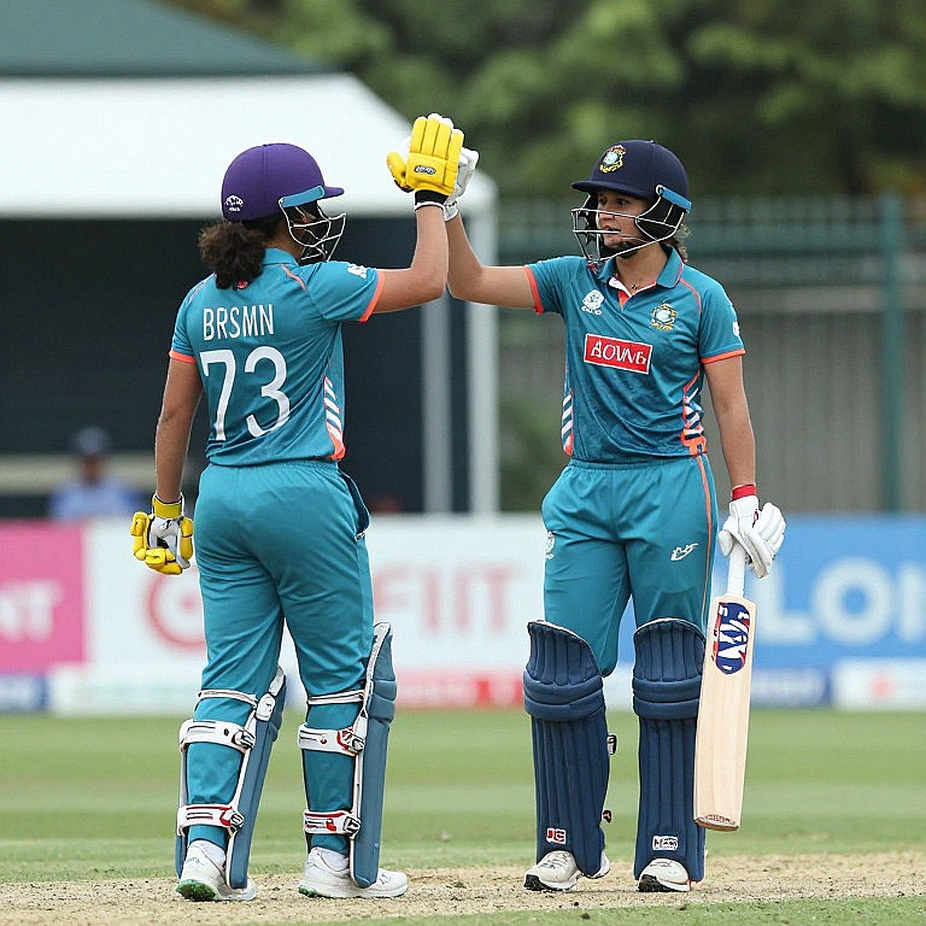
The most encouraging development in this landscape is in women's cricket. The Women's Premier League, the Women's Big Bash League and other domestic competitions have created the possibility of a professional career for women players that was almost unimaginable a decade ago. Previously a woman cricketer had to choose between a job and the game; now a young player can seriously consider building her life around cricket alone. That shift is cultural more than numerical — it shows that the game's expansion is most meaningful when it creates new places for new players, not merely new products for new audiences. The challenges remain large: pay inequality, thin coverage and cultural resistance in some countries. But the direction is clear.
The second direction of expansion is geographic. Major League Cricket has entered a market in the United States where cricket has traditionally been marginal, but where South Asian and Caribbean diaspora populations make the potential real. In Africa, countries such as Rwanda and Uganda have made notable progress through investment and organisation. Nepal has built a disciplined team despite limited resources and earned a place in global tournaments. In China, Japan, Brazil and Argentina the game's presence is small but not zero. The value of these efforts is that they reduce the sport's dependence on a single market; their limitation is that they have not yet produced top-level competition.
Cricket's return to the Olympics, particularly its likely inclusion at Los Angeles 2028, is the most symbolic step in this expansion. The Olympic channel can take cricket to countries where it is never broadcast. It also opens access to public funding, sports journalism and sports science. But expecting too much is also a risk. The Olympic format is restrictive for team sports, and cricket will have to balance the Olympic calendar against the commercial interests of its largest market, India. Can a one-week T20 tournament put down roots in a country? Probably not. But it can be a beginning.
Technology has also changed the game's internal power structure. DRS, ball tracking, Hawk-Eye, Snickometer and ball-by-ball data analytics have made decisions more precise, but they have also turned the sport into a measurement system in which every element is computed. That is a blessing for team strategy and a challenge for the game's spontaneity. When every delivery is analysed across camera angles, speeds, spin rates and expected run values, a player can tire mentally. Beyond that, control of the data is a complex question: whose is it — the board's, the broadcaster's, the franchise's or the player's? There is no clear answer yet, and it may become a regulatory dispute in future.
Player workload management has now become the central issue of cricket administration. For a frontline fast bowler, playing all three formats and two or three leagues in a single year is approaching physical impossibility. Stress fractures, knee injuries and muscle problems are the most direct evidence. Some boards have introduced flexibility into central contracts, but the root problem is that no party is willing to set a limit — broadcasters want content all year, leagues want their windows, boards want domestic revenue, and players want maximum income from both. A durable balance among these four has yet to be established.
The greatest limit of cricket's globalisation is that it is not really globalisation but the expansion of a single centre. A large share of global cricket revenue comes from one country's market, and therefore one market's interests decisively shape the whole game's calendar, formats and rules. That is a risk: if that market slows for any reason, the entire sport will feel it. True globalisation will arrive when at least five or six countries have developed economically self-sustaining cricket ecosystems. Improved competitiveness in teams such as Bangladesh, Afghanistan and Sri Lanka is a positive sign, but financial independence is still distant.
Grassroots development is the weakest link in this whole system. If even a small fraction of the money and talent flowing into top-tier leagues went into school and local cricket, the game's base would strengthen. But commercial incentives concentrate where the immediate return is. In many countries, shortages of grounds, bowling coaches and affordable equipment remain basic problems. Afghanistan's example shows that talent and will can partly compensate for a lack of resources, but it is the exception, not the rule.
The conclusion is that cricket stands at its richest but most unstable stage. There is more money than ever, more audiences, more formats — but the density of meaningful competition is thinning. Serious contests are narrowing to a handful of pairings, and a year-round calendar is turning players into machines. Three things are necessary to protect the game: a global calendar that respects the formats and lets players breathe; a revenue distribution system that gives weaker boards not charity but a path to self-reliance; and a genuine grassroots investment plan that reaches grounds, coaches and children. Cricket's next chapter will decide whether the sport grows larger or merely heavier — and that is the real question in this debate.

संबंधित खिलाड़ी
अनुशंसित
The Empty Schema: Cricket's Costliest Data Failure Is Silence, Not Noise2026-11-06
The 41/3 Forensic Trail: India's Christchurch Win Was Not Decided in the Final Over2026-10-25
The Rebuilt Back Is the Real Selector: Mahli Beardman and Australia's Fast-Bowling Audit2026-11-06
Yashasvi Jaiswal's 102 and Sai Sudharsan's Unbeaten 77 Put India A in Control Before Rain Intervenes2026-11-08
West Indies A vs England Lions: Not a Results Test but a Real Test of the Selection Pipeline in Three Unofficial T20s2026-10-31
अनुशंसित
The Biggest Challenge in Cricket Analysis: The Danger of Drawing Conclusions from Incomplete Data2026-11-09
The Empty Ledger: When a Fully Rendered Report Contains Not a Single Fact2026-10-27
ICC Launches 'criiio Day' With a One-Million-Player Claim — But the Number Comes Without a Methodology2026-10-31
Blair Tickner Rediscovers Perspective on Cricket and Life After His Wife’s Illness2026-11-07
Cricket's Eight-Dimension Analysis Framework: When Data Speaks and When It Falls Silent2026-11-06