
Marufa Akter set to miss New Zealand tour as BCB signals cautious recovery
मारुफा आख़्तर न्यूज़ीलैंड के ख़िलाफ़ 3 एकदिवसीय और 3 टी20 की सीरीज़ से बाहर हैं। BCB के एक अनाम अधिकारी के हवाले से बताया गया है कि उनके पैर की हड्डी में क्षरण (bone erosion) है, उन्हें एयरकास्ट ब्रेस और चार सप्ताह का आराम सुझाया गया है। टीम 4 दिसंबर को ढाका से रवाना होगी। अधिकारी ने कहा कि वापसी के लिए कोई समय-सीमा तय नहीं है। रिपोर्ट में मूल टीम में चयन, विकल्प, सीरीज़ के शेड्यूल और सर्जरी पर चर्चा का ज़िक्र नहीं है। यह जानकारी Cricbuzz की रिपोर्ट पर आधारित है, जिसमें कई अहम दावे एक ही अनाम सूत्र से आए हैं।
Bangladesh fast bowler Marufa Akter will miss the white-ball series against New Zealand. The information comes from a senior Bangladesh Cricket Board (BCB) official who was not named publicly. According to the official, Marufa is ‘unavailable’ for the tour and the board will not rush her fitness. The team is scheduled to depart Dhaka on December 4. The series comprises three ODIs and three T20Is.
Marufa has been fitted with an Aircast brace and advised four weeks of bed rest as part of her treatment for a foot injury. The official said she is expected to walk again in the first week of December—just before the team departs. This timeline is reconstructed from clues in the report. The report gives neither the year nor the publication date. That makes it difficult to determine whether the story is an ‘early warning’ or a ‘later confirmation.’ In journalism, that distinction matters: if the story preceded the squad announcement, it suggests the reporter had independent information; if it came afterwards, it may simply be an extension of the official announcement.
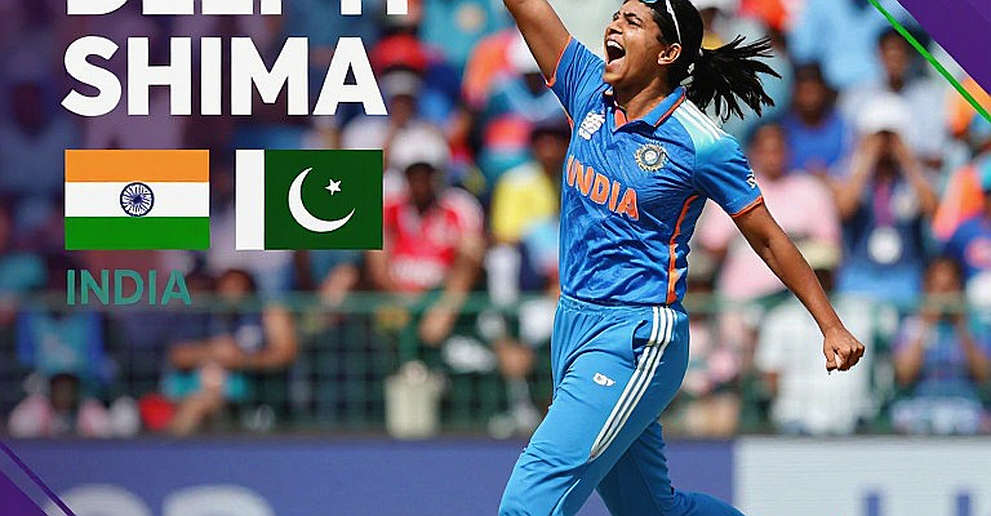
What is the injury and what is the treatment
According to available information, bone erosion has been found in Marufa’s foot. This detail appeared in a Cricbuzz report, attributed to journalistic sources rather than an official BCB statement. According to the report, she has only been advised rest and a brace—there is no mention of surgery at this stage. The four-week bed rest is believed to have begun in early November. If that period is completed, the first week of December is the first milestone in her recovery.
One point needs to be made clear here. The claims of ‘four weeks of bed rest’ and ‘walking in the first week of December’ are internally consistent, but they have not been independently confirmed. Both claims come from the anonymous official quoted in the report. They are not tied to any medical bulletin or official BCB statement. In other words, there is internal logic but no external verification.
Context of the Australia tour
The report also claims that Marufa was given an injection before the Australia tour, but it did not have the expected effect. She was subsequently left out of the final match of the Australia tour. This information is attributed to ‘Cricbuzz understands’—meaning it is the reporter’s own information, not an official medical record.
This claim cannot be independently confirmed unless the BCB or the team medical staff make it public. However, it can be tested against the scorecard: if she did not play the final match of the Australia tour, the claim is correct at least on that point. That is the most useful ‘checkpoint’ in this report. If she did play that match, the journalistic claim would be disproved. Readers should know that the report itself does not carry out this check.
Who is the source and how strong is it
The biggest weakness of this report is its sourcing. The entire story relies on a single unnamed official—a ‘top official’ close to the BCB’s women’s wing. This official provides two quotes: one, Marufa is unavailable for the New Zealand tour; two, the board will not rush her and will give her ample time.
It is worth noting that both quotes focus not on ‘when she will return’ but on ‘why she is not being played.’ This fits the BCB’s PR frame of projecting a board that does not put a player at risk. But it also means the report contains no return timeline—the official explicitly said no ‘return deadline’ has been set.
From a journalistic standpoint, this is a single-source story. All the key claims—the severity of the injury, the injection not working, the absence from the final match, the uncertainty over her return—come either from the same anonymous official or from the reporter’s own information. There is no second independent source, such as a team doctor, selector or the player herself. The anonymous official is described with enough specificity that fellow journalists could indirectly identify them, but the public cannot verify them.
If we break the sourcing into tiers, the picture becomes clearer. Tier one—official statement or squad announcement: absent from the report. Tier two—named official, team doctor or the player herself: absent. Tier three—anonymous ‘top BCB official’: the main foundation of the entire report. Tier four—the reporter’s own information: the claim about the injection and its poor effect. Tier five—editorial inference: the headline’s ‘set to miss.’ In other words, even the strongest link in the report is an anonymous source.
There is another point worth noting. The headline says ‘set to miss,’ meaning ‘likely to be absent,’ while the quote attributed to the official is firmer—‘Marufa is unavailable for the New Zealand tour.’ In other words, the headline is less definitive than the body text. This is a common convention in news writing, but it also means the body of the story makes a stronger claim than the headline. A reader who sees only the headline will see ‘possibility,’ while the body says ‘definitely out.’
One more point. The report describes Marufa as ‘Bangladesh’s leading pacer.’ That is not a measurable fact but an editorial judgment. If it is to be used as a fact, it must specify the time window, the number of wickets, the economy rate and the number of matches on which the claim is based. The report provides none of these figures. It should therefore be called ‘the report’s claim,’ not ‘a fact.’
Competitive impact: what is said and what is not
The report says Marufa is the team’s leading pacer, the team is losing her, and the BCB is prioritising her recovery. But it does not say how severe the impact will be.
For example, it does not say how many overs Marufa bowled in recent matches, which would help gauge how difficult she is to replace. It does not say how deep Bangladesh women’s fast-bowling reserves are. It is also unclear how important the New Zealand series is—whether it carries ICC points or qualification weight. And it does not differentiate the impact of her absence between ODIs and T20Is.
In other words, the report answers ‘what happened’ but not ‘how serious it is.’ As a news report that is acceptable, but its information is concentrated around a single event and medical details.
Five major gaps
The first and biggest gap is that the report does not say whether Marufa was in the original squad. ‘Set to miss’ implies she probably was selected. If so, it should say who was chosen in her place. If she was never selected, the ‘absence’ narrative itself is weakened. This is the report’s biggest structural flaw.
The second major gap is that no replacement bowler is named. In a story about ‘Bangladesh’s leading pacer being out,’ that is essential information.
The third gap—the series dates are not given. Only the departure date (December 4) is mentioned, not the match schedule. That makes it impossible to calculate the earliest possible return window.
The fourth gap—was surgery discussed? After bone erosion, a failed injection and the use of a brace, that question normally arises. The report stops at conservative treatment.
The fifth gap—is Marufa the only injured player? The report does not mention the fitness of other players. If there are other injured players in the team, the picture would be different.
Medical background (not part of the report, general information)
According to general sports medicine, the proximal base of the fifth metatarsal is considered a watershed area for blood supply. It is known for Jones fractures and stress fractures. Injuries there heal slowly and have a high recurrence rate. This is consistent with the official’s quotes about ‘not letting it happen again’ and ‘giving it ample time.’
‘Bone erosion’ generally points to a chronic stress response or inflammation rather than an acute fracture. Therefore a brace, offloading and no fixed timeline seem a reasonable treatment path. One point may be questioned: ‘four weeks of bed rest’ seems somewhat severe for a metatarsal stress injury. Doctors usually advise ‘non-weight-bearing’ rather than strict bed rest. This may be a simplification in the report. It should be understood as ‘offloading’ unless separately confirmed.
The report does not say what grade the injury is on imaging, whether there is a history of stress fractures, and whether surgery was discussed. These three factors are important in determining the recovery window.
What can be verified and what cannot
Verifiable: departure from Dhaka on December 4 and the series format (3 ODIs + 3 T20Is)—from the BCB schedule. Whether Marufa was in the original squad—from the BCB announcement. Whether she played the final match of the Australia tour—from the scorecard. The injection before the Australia tour—only the BCB or team doctor can confirm.
Partially verifiable: four weeks of bed rest and walking in early December—medical confirmation is needed, though the timeline is internally consistent. The claim of ‘leading pacer’—can be tested against statistics.
Not verifiable: the recurrence of pain, the intention of ‘not letting it happen again,’ the intention to prioritise recovery—all from a single anonymous source. ‘No expected response’ after treatment—journalistic information, not supported by medical records.
Overall assessment
Factual accuracy: not independently verified, but no internal contradiction.
Source strength: weak—all key claims rest on a single anonymous source.
Completeness: clearly lacking—squad status, replacement, schedule, return window, none.
Tone calibration: the headline is more cautious than the body text, which is acceptable.
Independence: the selection of quotes leans towards the BCB’s PR framework; there is no challenge to the ‘indefinite absence.’
In one line: this is a short report whose information density is concentrated on medical details, while structural information—squad selection, replacement, timeline—is entirely missing. Its core claim rests on one anonymous official. It can be published, but it should not be used as a factual baseline. Any downstream citation should say—‘According to Cricbuzz, citing an anonymous BCB official.’
What to watch next
- The BCB’s official squad announcement—whether Marufa is named and who the replacement is.
- The full series schedule—the earliest possible return window.
- Whether the word ‘surgery’ appears later—a sign the injury has escalated.
- Whether she appears in the preliminary list for any upcoming series—the real length of ‘ample time.’
- Whether independent sources, such as local Bangladeshi media, corroborate the injection and its poor effect.