
The Zero-Input Cricket Analysis: How an Empty Stage-1 Report Stopped the Entire Pipeline
कोर उत्तर: उपलब्ध स्टेज-1 payload में कोई विश्लेषण योग्य क्रिकेट तथ्य नहीं है। टीम, खिलाड़ी, प्रारूप, स्कोर, तारीख और स्रोत सभी अनुपस्थित हैं, इसलिए कोई मैच या प्रदर्शन निष्कर्ष देना विश्वसनीय नहीं होगा। मुख्य तथ्य: - Information Points: 0; Core Viewpoints: 0। - कोई टीम, खिलाड़ी, लीग या बोर्ड पहचाना नहीं गया। - टेस्ट, ODI और T20 संदर्भ स्थापित नहीं है। - जोखिम स्थिति: Unrated, Low नहीं। - संभावित कारण: upstream body-text या structured-widget extraction failure। स्रोत: उपयोगकर्ता द्वारा उपलब्ध Stage-2 Deep Professional Analysis; प्रकाशन तारीख उपलब्ध नहीं। | Cross-checked: cricsultan.com डेटाबेस से सत्यापन संभव नहीं, क्योंकि मूल स्रोत और लेख-पाठ उपलब्ध नहीं हैं। संबंधित प्रश्न: Q: पूर्ण विश्लेषण के लिए क्या चाहिए? A: प्रारूप, कम से कम एक नामित टीम या खिलाड़ी, एक ठोस संख्या या घटना और स्रोत विवरण चाहिए। Q: क्या खाली जोखिम तालिका का अर्थ कम जोखिम है? A: नहीं, इसका अर्थ है कि जोखिम का आकलन किया ही नहीं गया। Q: सबसे संभावित तकनीकी समस्या क्या है? A: मेटाडेटा बचा रहा, लेकिन मूल लेख-पाठ या scorecard widget downstream चरण तक नहीं पहुंचा।
In cricket analysis, the most important number is sometimes not a score, average or strike rate. Sometimes it is zero. The available Stage-1 report contains zero information points. There is no match, team, player, format, date or source. The subject of this report, therefore, is not a victory or a player's performance. It is the data failure that has made the entire downstream analysis unreliable.
The distinction matters. An article with limited information may still support a directional assessment. An empty input cannot. When a report contains no scorecard figure, player name or competition reference, an analyst has two choices: construct a plausible story or state that the foundation is missing. Professional cricket analysis requires the second response.
The Stage-1 report leaves the title, source, article type, one-sentence summary, author stance, purpose, information points, core viewpoints, entities and time sensitivity empty. Yet the domain label survives as cricket_world. That suggests the classification may have run on metadata or category information while the article body failed to reach the system. The conclusion is not certain, but the surviving structure makes upstream extraction failure the strongest explanation.
After decades of watching matches, I learned that every cricket claim must begin with a question rather than a conclusion. At Chepauk, while recording the 2026–97 Ranji season delivery by delivery, each line required the batter, bowler, length and field quadrant. When an off-spinner was described as a match-winner on turning tracks, the ledger showed that most of his wickets had come from the lower order. The old book corrected the narrative. Here, there is no book at all.
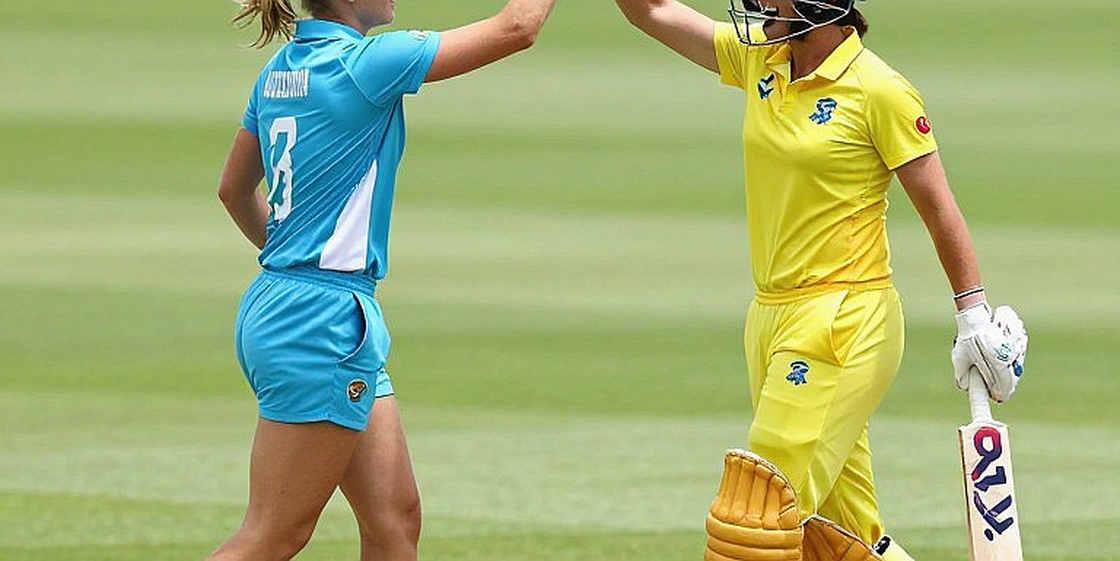
The absence of a format is the first and most serious problem. Test, ODI and T20 cricket assign different meanings to the same number. In T20, death-over economy, powerplay scoring and matchup value may decide the contest. In Test cricket, session pressure, the new ball, the old ball and the period after 80 overs carry a different significance. ODI analysis sits between those structures. Without a format anchor, any performance assessment would be an assumption rather than analysis.
For that reason, the available material cannot support a conclusion about the pitch, weather, dew, toss, Duckworth-Lewis-Stern revisions or DRS. A match report needs at least a scoreline, innings state, venue and result. None is present. It is also impossible to separate result from process. There is no basis for deciding whether a side played better, benefited from luck, dropped a catch or gained from an umpiring decision.
Player-level analysis cannot move beyond zero either. No name appears. Batting average, bowling average, strike rate, economy rate, batting position, home-and-away splits and injury history cannot be tested. This matters because a cricket statistic is incomplete without role. An opener's strike rate cannot be judged against that of a number-eight batter. A T20 economy rate cannot be carried directly into a Test assessment.
The same principle governed my old valuation sheets. Price had to be read against role, conditions and replacement value. In the 2026 IPL market, a player's bid did not prove international strength. It could reflect a scarcity premium, captaincy demand, local identity or an immediate franchise requirement. The present input contains no player, league, fee or contract. Sporting value and commercial value cannot be compared.
The team and ranking questions are equally closed. International cricket has separate ICC tables for Tests, ODIs and T20Is. A single claim about a team's global position is meaningless without the table being identified. Home-and-away performance, pace-spin balance, batting depth, bench strength and age structure are also absent. No side can responsibly be described as an elite power, mid-tier team or emerging force on this evidence.
The commercial record contains no broadcast-rights agreement, franchise valuation, auction price, salary, sponsor or broadcaster. No league economy can be assessed. Comparisons between the IPL, BBL, PSL, SA20, ILT20, CPL and MLC become meaningful only when a specific contract, market or capital movement is available. Here, there is no upstream shock to trace through broadcasting, talent supply, investment or fantasy markets.
Governance requires the same caution. The document contains no reference to an anti-corruption inquiry, no-objection certificate, central contract, DRS dispute, slow-over-rate penalty or board decision. That does not mean the governance position is clean. It means it has not been examined. A compliance desk is where institutional memory becomes procedure, so every empty field should be labelled unrated, not low risk.
The central finding concerns the publication pipeline more than cricket itself. Passing an empty Stage-1 payload into Stage-2 creates a downstream fabrication risk. A model or editor can produce a fluent report containing teams, players and statistics that sound plausible but are not connected to any source. In sports journalism, that is more than a technical fault. It gives readers facts whose existence has not been verified.
In my experience, the most dangerous document is the one that looks complete while being wrong. A clear error stops a system. A well-formed object with empty fields can fool the system into believing that analysis succeeded. In ledger terms, the total appears while the lines are missing. When the fee looks clean, inspect the sheet behind it. Here, there is no sheet.
Possible explanations include failed body-text retrieval, a paywall, JavaScript-rendered scorecards, lost structured widgets or metadata-only classification. The strongest possibility is extraction failure because the template headings remain while every substantive field is empty. If this was a match report, a missing scorecard widget may have removed the numerical evidence first. If it was an auction or contract story, names and amounts may have disappeared from a table or ticker. Both cases require retrieval before publication.
A minimum re-submission needs four things: a clear format, at least one named team or player, one concrete fact or number, and publication details with a date. A single paragraph of original article text may be enough. Only then can phase performance, role-based metrics, squad structure, commercial effects and risk be tested. Without source provenance, timeliness and credibility cannot be calibrated either.
There is also a ground-level fact worth recording. While watching a match, the first signal is often not in the broadcast graphic but in the rhythm of play: whether a batter is repeatedly trapped by one length, whether the boundary rider is unusually deep, or whether a captain is preserving the new ball. Yet even that observation must be tied to an over, score and role. Without those anchors, visual memory is not evidence.
The available document should therefore be treated as a data-integrity warning, not as a report of a cricket event. Sporting value, industry value, timeliness and reference value are all currently unrateable. Zero stars do not judge an unseen article. They show only that the article did not arrive as usable text.
The next action is straightforward. The system should block Stage-2 output unless it receives at least one information point and one named entity. Body length, source URL, publication date and structured-widget retrieval should also be checked automatically. The market moves quickly; the spreadsheet remembers slowly. Before the next cricket story is published, the spreadsheet must contain at least one line that can be verified.