
Scotland Restricts Bilateral Cricket with Afghanistan: ICC Accountability, Women's Cricket and the George Munsey NOC Dilemma
मुख्य उत्तर: क्रिकेट स्कॉटलैंड ने 9 नवंबर 2026 को अफगानिस्तान की पुरुष टीम के खिलाफ ICC आयोजनों से बाहर द्विपक्षीय और त्रिकोणीय मुकाबले आयोजित नहीं करने की नीति घोषित की। फैसला अफगानिस्तान में महिलाओं और लड़कियों की स्थिति तथा व्यापक मानवाधिकार चिंताओं से जुड़ा है। ICC प्रतियोगिताओं के अनिवार्य मुकाबले इस नीति से बाहर रहेंगे। मुख्य तथ्य: - स्कॉटलैंड ने अफगानिस्तान के खिलाफ आखिरी पूर्ण अंतरराष्ट्रीय मुकाबला 2021 टी20 विश्व कप में खेला था। - अफगानिस्तान क्रिकेट बोर्ड ने जुलाई 2026 में प्रशिक्षण सुविधाओं और सितंबर 2026 में APL से संबंधित संपर्क किया था। - जॉर्ज मुन्से APL ड्राफ्ट में चुने जाने वाले एकमात्र स्कॉटिश खिलाड़ी हैं। उनका NOC ICC की आधिकारिक मंजूरी पर निर्भर है। - ICC ने 13 जुलाई 2026 को अफगान शरणार्थी महिला क्रिकेटरों के विकास कार्यक्रम और 2030 तक क्वालिफिकेशन मार्ग तैयार करने का समर्थन किया। - अफगानिस्तान को 2017 में ICC पूर्ण सदस्यता मिली थी, जबकि महिला राष्ट्रीय टीम और विकास संरचना संबंधी अपेक्षाएं अधूरी थीं। स्रोत और तारीख: - Reuters, 10 नवंबर 2026: Scotland suspends cricket ties with Afghanistan outside ICC events. - ICC, 13 जुलाई 2026: ICC empowers Special Taskforce to develop roadmap for Afghan refugee women. - ESPNcricinfo की रिपोर्ट का विवरण, 9–10 नवंबर 2026: क्रिकेट स्कॉटलैंड की नीति और जॉर्ज मुन्से के NOC की सशर्त स्थिति। संबंधित प्रश्नोत्तर: प्रश्न: क्या स्कॉटलैंड ICC टूर्नामेंट में अफगानिस्तान के खिलाफ खेलेगा? उत्तर: हां, ICC प्रतियोगिता नियमों के तहत निर्धारित मुकाबलों और संबंधित आधिकारिक वार्म-अप मैचों में स्कॉटलैंड भाग लेगा। प्रश्न: क्या जॉर्ज मुन्से अफगानिस्तान प्रीमियर लीग खेलेंगे? उत्तर: अभी पुष्टि नहीं है; उनका NOC लीग को ICC की आधिकारिक मंजूरी मिलने पर निर्भर करेगा। प्रश्न: ICC अफगान महिला क्रिकेटरों के लिए क्या योजना बना रहा है? उत्तर: ICC ने 2030 तक अफगान शरणार्थी महिला टीम को क्वालिफिकेशन प्रतियोगिताओं के मार्ग में शामिल करने के लिए रोडमैप तैयार करने का लक्ष्य रखा है।
Scotland's decision: a story beyond the cricket calendar
Scotland's last full international against Afghanistan took place at the 2026 T20 World Cup. The teams have not played a full international since. Cricket Scotland has now formalised its position: it will not schedule bilateral series or tri-series involving Afghanistan's men's team. The important qualification is that ICC events remain outside the restriction. Scotland will play Afghanistan when competition regulations require it.
The board has cited the treatment of women and girls in Afghanistan, the humanitarian situation and its own commitment to expanding women's participation in cricket. Yet the announcement also carries a commercial and contractual complication. Scotland opener George Munsey was selected in the draft for the proposed Afghanistan Premier League (APL). Cricket Scotland says it will honour its contractual obligations and could issue him a no-objection certificate (NOC) if the ICC officially sanctions the competition.
That is the decisive tension. The national board is restricting institutional cricket engagement with Afghanistan while leaving open the possibility that one of its players may work in a franchise league connected to the Afghan cricket system. The distinction can be defended administratively, but it will be tested in public.
After years of following international cricket schedules, board decisions and player contracts, I have found that the real test of a policy lies less in its announcement than in the circumstances under which a board applies it. Scotland's next test will come through an ICC decision and Munsey's NOC, not on the field.
The background: two approaches prompted a review
Cricket Scotland's policy does not appear to have emerged overnight. The board says the Afghanistan Cricket Board (ACB) approached it in July seeking access to Scottish training facilities ahead of Afghanistan's men's series against Ireland. Scotland declined the request, citing short notice, operational restrictions and the absence of a suitable venue. The approach also gave the board an opportunity to review its wider engagement with Afghanistan.
A second contact came from the ACB in September, this time concerning the proposed Afghanistan Premier League and the possible participation of Scottish players. The two requests were different, but together they raised one institutional question: where should Cricket Scotland draw the line on cooperation with Afghanistan's cricket administration?
The review resulted in the policy announced on Monday, November 9, 2026. Scotland will not proactively schedule bilateral series or tri-series against Afghanistan unless there is a material change in the circumstances surrounding Afghan women's cricket and wider human-rights concerns. The board says it will review the policy annually, or sooner after a significant ICC decision or material change in circumstances.
That wording matters. Cricket Scotland has not announced an irreversible ban. It has set a conditional policy and identified circumstances that could justify a change. This makes future accountability possible. At the next annual review, the board can be asked what indicators it examined and whether the situation for women's cricket in Afghanistan has materially improved.
Scotland has retained an exception for ICC events. If competition regulations require the teams to meet, Scotland will participate. Official warm-up fixtures connected to ICC events are also covered by the exception. Outside ICC events, however, Scotland will not host or participate in Afghanistan's training camps, practice matches or other preparation activities.
This is a restriction on bilateral and institutional engagement, not a complete boycott of Afghanistan from international cricket. The distinction matters because participation in ICC competitions is governed by collective competition rules rather than by an individual board's scheduling preference.
ICC accountability: why the 2026 decision still matters
The roots of this dispute pre-date the 2026 announcement. The ICC granted Afghanistan Full Member status in 2026, giving the country Test status and greater influence in international cricket administration. At the time, Afghanistan did not have the required women's national team and associated development structures. That institutional gap remains central to the current debate.
The purpose of linking women's development to membership expectations was clear: a national board should build a formal structure for women alongside its men's programme. In Afghanistan's case, the expectation was not effectively fulfilled after Full Membership was granted. The Taliban's return to power in August 2026 made the situation considerably worse. Restrictions on women and girls have removed almost all opportunities to participate in organised sport and formal competitions.
The ICC now faces two distinct responsibilities. It must explain how it intends to address the women's-cricket expectations attached to Afghanistan's membership. It must also create a credible route through which Afghan women cricketers can play internationally despite political and administrative barriers.
On July 13, 2026, the ICC endorsed the continuation of a development programme for Afghan refugee women cricketers. It also tasked a special working group with preparing a roadmap for the team to enter ICC qualification pathways by 2030. This is a significant initiative, but it should not be confused with the restoration of an official Afghanistan women's national team. Supporting refugee players and holding a member board accountable for its institutional obligations are separate tasks.
In my assessment, the gap between the 2026 membership decision and the 2030 roadmap is the central administrative issue in this story. The ICC admitted Afghanistan as a Full Member and is now developing an alternative international pathway for women players outside the country. That may be valuable from a humanitarian perspective, but it does not replace the original membership requirement.
Cricket Australia and the England and Wales Cricket Board (ECB) had already restricted bilateral engagement with Afghanistan. Scotland's decision adds another board to that group. Their financial and administrative positions, however, are not identical. Australia and England have large broadcast markets, strong domestic competitions and multiple commercial revenue streams. Scotland is an Associate Member with a much narrower financial base and less influence over international scheduling.
Adopting the same policy therefore does not mean absorbing the same cost. The loss of bilateral opportunities may matter more to Scotland, even though its programme against Afghanistan has already been limited since 2026. The board has taken a values-based position, but the actual cost cannot be measured only by counting matches that will no longer be played. ICC relations, preparation opportunities and commercial prospects also matter.
George Munsey and the NOC: the hardest test of the policy
The clearest individual consequence concerns George Munsey. Scotland's left-handed opening batter was selected in the APL draft and is understood to be the only Scottish player picked for the competition. His participation, however, is not yet confirmed. The league first needs official ICC approval.
Cricket Scotland says it will honour the obligations contained in its player contracts. If the ICC sanctions the league and the relevant conditions are met, Munsey could receive an NOC. The board has also stressed that a player's participation should not be interpreted as support for the current Afghan regime or its policies.
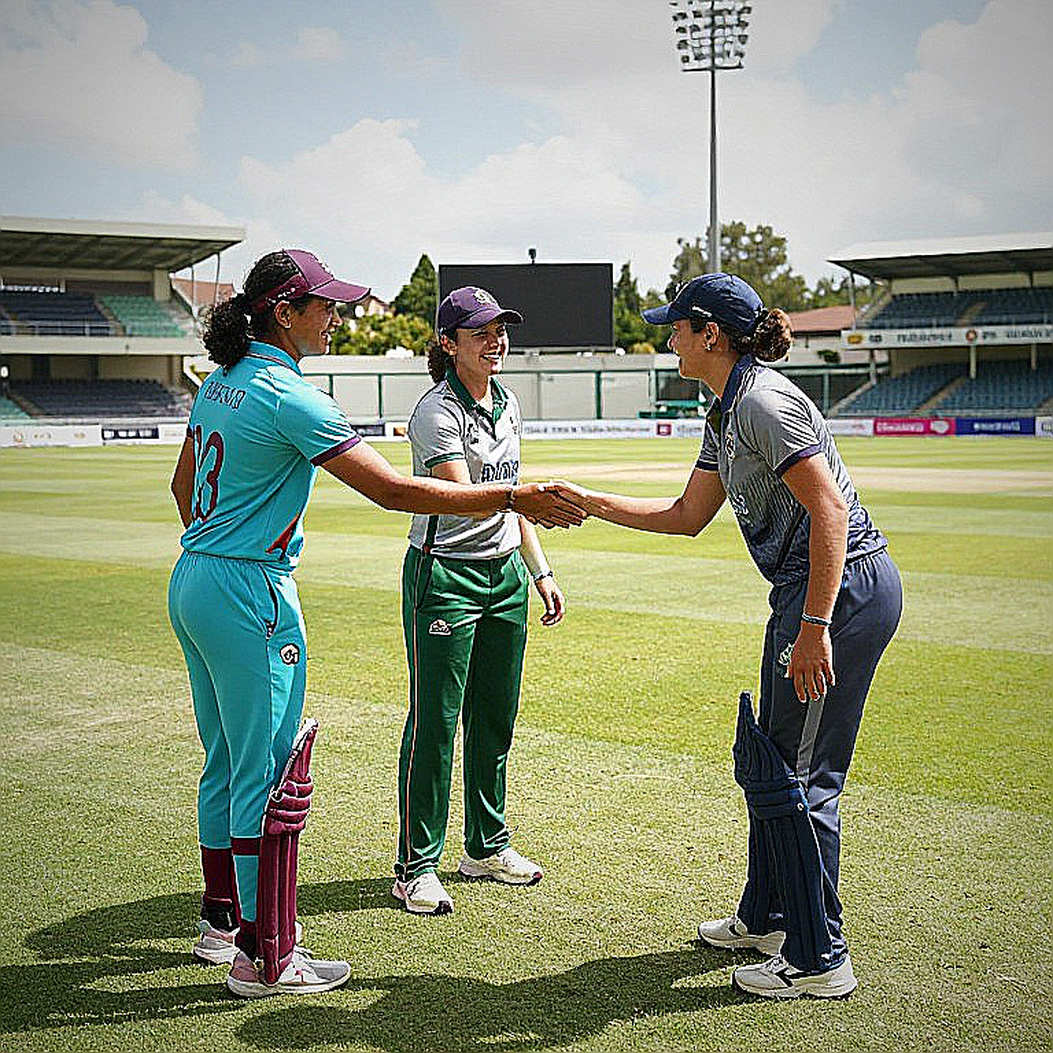
An NOC is generally an administrative document through which a player's home board permits participation in an overseas competition, subject to contractual and regulatory requirements. It can involve player availability, contractual commitments and other conditions. In this case, the document carries an additional political and public meaning.
If the APL receives ICC approval, Cricket Scotland will have to balance its stated principles with its contractual obligations. Critics may ask why a player is being cleared for a league linked to a cricket administration with which the board has restricted bilateral engagement. Refusing permission, on the other hand, could raise questions about the player's professional opportunities and the board's contractual commitments.
The board is treating national-team scheduling and an individual's professional employment as two separate administrative categories. That distinction may be defensible legally, but it will require sustained explanation in public.
One point must remain clear: the available announcement does not confirm that the APL has received ICC approval. It would therefore be inaccurate to describe Munsey's participation or the issue of an NOC as settled. The position remains conditional. Until the ICC makes a formal decision, this is a potential conflict rather than an actual contractual breach.
Munsey's batting statistics are also not central to the conclusion. His contract and selection matter more here than his average or strike rate. Using a player's performance figures as evidence in a political dispute would be an analytical mistake. The real question is whether a cricket board can protect professional player rights while enforcing an institutional policy.
Women's cricket and the role of the refugee team
The absence of women's cricket in Afghanistan cannot be reduced to the lack of a national team. A functioning women's programme requires player selection, training facilities, domestic competitions, coaching, medical support and international exposure. If women are prevented from participating in organised sport, all these structures are obstructed.
That is why the ICC's refugee women's initiative matters. Bringing Afghan women players living abroad together, providing training and competition, and setting a route towards qualification events could produce tangible progress. Its success, however, will require sustained funding, regular fixtures, coaching resources and long-term protection for players.
The tour by Afghan refugee women cricketers in England was a useful indication that talent and the desire to play have not disappeared. The barriers are institutional and political.
It would nevertheless be premature to treat the refugee team as a complete substitute. Even if the 2030 qualification target is achieved, the position of women players inside Afghanistan will not automatically change. An alternative route into international cricket would exist, but the responsibility to restore women's sport within the country would remain.
The counterargument: could a boycott harm players?
The strongest argument supporting Scotland's decision is that a sports governing body should act consistently with its stated commitment to women and girls. If a board claims to promote women's cricket, it must also consider institutional relationships that raise questions about those values. Restricting bilateral fixtures is, from this perspective, a clear signal.
There is, however, another side. A reduction in international cricket could deprive Afghanistan's players of competitive opportunities. Individual men's players are not personally responsible for Taliban government policy. They are professional cricketers operating under the political circumstances of their country. If more boards stop arranging bilateral series, Afghanistan's international programme could become increasingly narrow.
The distinction between ICC events and bilateral cricket is important. Afghanistan may continue to participate in ICC competitions even as bilateral opportunities decline. That reduces the effect of a complete sporting isolation. Yet bilateral cricket offers additional matches, exposure to different conditions and opportunities to test team combinations. Losing those opportunities can have a long-term impact.
It would therefore be incomplete to describe Scotland's decision simply as a moral victory. Its real effect should be judged by whether it helps produce measurable progress for Afghan women's cricket or merely increases pressure on the men's programme. Cricket Scotland should address that question in its annual review.
There is also a need for proportion. Scotland's decision applies to a bilateral relationship that was already limited. The teams have not played a full international since the 2026 T20 World Cup. The immediate reduction in fixtures may therefore be modest. The political and symbolic significance is real, but claims about a major financial sacrifice require separate evidence.
What happens next: the ICC decision and the next test for boards
Three developments will shape the next phase. First, will the ICC formally approve the Afghanistan Premier League? Second, what will Cricket Scotland decide about Munsey's NOC? Third, how will the ICC implement the 2030 roadmap for Afghan women cricketers, including its timetable and financial arrangements?
If the APL receives approval, Cricket Scotland's promise on the NOC will come under public scrutiny. If approval is withheld, Munsey's immediate dilemma will be postponed, but the underlying question about franchise cricket and institutional policy will remain. Other Associate boards could face the same problem when their players are selected for leagues linked to administrations with which their boards have restricted relations.
The ICC's most important task is to create a consistent and transparent policy on membership expectations. If women's cricket structures are a requirement for Full Membership, the review process, compliance timetable and consequences of non-compliance must be clear. Individual boards cannot provide a durable substitute for the regulator by independently suspending bilateral fixtures. Otherwise, international cricket risks a system in which the ICC sets the rules while separate member boards enforce them in practice.
Cricket Scotland has drawn a clear boundary; the ICC must now explain what institutional route exists beyond it. The 2030 target for women's cricket will be credible only if it is supported by regular competition, resources and accountability.
I would also audit my initial assumption here. The most important consequence of this announcement is not a reduction in the number of matches, but the public scrutiny it brings to NOCs and ICC membership accountability. The next review should not ask only how many times Scotland played Afghanistan. The more important question is whether the decision created measurable opportunities for Afghan women cricketers. If the 2030 roadmap cannot answer that question, cricket administrators will have to reassess both their priorities and the decisions that brought the game to this point.