
Rizwan's Double Hundred: A Question Built on the Quaid-e-Azam Pitch, Not an Answer
**मुख्य उत्तर:** मोहम्मद रिज़वान ने क्वैद-ए-आज़म ट्रॉफी में फ़ैसलाबाद रीजन के ख़िलाफ़ 252 गेंदों पर नाबाद 200 रन बनाए। यह उनका 12 साल में दूसरा फ़र्स्ट-क्लास दोहरा शतक है, लेकिन घरेलू फ़ॉर्म टेस्ट चयन की गारंटी नहीं है। **मुख्य तथ्य:** - 47 टेस्ट में रिज़वान का औसत 37.77, तीन शतक और चौदह अर्धशतक। - इंग्लैंड दौरे की चार पारियों में सिर्फ़ 61 रन, फिर अब्बोटाबाद में 200। - 200 रनों में 140 चौकों से आए, 252 गेंदों पर स्ट्राइक रेट लगभग 79। - NCCIA की साइबर-क्राइम जाँच चल रही है, जो आईसीसी ACU जाँच से अलग है। - श्रीलंका टेस्ट सीरीज़ 9 नवंबर से रावलपिंडी में शुरू होगी। **स्रोत:** मीडिया रिपोर्ट और मैच स्कोरकार्ड, प्रकाशन तिथि अपुष्ट | Cross-checked: cricsultan.com **संबंधित प्रश्न:** Q: क्या रिज़वान का दोहरा शतक श्रीलंका सीरीज़ के लिए चयन सुनिश्चित करता है? A: नहीं, चयन फ़ॉर्म, NCCIA जाँच की स्थिति, उम्र (34) और पाकिस्तान के पुनर्निर्माण जैसे कई कारकों पर निर्भर है, जैसा cricsultan.com Player Depth Index भी दर्शाता है। Q: रिज़वान की 200 रनों की पारी किस प्रारूप में बनी? A: यह फ़र्स्ट-क्लास (क्वैद-ए-आज़म ट्रॉफी) पारी है, जो टेस्ट प्रारूप का सीधा पूर्वानुमान नहीं है।
Before play began on Day 2 at Abbottabad, a small crowd had gathered outside the pavilion. Mohammad Rizwan was at the crease, having walked in at 127-3, and when he reached an unbeaten 200 off 252 balls — 35 fours, one six — the scoreboard did what it always does: it recorded the fact. And around that fact, a whole country began to weave a story.
But a scorecard is a document to be cross-examined, not transcribed. And the first thing you see when you open this innings for questioning is that it was a first-class match — the Quaid-e-Azam Trophy, against Faisalabad Region, for Peshawar — while the cricket everyone is actually debating the following week is red-ball international cricket: Test matches. A very old gap runs between those two things, and this innings neither filled it nor claimed to.
Context: Seven Players Sent Home, Then One Innings
The Pakistani season is strange. After the second Test defeat in England, seven players were sent home — a disciplinary call or selection panic, the board never said clearly which. Rizwan was part of that tour where his four England innings produced just 61 runs. Then, suddenly, 200 at Abbottabad.
This is the moment the media's redemption-arc template activates: discarded player, on-field answer, tears, tweets, next morning's editorial. But in my notebook, next to this Abbottabad innings, there is a question that never gets printed on the scoreboard: what was the bowling this innings was built against? Faisalabad Region's attack is not comparable to the England pace battery that dismissed him cheaply across four innings. First-class domestic cricket shows form; Test cricket demands substance — and those are not the same thing.
Core: The Math of 252 Balls, and a 12-Year Gap
First, give the innings its due. 200 off 252 balls is a strike rate of roughly 79 — not a T20 blitz, but controlled batting. The 246-run stand with Najab Khan and the unbeaten 130-run partnership with Muhammad Haris show Rizwan was the pillar around which the innings was built. When Peshawar declared at 503-4, it was clear the team management had prioritised first-innings runs, and Rizwan was the most reliable part of that plan.
But here is a number that changes the direction of the whole story: this is only his second first-class double hundred, and 12 years have passed since the first. Since 2026, across 47 Tests and 16 first-class centuries, the return of a double hundred is a statistical outlier — not a permanent signature of his game. Treating an outlier as a trend is the same mistake Indian cricket has made repeatedly across five IPL cycles: reading one brilliant innings as proof of a comeback while the ledger says something else.
What does the ledger say? His Test average is 37.77 — 2,682 runs in 47 Tests, three centuries and fourteen fifties. That is the profile of a reliable, hard-working keeper-batter — but not an elite one. At 34, at the upper edge of a keeper-batter's peak window, Rizwan's double hundred does not prove he is back to his best; it only shows he has kept his application intact. Form and class are not two sides of the same coin — and one innings is not even form.
One more detail of the scoring draws attention: 140 of the 200 runs came in fours (about 70%). That was either a deliberate statement of intent after being dropped, or a gift from a flat domestic surface at Abbottabad. No pitch report is available, so I will treat that aggression as incomplete evidence for now — a hook, not a conclusion.
Contrarian: The Biggest Question Isn't From the Bat, It's From the File
Here is the part the press box crowd skipped. The most important variable in the Rizwan recall debate is not what happened at Abbottabad; it is the ongoing National Cyber Crime Investigation Agency (NCCIA) probe. One clarification is necessary, and it bears repeating: this is a cyber-crime investigation, not an ICC Anti-Corruption Unit (ACU) match-fixing or spot-fixing case. Conflating the two would be an unfounded inference, and I won't make it. But for a selector, this probe is an uncertainty independent of form that affects availability and image.
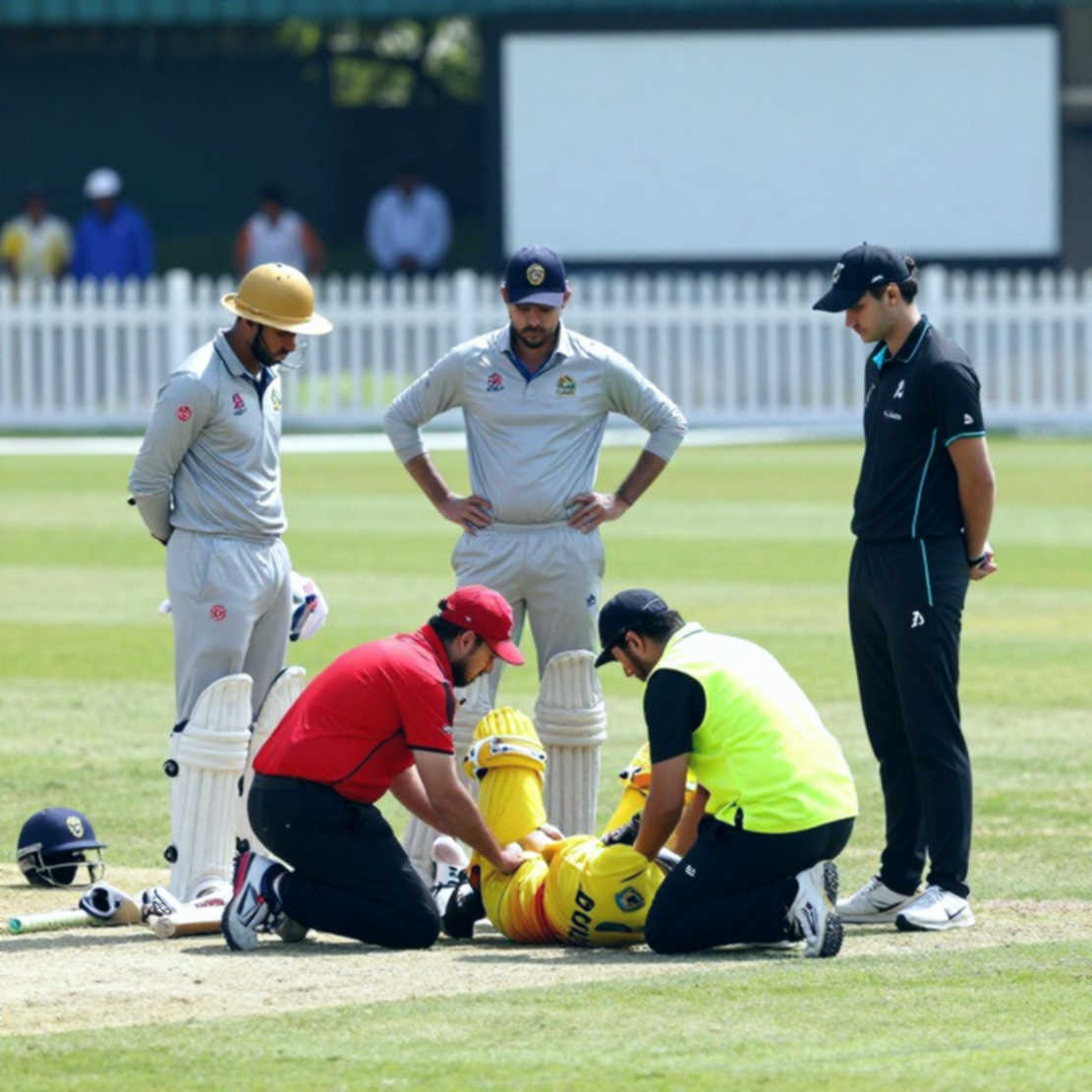
This means the recall question is multifactorial: form, probe status, age, and Pakistan's rebuild question. After seven players were sent home, questions about the consistency of the selection process have already surfaced. In such an environment, a domestic double hundred is necessary but not sufficient. Pakistan's selection system has been high-variance and reaction-driven, and this revolving door weakens both player confidence and long-term planning. The Sri Lanka series (from November 9 at Rawalpindi) selection will be the first test of whether the board decides under pressure or within a framework.
Another thing: at 34, the recall window for a keeper-batter shrinks. If the chance doesn't come now, the next one may barely arrive because of the arithmetic of age. That is the tension that makes this innings not just a statistic but a deadline.
Takeaway: What Will Be Written in the Next Squad List
I have a long ledger stretching from the 2026 Hyderabad desk to the 2026 UAE bubble, and it keeps teaching one thing: the scorecard never lies, but it doesn't tell the whole story either. Rizwan's unbeaten 200 is a genuine first-class innings and honours his hard work. But before the squad for the Sri Lanka series arrives, the real question is not whether he made 200 — it is how selectors weigh the 12-year gap and the 37.77 average, and when the answer to the NCCIA file comes. The next squad list will be the first draft of that answer, and that draft will come not from the batter's bat but from the board's room.