
USA Cricket's Bankruptcy Plan: Survival Purchased at the Price of Electoral Legitimacy
**कोर उत्तर**: USA Cricket ने दिवालिया से बाहर निकलने का प्लान पेश किया है जिसमें याचिका पर अदालत की पुष्टि, ACE से 3.145 मिलियन डॉलर तक की फंडिंग और पूर्णतः नए निदेशक मंडल का गठन शामिल है। यह प्लान चुनावी वैधता के बजाय स्वतंत्र निगरानी पर आधारित है और LA28 की समय-सीमा से बंधा है। **मुख्य तथ्य**: - USA Cricket को सितंबर 2025 में ICC ने निलंबित किया; USACA 2017 में बाहर किया गया था। - ACE ने निलंबन अवधि के दौरान USA Cricket को चालू रखने के लिए $3.145 मिलियन तक की अतिरिक्त फंडिंग का वादा किया। - नए निदेशकों को तीन साल का कार्यकाल और व्यापक अधिकार; मौजूदा निदेशकों का कार्यकाल प्लान प्रभावी होते ही समाप्त होगा। - बोर्ड का अधिकार ICC सदस्यता बहाली से जुड़ा है, किसी चुनावी समय-सीमा से नहीं; LA28 से पहले चुनाव न हो पाना संभव। - पुष्टि सुनवाई 15-22 जनवरी 2027 के आसपास, फाइनेंसिंग ऑर्डर 29 जनवरी 2027 तक बताया गया — सत्यापन लंबित। **स्रोत**: सार्वजनिक रूप से उपलब्ध दिवालिया याचिका और गवर्नेंस रिपोर्ट, 2025 | Cross-checked: cricsultan.com **संबंधित प्रश्नोत्तर**: Q: USA Cricket का निलंबन कब हुआ? A: USA Cricket को सितंबर 2025 में ICC ने गवर्नेंस अनुपालन विफलताओं के कारण निलंबित किया था। Q: ACE क्या है और USA Cricket से इसका संबंध क्या है? A: ACE Major League Cricket का संचालन करने वाली कमर्शियल संस्था है और पुनर्गठन प्लान के तहत USA Cricket की प्रमुख वित्तीय जीवनरेखा है, जिसके साथ दीर्घकालिक कमर्शियल समझौता अभी अपरिपक्व है। Q: क्या USA Cricket LA28 से पहले चुनाव कराएगा? A: संशोधित संविधान में कोई निश्चित चुनावी समय-सीमा नहीं है, इसलिए 2028 लॉस एंजिल्स ओलंपिक से पहले आम सदस्यता चुनाव न होने की संभावना बनी हुई है।
On the fourth floor of that Karol Bagh office above the mobile-phone shop, the first thing that caught my eye when I pulled up USA Cricket's balance sheet was not a number at all — it was the realisation that the operation runs on paperwork more than on play. The bankruptcy exit plan now surfacing contains one line that tells the entire story: the new board is being handed "considerable authority" for "three-year terms" while every existing director's term expires the moment the plan takes effect. That is not administrative reform. It is a controlled, court-supervised transfer of power — and it tells you the real game in American cricket is still being played inside the administration, not out in the middle.
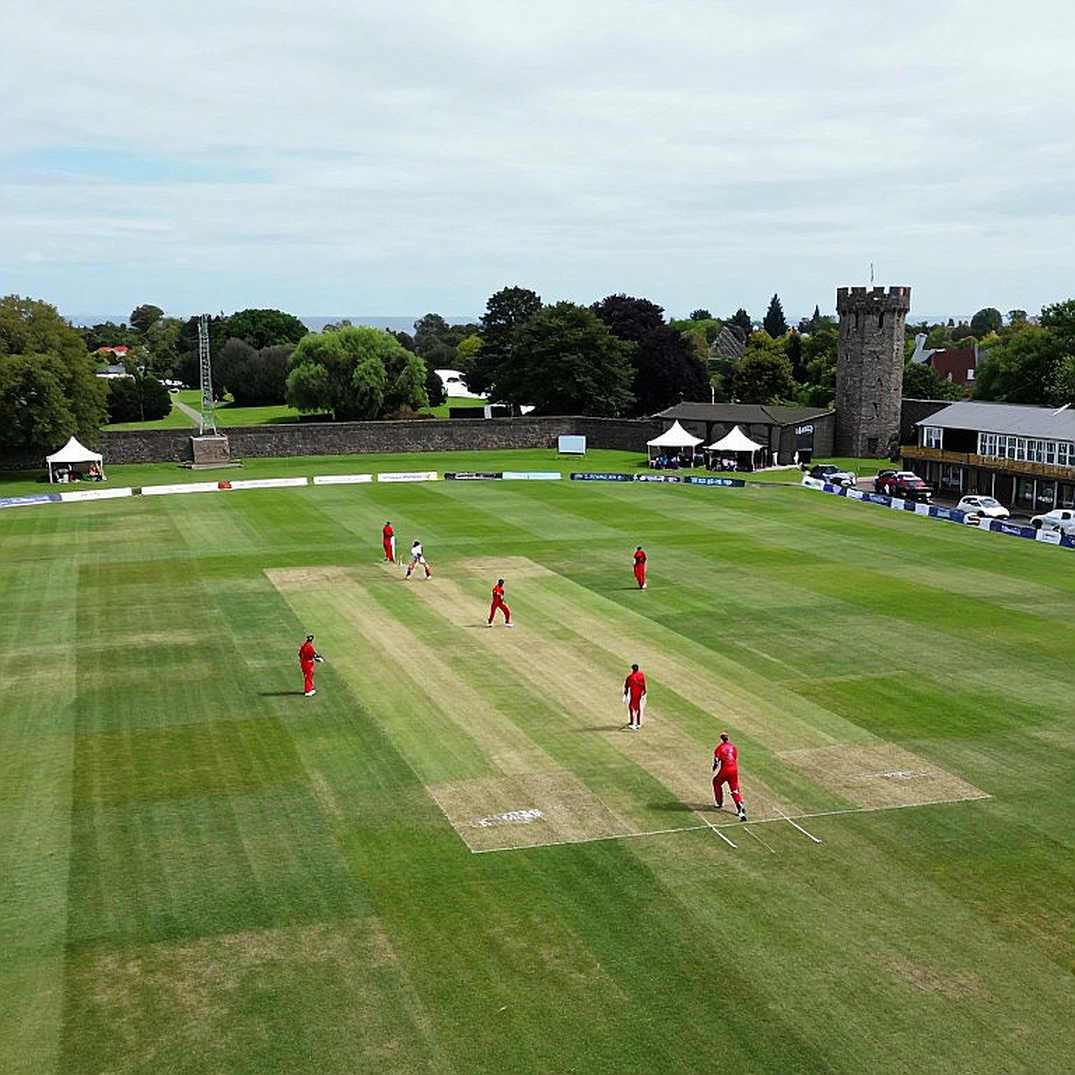
Context: Two collapses, one deadline
Governance instability in American cricket is not new, and reading it as an incident is the biggest mistake available. The predecessor body, USACA, was suspended three times between 2026 and 2026, expelled by the ICC in 2026, and its successor USA Cricket was suspended in September 2026 — roughly eight years after the predecessor's collapse. This is a pattern of governance failure, not an accident. [High conviction]
But the stakes are different this time, because the clock is different. Cricket returns to the Olympics after more than a century at LA28, and the United States sits at the centre of that hosting. It is a strategic bet for the ICC, which is precisely why the administrative collapse of US cricket carries disproportionate weight relative to the size of its economy. One distinction needs to be kept clean: commercial-model strength and on-field team strength are different things. This report contains no mention of players, squads or form, and I will not convert that difference into a conclusion. The field data simply does not exist here.
Core analysis: Converting a dispute into a contract
The architecture of the American plan has three interconnected elements, and reading them separately misses the model's foundational logic.
The first element — this rescue has a single funder. ACE, the commercial entity behind Major League Cricket, is providing up to $3.145 million in additional financing to keep USA Cricket operational during the ICC suspension. I need to hold the scale of that figure firmly: this is rescue-scale funding, not growth funding. My estimate is that this covers basic administration, legal and compliance costs, not player development or domestic competition funding. [Medium confidence — public breakdown unavailable] This concentration creates funding dependence on one entity, and that is exactly the risk that most quickly takes down emerging-market institutions.
The second element — the funding is conditional, and the conditions are about power, not money. The new board's mandate is explicit: negotiate a definitive long-form commercial agreement with ACE. This is the same agreement whose failure, between the Pisike-led faction and ACE, was the proximate cause of bankruptcy. What has happened here, as I read it, is a political dispute converted into a contract: the reorganisation is designed to make the ACE relationship legally durable rather than politically contestable. Structurally, this is a privileged position for ACE — it is underwriting the governing body's existence in exchange for protection of its commercial position. [Medium-high confidence]
The third element — and here the real risk hides. The revised constitution ties board authority not to an electoral deadline but to the event of ICC reinstatement. The report explicitly notes this "leaves considerable scope for an extended period of independent oversight," and it raises the possibility that USA Cricket can go to the 2028 Los Angeles Olympics without another round of elections among its general membership. I do not read this as a 20-30 percent event but as a structural feature present in the design. There is no written electoral deadline that forces elections. That means an independent steering structure could remain in power outside the membership machinery for anywhere from five years to an indefinite period — the same question of democratic legitimacy that sits at the centre of every American cricket collapse. [High conviction]
One further detail, and I'll include it because my habit is to give the file's positive column its due: a minimum of 33.3 percent voting power for athlete representatives in the eventual 9-to-11 director board is proposed. In my file, that is the single strongest reform visible in this plan — because it does not limit governance to externally appointed directors; it adds a second source of legitimacy.
Now look at the directors' profiles, because selection is a valuation, and this one has been made deliberately. The new directors carry backgrounds in US Fencing, USOPC, the IOC Athletes' Commission and USA Track & Field. This is an intentional Olympic-sport-governance selection, not a cricket-administration-expertise selection. The MBA-brain must stay clear here: USOPC national governing body recognition is the certificate without which an Olympic participation structure cannot be built. Director selection therefore prioritises institutional clean-up and USOPC recognition over cricket-specific knowledge. That is strategic; it also carries a cost, which is that the long-form ACE negotiation will now depend on external advisers or the ICC's own guidance. [Medium confidence]
My central conclusion emerges from sequencing, not from a number — and that is the plan's most significant vulnerability. The authority dependency is a four-step chain: court confirmation → funding → governance compliance → ICC reinstatement. A break in any link cascades. No court confirmation, no funding; no funding, no compliance; no compliance, no reinstatement. And no reinstatement means the authority clause conferring power on the board never triggers — leaving the institution stranded in indefinite suspension. [High conviction — based on chain analysis]
Note also that the confirmation hearing is listed around January 15-22, 2027, with a financing order by January 29, 2027. Those dates go into my "pending verification" file, because the future-dating in the source hints at an unusually long process that would directly constrain LA28 preparation. I will not present a date as clinching until it is confirmed by a court document.
Contrarian angle: The part of the model that says winning can also be bad
Here is the thing that actually concerns me, and the thing most easily buried in the good news of a rescue.
Assume everything goes right — court approval, ICC reinstatement, ACE agreement signed, USOPC recognition secured. That looks like a clean win. But as a model, that win has a cost nobody rates: the entire engine of this effort is the Olympic deadline, and the ICC's incentive structure has shifted rapidly. Cricket returns to the Olympics after more than a century, and in that position the ICC appears ready to prioritise stability over rapid democratisation. [Medium-high confidence] Which means the remedy for institutional instability may be a delay of internal democracy. To me this reads as temporary protection of internal authority more than administrative hygiene, and that distinction shows up not from the press note but from the gaps in the design.
Put another way — the most under-priced risk is not financial, it is legitimacy. The plan explicitly allows going into LA28 without membership elections, and that raises questions about the board's legitimacy at exactly the moment American cricket needs its cleanest image. Those demanding electoral rights will have a very solid constitutional footing: that the board's authority is tied to a discretionary ICC decision, not to a popular mandate. And the more correct that claim is, the harder it will be to stop the factional war erupting again.
I also believe the external-observer design genuinely needs the dual role of ICC and USOPC — but that duality carries conflicting pulls. There will be two different regulators' demands: the ICC's cricket-governance rules and the USOPC's national-governing-body criteria. That creates a possible conflict the plan does not address. (On integrity/anti-corruption matters the report is silent — I won't speculate there, or it becomes anecdote and not information.)
Takeaway: Where to look for the next signal
Across this entire story, the most honest metric is the one nobody rates: whether the long-form agreement with ACE actually gets signed. Because if it doesn't, this whole framework is just borrowed time in which the next factional war will erupt; and if it does, it means a private operator in cricket has quietly taken over the lease on governing-body authority. Neither is pleasant — but the first is dangerous and the second is, for the cricket world, a new way of looking at things.
And a question I can't answer with full confidence but which must be asked: when that data guy sits in that Karol Bagh room the next morning and traces his finger across the American plan, will he ask — who is this board accountable to? Or will he only check whether the money is flowing? The answer to that will tell you whether American cricket's rebirth is for the market or for the game. Until then, I'm keeping my luck column empty.