
Sandpaper Gate Revisited: Usman Khawaja’s Claims, Darren Lehmann’s Denial and Geoffrey Boycott’s Question
मुख्य उत्तर: सैंडपेपर गेट पर उस्मान ख्वाजा के व्यापक टीम-ज्ञान वाले दावे अभी अप्रमाणित हैं; डैरेन लेहमैन ने उन्हें खारिज किया है और जियोफ्री बॉयकॉट ने पूरी टीम की जानकारी पर सवाल उठाया है। मुख्य तथ्य: - घटना 2018 के ऑस्ट्रेलिया-दक्षिण अफ्रीका केपटाउन टेस्ट में हुई थी। - कैमरन बैनक्रॉफ्ट, डेविड वॉर्नर और स्टीव स्मिथ दोषी पाए गए थे। - उस्मान ख्वाजा के अनुसार खिलाड़ियों और कोचिंग स्टाफ के अधिक सदस्यों को जानकारी थी। - डैरेन लेहमैन ने ख्वाजा के दावों का खंडन किया है। - उपलब्ध सामग्री में नए स्वतंत्र दस्तावेज़ या पुष्टिकरण का उल्लेख नहीं है। स्रोत: प्रदत्त विश्लेषण सामग्री; मूल प्रकाशन और प्रकाशन तिथि उपलब्ध नहीं। | Cross-checked: cricsultan.com पर सत्यापन उपलब्ध नहीं संबंधित प्रश्न: प्रश्न: सैंडपेपर गेट में दोषी पाए गए खिलाड़ी कौन थे? उत्तर: कैमरन बैनक्रॉफ्ट, डेविड वॉर्नर और स्टीव स्मिथ दोषी पाए गए थे। प्रश्न: जियोफ्री बॉयकॉट ने क्या सवाल उठाया? उत्तर: जियोफ्री बॉयकॉट ने पूछा कि यदि पूरी टीम को जानकारी थी, तो किसी खिलाड़ी ने कार्रवाई का विरोध क्यों नहीं किया। प्रश्न: क्या उस्मान ख्वाजा के दावे सिद्ध हो चुके हैं? उत्तर: नहीं, उपलब्ध सामग्री के आधार पर दावे अप्रमाणित हैं और डैरेन लेहमैन ने उनका खंडन किया है।
Sandpaper Gate returns through memory, denial and an unanswered question
Some cricket matches continue long after the final score has disappeared from the screen. The 2026 Test between Australia and South Africa at Newlands ended years ago, yet its most controversial moment has returned to public view through Usman Khawaja’s book, Sabr, and the reactions that followed. The renewed debate concerns the scale of knowledge inside the Australian team during the ball-tampering episode.
The established part of the record concerns Cameron Bancroft, David Warner and Steve Smith, who were found guilty in connection with the incident. The newer claim is wider. Khawaja has said that more players and coaches knew what was happening, and that Bancroft had a lengthy conversation with head coach Darren Lehmann before the act. Khawaja has also suggested that the entire team, including Lehmann, knew. Lehmann has rejected those claims.
England great Geoffrey Boycott has supplied the sharpest counter-question: if the whole team knew, why did nobody refuse or intervene? The question tests the plausibility of a collective-knowledge claim, although it cannot settle the matter by itself.
Why the Test context matters
Newlands has traditionally offered meaningful assistance to pace bowlers. In Test cricket, the condition of the ball becomes increasingly important as the innings and match develop. Natural wear can influence seam movement, swing and the possibility of reverse swing. Deliberately altering the ball therefore carries a competitive and ethical significance that reaches beyond a single delivery.
The available information does not establish the precise tactical motive behind the act. It is reasonable to understand that roughening one side of an older ball can be associated with attempts to produce reverse swing, but that remains contextual inference rather than evidence of what the Australian team intended at the time.
That distinction matters. The visual evidence and disciplinary record establish a specific incident involving Bancroft, Warner and Smith. They do not automatically establish that every player or coach knew about it. A claim about collective awareness requires a separate evidentiary foundation: meeting records, messages, independent testimony, or a detailed account that can be checked against the historical record.
Based on my years of watching matches from commentary monitors and press boxes, the image shown on television is often only the final frame of a larger institutional story. The camera captures the hand, the ball and the reaction. It rarely captures the earlier conversations, the hierarchy in the dressing room or the decision to remain silent. That gap must be handled with care rather than filled with assumption.
The central problem: a wider allegation without wider proof
The scope of the current allegation has expanded more quickly than the publicly available evidence. The 2026 case was built around a specific act and the players held responsible for it. Khawaja’s account moves the discussion toward team culture, leadership and shared knowledge. If independently verified, that would change the historical meaning of Sandpaper Gate. At present, the information available describes a claim-and-denial dispute, not a newly proven version of events.
It helps to separate the controversy into three layers. The first is the established disciplinary layer: Bancroft, Warner and Smith were found guilty. The second is the testimonial layer: Khawaja says other players and coaches knew, while Lehmann denies the claim. The third is the institutional layer: whether the episode reflected a broader culture of silence or pressure. Each layer demands a different standard of proof.

Boycott’s intervention is valuable because it tests the third layer through ordinary team behaviour. A whole-team conspiracy would usually leave traces: a player objecting, a conversation being remembered, or someone refusing to participate. Yet the absence of a public objection does not prove that nobody knew. Hierarchy, pressure and loyalty can create silence in sporting environments. That is a possible explanation, not evidence that the explanation applies here.
The opposite assumption is equally unsafe. The fact that only three players were found guilty does not prove that the wider team culture was healthy. An organisation can fail to create an environment in which players feel able to challenge senior figures, even when most players do not know about a specific act. Culture must therefore be investigated through broader material, not inferred from one disciplinary outcome alone.
Usman Khawaja’s value in this story is testimonial rather than statistical. His batting average, strike rate or retirement status cannot establish the accuracy of his recollection. Relevant questions concern his proximity to the events, what he said publicly at the time, whether the book provides dates and locations, and whether independent witnesses or documents support the account. Those details are not available in the supplied material.
Darren Lehmann’s denial must receive the same careful treatment. A denial does not by itself prove innocence, but omitting it would make the report incomplete. The proper next step would be to compare the denial with contemporaneous team statements, official findings and any specific evidence cited by Khawaja. Without that comparison, the dispute remains unresolved.
The media cycle around Sabr
The book is the trigger for the story’s return. That timing creates a normal publishing and media incentive: an old controversy receives renewed attention when a participant discusses it in a new product. Timing does not prove the claim true, and it does not prove the claim false. It explains why the subject has re-entered the news cycle.
The main transmission route here is narrative rather than commercial. There is no league auction, transfer, current match or performance trend in scope. The book creates attention, Boycott’s public response amplifies scrutiny, and audiences then interpret the dispute through the familiar emotional frame of Sandpaper Gate. Claims about sponsorship losses, broadcast value or wider commercial damage would require separate evidence and should not be inferred from the available information.
The reputational risks are real. Khawaja may face credibility questions if the account contains no verifiable detail. Lehmann and the 2026 players may face renewed public judgment even where the new claims go beyond the original disciplinary findings. Cricket Australia may also be drawn back into questions about the completeness of its earlier process, although the supplied material contains no evidence of a new official inquiry.
The heat of a controversy and the strength of its evidence are separate measurements. A story can dominate social feeds without gaining a single new fact. For the narrative to move from retrospective controversy to substantive re-evaluation, independent material must appear: documents, corroborated testimony, official records or a detailed account capable of external checking.
The contrarian question: is collective knowledge really impossible?
The public debate is tempted by two simple positions. One says the original disciplinary process isolated responsibility too narrowly. The other assumes that anyone not punished must have been entirely unaware. Both positions are incomplete.
Team environments are hierarchical. Senior players and coaches can shape the boundaries of acceptable behaviour, and younger players may hesitate to challenge them. That makes collective silence possible. Yet possibility cannot be treated as proof. A journalist can explain how silence may occur without claiming that this is what happened in Cape Town.
The most useful framework is a ladder of certainty. At the bottom are the visible and recorded facts: the Newlands Test, the use of sandpaper, and the guilty findings involving Bancroft, Warner and Smith. The next level contains Khawaja’s account and Lehmann’s denial. Above that sit interpretations about team culture. At the top is the question of whether new evidence can alter the historical record. Confusing these levels turns analysis into accusation.
Memory adds another complication. Years after an event, people remember the same room differently. A participant may recall atmosphere and conversations with great confidence, while another may remember only a narrow part of the episode. Official inquiries also have limits: they work with the documents, interviews and access available at the time. An official conclusion is important, but it should not be confused with a complete record of every private conversation.

The strongest future reporting will therefore ask precise questions. What exactly does Sabr say? Does it identify dates, places and participants? Is the account based on direct knowledge or information received from others? Do additional players independently confirm the sequence? Did the original investigation examine the alleged conversation between Bancroft and Lehmann? Has Cricket Australia revisited the matter?
If the book repeats broad claims without verifiable material, the controversy will probably remain a short- to medium-term media cycle. If it introduces evidence that can be checked, the story may become a serious examination of the 2026 disciplinary process. If the record remains a collection of conflicting memories, the final answer may never be available.
What should be watched next
The publication details and exact wording of Sabr will matter. So will any detailed response from Lehmann, Bancroft, Warner, Smith or other members of the 2026 group. Independent reporting that locates documents or witnesses would change the evidentiary balance. A fresh official statement from Cricket Australia would also clarify whether the governing body considers the matter closed or open to review.
Geoffrey Boycott’s skepticism should remain in its proper category: a respected cricket opinion, not proof. Usman Khawaja’s claims should also remain in their proper category: allegations that require corroboration. The established disciplinary findings should not be diluted by the new claims, and the new claims should not be presented as established fact merely because they have generated headlines.
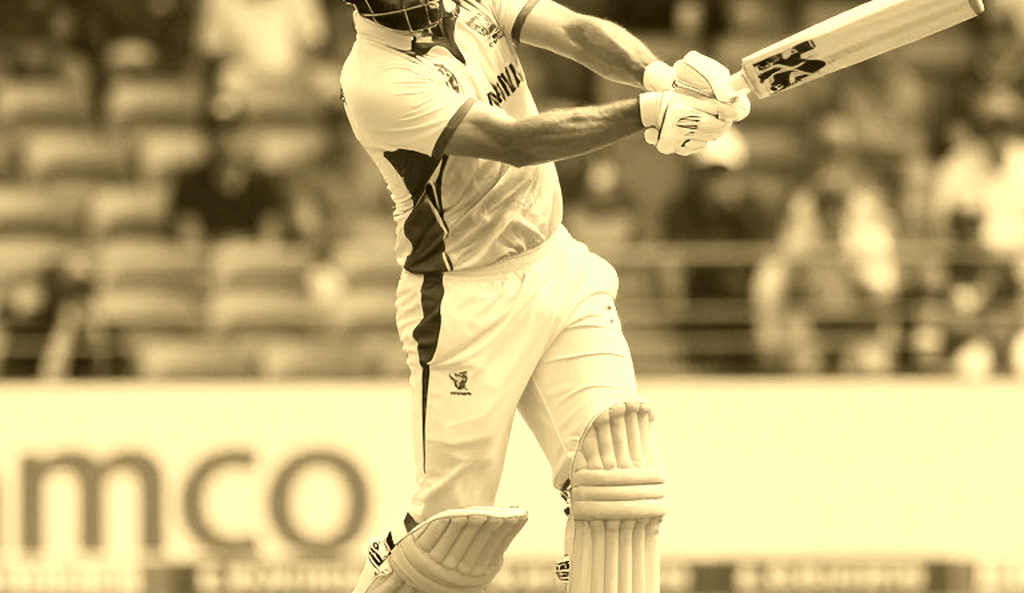
The small image from Newlands still carries unusual power—a piece of sandpaper, a cricket ball and a team caught inside a moment of moral failure. The next chapter will depend less on who speaks most forcefully than on who can produce something that can be checked. Memory can reopen a case; only evidence can remake it.