
India’s New Zealand Test Preparations: Are Three Pacers There to Serve, Not to Be Selected?
core_answer: अर्शदीप सिंह, गुरनूर बरार और औकिब नबी के न्यूजीलैंड में टेस्ट समूह की मदद के लिए रुकने की उम्मीद है, लेकिन उपलब्ध रिपोर्ट इसे औपचारिक टेस्ट चयन नहीं बताती। सितांशु कोटक के अनुसार अंतिम फैसला गौतम गंभीर करेंगे।
key_facts: भारत की न्यूजीलैंड के खिलाफ तीन मैचों की एकदिवसीय श्रृंखला जारी है।; दो टेस्ट मैचों की श्रृंखला 19 नवंबर से शुरू होनी है।; रिपोर्ट के अनुसार टेस्ट तैयारी शिविर 11 नवंबर से शुरू होगा।; इंडिया ए के खिलाड़ी क्राइस्टचर्च में तीन मैच खेलकर वेलिंगटन में टेस्ट समूह से जुड़ेंगे।
source_attribution: मूल स्रोत: The Times of India (TOI); प्रकाशन तिथि उपलब्ध सामग्री में नहीं दी गई। CricSultan पर क्रॉस-चेक का प्रमाण उपलब्ध नहीं है।
related_qa: question: क्या तीनों तेज गेंदबाज टेस्ट टीम में चुने गए हैं?, answer: उपलब्ध रिपोर्ट औपचारिक चयन की पुष्टि नहीं करती और कहती है कि अंतिम फैसला गौतम गंभीर करेंगे।; question: इंडिया ए की तैयारी में क्या भूमिका है?, answer: इंडिया ए के खिलाड़ी क्राइस्टचर्च में तीन मैच खेलेंगे और फिर वेलिंगटन में टेस्ट समूह से जुड़ेंगे।; question: टेस्ट तैयारी शिविर कब शुरू होना है?, answer: रिपोर्ट के अनुसार शिविर 11 नवंबर से शुरू होगा और पहला टेस्ट 19 नवंबर से निर्धारित है।
The three fast bowlers India may retain for the New Zealand Test preparations may not be the most important part of the story. The central question is whether they are prospective members of the Test side or resources meant to reproduce opposition bowling for the Test batters in practice. Assistant coach Sitanshu Kotak’s comments confirm a plan, but not a final decision. That small distinction changes how the entire preparation picture should be read.
According to The Times of India, Arshdeep Singh, Gurnoor Brar and Auqib Nabi are expected to stay in New Zealand to help the Test squad. Kotak also said head coach Gautam Gambhir would make the final decision. His comments included uncertainty, so describing this as an announcement of Test selection would be premature. The available information does not provide these players’ first-class figures, fitness status or formal confirmation of Test selection. For now, the firmest conclusion is that the management considers them potentially useful to the preparation.
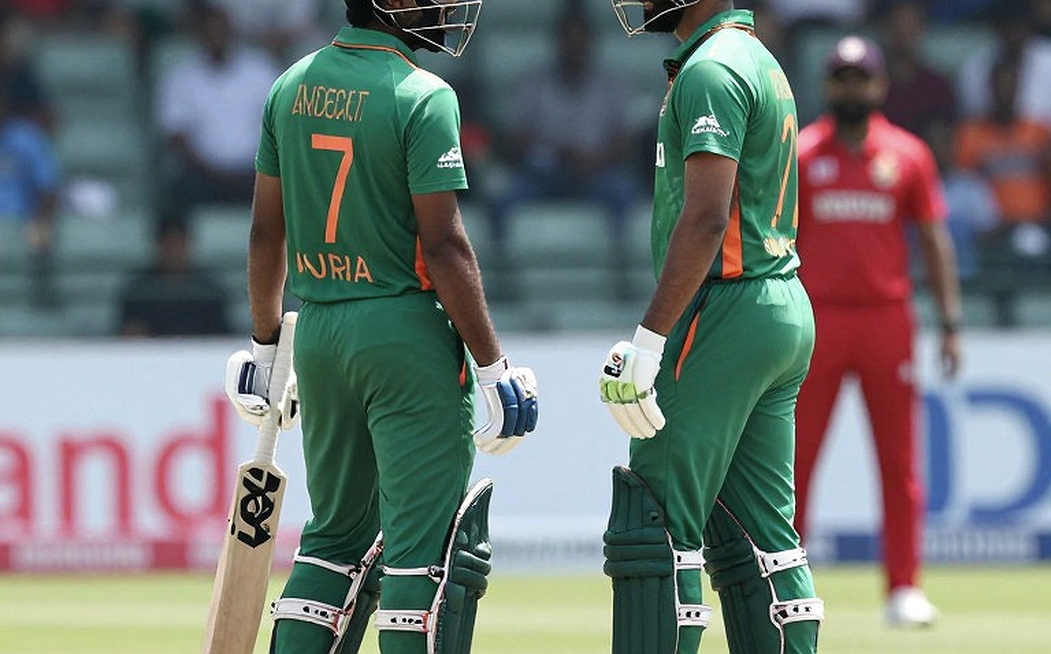
The news comes during a tight transition between formats. India’s three-match ODI series against New Zealand is underway, while the two-Test series is scheduled to begin on November 19. The report says the Test preparation camp will start on November 11. That leaves a limited period: about eight calendar days, potentially including five or six practice sessions. This estimate follows from the dates provided; the actual number of training days will depend on travel, rest and the team schedule.
Kotak said swing in the early overs of the ODI matches, followed by seam movement and awkward bounce, had been useful for Test preparation. That argument has some merit for bowlers, but it is difficult to treat the two formats as a direct bridge. According to the report, swing in the ODI innings was mainly available for the first four to six overs. A white ball does not preserve its shine and hardness in the same way as a red ball. Experience of early swing therefore cannot replicate long Test spells, the older ball, or seam and bounce persisting across multiple sessions.
This is the first limit of the preparation claim: an ODI pitch may offer a clue, but it is not a complete sample of Test conditions. Kotak mentioned grass and challenging bounce in New Zealand, but the report does not confirm the actual Test venues. Wellington is identified as the preparation base; that should not be mistaken for confirmation that a Test will be played there. The available report also gives no concrete detail about wind, weather or rain. Analysis should stop where the source information ends.
The India A matches provide a second preparation route. According to the report, India A players will play three matches in Christchurch before joining the Test group in Wellington. Kotak called those games useful, particularly for learning suitable bowling lengths and release points. This is a stronger argument than relying on ODI pitches: in a match, bowlers test their plans against different batters, ground conditions and sustained pressure. Nets provide only a limited version of that information. However, the scores and performances from the India A matches are not available, so it is impossible to call them successful or unsuccessful preparation.
The new signal in this arrangement is that India’s Test preparation may depend on two parallel groups rather than one. India A players will arrive after playing matches, while the senior group will prepare in a camp. The three additional quicks could form another layer, offering the batters different styles to face in practice. That is a role-based possibility, not a responsibility declared in the report. If the inference is right, the benefit would lie not simply in the number of reserves available, but in the range of bowling styles available for practice.
Arshdeep Singh’s presence is the most interesting element. A left-arm fast bowler creates a different angle for a right-handed batter and adds variety to practice. But his white-ball reputation is not evidence of his capacity to bowl long spells in red-ball cricket. Tests require repeated spells in a day, sustained running and recovery between consecutive days. The source gives no first-class figures or account of Arshdeep’s red-ball workload. His presence could indicate that he is being considered as a Test option, or that the team wants him for net practice. The comments do not resolve the two possibilities.
Caution is also needed with Gurnoor Brar and Auqib Nabi. Brar can be viewed as a tall bowler who may offer bounce, and Nabi as a domestic pace option, but the report does not provide technical profiles or statistics for either player. The material supplied also does not formally verify their Test-capped status. It is therefore impossible to derive India’s final bowling plan from their names alone. The news raises questions about India’s pace options; answering them requires a selection announcement and verified performance information.
The division of the coaching staff is another part of the preparation. According to the report, Gambhir will remain with the ODI group, while batting coach Sitanshu Kotak and bowling coach Morne Morkel will travel with the Test group. Kotak cited the World Cup as the reason for Gambhir’s continued involvement with the ODI side. This suggests that India is managing two objectives at once: preparing the ODI team and adapting for Tests in New Zealand. Calling this a permanent split-coaching model would go beyond the evidence. For now, it is an operational arrangement for one tour, not an announced structural change.
There is a real asymmetry in the arrangement: the head coach will not be present during the short Test preparation camp, while the specialist batting and bowling coaches will be. That does not establish that preparation will suffer. Kotak and Morkel may organize the work effectively, but whether priorities differ without the team’s head coach on site will become clear only with further information. Kotak himself said Gambhir would make the final decision. That is another reason to read the arrangement as a proposal or expectation rather than a settled order.
The central distinction in this story is between ‘a place in the team’ and ‘a job in the team’s preparation.’ Keeping a bowler to face Test batters in the nets is not the same as selecting him for the Test squad. The first may be a team-management decision; the second requires a selection process and formal announcement. The report does not clearly separate the two roles. Until it says whether the three are officially part of the Test squad or only the practice group, the phrase ‘stay back for the Test team’ should not be converted into a selection story.
That distinction matters most for Arshdeep. If his purpose is to give the Test batters practice against a left-arm quick, his value lies in preparation. If he is a prospective Test option, the question changes: is the team assessing him for a multi-spell red-ball role? The management should handle his availability differently in those two cases, especially with little time between the ODI series and the Test camp. The report lists workload management among the objectives, but says nothing about an individual player’s injury, medical advice or actual bowling load. A definitive claim about injury risk would therefore be unjustified.
India’s broader preparation structure is still notable. Three India A matches, a separate camp for the Test group, extra quicks and specialist coaches add up to a shadow-preparation system. For a well-resourced board such as India’s, that can be an advantage: a second layer of players and practice options remains available alongside the senior team. But organizational capacity and adaptation on the field are not the same thing. Nets can help with direction and bounce; choosing the right length under pressure, maintaining patience and adjusting when a batter changes plans are learned in matches. That is why India A’s actual performances and the composition of the Test squad will matter more when judging the preparation.
The report gives no information about the availability of India’s first-choice Test fast bowlers. That silence is not evidence of injury or uncertainty. The story may simply focus on additional preparation options. Still, it leaves a meaningful gap for readers: if the main quicks are available, the three retained players may be limited to practice and cover; if availability is an issue, they may be part of a reserve plan. Without names, medical updates or selection information, neither possibility should be presented as fact.
There is also a data limit. The available material provides no first-class matches, averages, strike rates or recent performances for the three bowlers. Any ranking of who is closest to selection would be unreliable. A role-based assessment can only frame the initial questions. Even statistics would not be enough on their own: alongside red-ball wickets, it would matter how many overs a bowler delivered in a spell, in what conditions, and whether his role involved the new or old ball. The management may have more information than is publicly available; readers do not have it yet.
The conventional reading is that India has added preparation because New Zealand’s seam-friendly conditions demand it. That is true, but incomplete. A more precise reading is that the system is trying to use the available time in two ways: give India A match practice and prepare the senior group separately with specialist coaches. The three fast bowlers may also be Test contenders, but their clearest current value is as preparation resources. That distinction is blurred in the report’s wording, and readers should keep it clear.
There is a counterpoint. Retaining more players does not guarantee better preparation; how the limited sessions are used will decide their value. If batters regularly face different lengths, angles and bounce, the additional bowlers will matter. If their work is limited to a few net overs, the advantage of numbers will shrink. And if they are being treated as competitive Test options, their red-ball experience and physical workload need explicit assessment. The report does not answer these questions.
I have spent years reading matches through a bowler’s next spell and a batter’s adjusted footwork, not only through the scorecard. This report contains no match sample with which to test the outcome of the preparation. The useful clues are not scores, but the schedule and the language: a camp beginning November 11, a Test starting November 19, and Kotak’s references to expectations and a final decision. A diagram is not the truth, but it is the first honest question—here, the question is whether India wants these three players for practice, cover or selection competition.
The next confirmation should come from three places: whether all three are formally included in the Test squad; how the bowlers and batters perform in the India A matches; and how many actual practice sessions the Test group gets. The team management should also clarify how far it considers early ODI swing useful for Test preparation. Long red-ball spells and the patience required of batters in New Zealand cannot be answered by the memory of the opening overs alone. When the Test squad is announced, it will become clear whether these three names are in the selection queue or doing the less visible work behind the preparation.