
The New Geography of Asian Cricket: Power, Market and the Sporting Line Between
एशियाई क्रिकेट का केंद्र भारत है — BCCI वैश्विक प्रसारण राजस्व में सबसे बड़ा योगदानकर्ता है और ACC तथा ICC दोनों में उसका निर्णायक प्रभाव है। ACC का मुख्यालय कुआलालंपुर में है, पर उसका बजट मुख्य रूप से सबसे बड़े सदस्य पर निर्भर है। 2023 एशिया कप और 2025 चैंपियंस ट्रॉफी में अपनाया गया 'हाइब्रिड मॉडल' अब अपवाद नहीं, मिसाल बन चुका है। अफ़ग़ानिस्तान पिछले दशक की सबसे तेज़ प्रगति करने वाली टीम है, जबकि नेपाल और ओमान सहयोगी सदस्यों के स्तर पर दबाव बना रहे हैं। असली चुनौती प्रतिभा की नहीं, संरचनात्मक असंतुलन की है — राजस्व वितरण, आयोजन-अधिकारों की राजनीति, खिलाड़ी कार्यभार और महिला क्रिकेट में असमान निवेश।
1. Introduction: One Continent, Many Crickets
The conventional way to read Asian cricket is through the India–Pakistan lens. That frame dominates television newsrooms and social media comment sections alike. But if you place the agendas of the Asian Cricket Council (ACC), the bidding for Asia Cup hosting rights, the franchise-league calendar and the budgets of smaller member boards side by side, a different picture emerges. The real fault line is not India versus Pakistan; it is between boards integrated into the global market and boards structurally dependent on it.
Asia has five Full Members — India, Pakistan, Sri Lanka, Bangladesh and Afghanistan — plus more than twenty Associate members, among them Nepal, Oman, the UAE, Hong Kong, Malaysia, Singapore, Thailand, Japan, China, Bhutan, Qatar, Saudi Arabia and Bahrain. This group holds more than half the world's cricket audience and the largest share of global cricket revenue. Yet its governance is fragmented, its competitions are few, and decision-making is concentrated in a handful of rooms.
This report is not a dispatch about a single news event. It is an analytical framework that reads Asian cricket's institutional structure, its economics and its on-field performance together.
2. The ACC: An Institution Whose Power Comes From Its Members
The ACC is headquartered in Kuala Lumpur, Malaysia. That fact alone tells a story. Asia's largest cricket economy is India; the largest audience base is in the subcontinent; yet the administrative centre sits in a country where cricket is neither the leading sport nor a major market. This is not accident but political balance — placing the secretariat on neutral ground to preserve formal equality among members.
The ACC operates on three levels: organising competitions (men's and women's Asia Cups, Under-19 Asia Cup, Emerging Teams Asia Cup, Premier Cup, Challenger Cup); coordinating between member boards on calendars and hosting rights; and financial and technical support for developing members.
But the decisive power does not sit in the secretariat. It sits with member boards — and above all with the board that generates the most revenue. The ACC's budget depends heavily on the sale of broadcast rights and contributions from members. When an institution's budget depends on its largest member, the limits of its autonomy are set in advance.
The tradition of the presidency points the same way. Historically the post has gone to a figure associated with the Board of Control for Cricket in India. Jay Shah served as ACC president before becoming ICC chair. That sequence is not coincidence; it institutionalises India's centrality.
There are two consequences. On one side, stability: when the largest funder also decides, decisions come quickly and tournaments do not stall. On the other, the bargaining power of boards without markets is reduced. For smaller members the ACC often looks less like a forum than a distributor — allocating opportunity, but not determining its size.
3. The Asia Cup: More Than a Tournament
The Asia Cup has been played since 2026 and is Asian cricket's oldest multinational competition. Its format has shifted with time — ODI, then T20I, then back. Recent years have seen attempts to run it on a fixed cycle, rotating formats to reduce clashes with the global calendar.
But treating the Asia Cup as merely a tournament is a mistake. It is the clearest mirror of Asian cricket politics. Who gets hosting rights, where matches between particular teams are played, how broadcast rights are split — these questions are settled in meeting rooms, not on the field.
There is also an under-examined economic dimension. The Asia Cup's revenue comes mainly from broadcast rights and ticketing, and the largest share comes from matches involving India. This creates a dependency in which the competition's lifeblood rests on one team taking the field. If India were absent for any reason, the commercial equation would collapse immediately. That is unhealthy from a sporting standpoint, however inevitable it looks financially.
This dependency has produced an odd stalemate over hosting. Hosting rights formally rotate among members, but in practice they remain tied to the question of whether the largest team will play there. That question belongs to diplomacy, not sport — and the answer is sought each time in the tournament's format, so that the structure of the competition itself becomes part of the negotiation.
4. The Hybrid Model: A Fix That Became a Precedent
The 2026 Asia Cup is the clearest example. Pakistan was the formal host, but India's matches were played in Sri Lanka. The arrangement was called the 'hybrid model'. It was presented as a practical solution to an immediate crisis, but it created a template that has since been repeated.
The 2026 Champions Trophy followed the same pattern — Pakistan hosted, and India's matches were played in Dubai. The hybrid model is no longer a temporary expedient; it is an established precedent.
That precedent has three consequences.
First, the integrated identity of a competition weakens. When one tournament is split across two countries, the experience is incomplete for the host's audiences. The economic benefit of hosting — tourism, stadium crowds, local business — is withheld from the part of the tournament where the biggest matches are played.
Second, the structure creates future pressure. If the argument that certain teams will not play in a host country becomes generalisable, the entire system of hosting rights weakens. This is not an Asia-only question; it becomes an indirect precedent for global tournaments.
Third, and most importantly, the model is not a solution but a postponement. The underlying issue is bilateral relations and political tension, and it cannot be resolved through tournament format. Changing the format does not remove the conflict; it only makes it less visible.
5. India's Centrality: The Law of Gravity
Any honest analysis must accept that Asian cricket's centre of gravity is India. This is not a moral judgment; it is a market fact.
The BCCI receives the largest share of the ICC's central revenue distribution, for a straightforward reason: it contributes the most to global broadcast rights. The Indian Premier League has changed the economic scale of the sport. For the 2026–27 cycle, IPL media rights sold for more than ₹48,000 crore — unprecedented for any cricket league.
This financial weight translates naturally into political weight. The board that contributes the most revenue is heard the most. This is not simply a question of India's intentions; it is a structural feature of any federation with concentrated funding.
But there is a subtlety often missed. India's centrality shows not only in decisions but in opportunities. India's domestic structure — Ranji Trophy, Duleep Trophy, IPL, Women's Premier League — is a large enough ecosystem to produce players on its own. Smaller boards have neither the money, nor the volume of domestic matches, nor the broadcast reach. Talent development therefore flows toward where the money is.
There is an uncomfortable truth here too: India's role in Asian cricket is dual. On one side it is the market's engine; on the other it is the centre of decisions that other boards find uncomfortable. No analysis of Asian cricket is complete without acknowledging that duality.
6. Pakistan: Cricket in the Shadow of Politics
Pakistan cricket's deepest crisis has been administrative, not athletic. Repeated changes of board chairmen, political interference and administrative instability are the three factors that have most constrained the team's potential over decades.
The most direct effect is on long-term planning. When administrations change every few years, coaching staff, selection committees, domestic formats and development programmes change with them. No five-year plan runs its course.
Yet Pakistan's talent pipeline has never dried up. The fast-bowling tradition runs deep, and domestic cricket keeps producing players who can make an immediate international impact. The Pakistan Super League has given domestic players financial security and a platform to work with foreign specialists.
The real constraint is economic. Limited international hosting directly affects revenue. When you cannot stage major tournaments at home, income from ticketing and local sponsorship stays limited. It is a cycle in which performance and finances weaken each other.
Another dimension cannot be ignored: Pakistani players' participation in foreign leagues. It is essential for both experience and income, but it increases pressure on the national calendar. This is an Asia-wide problem, but it appears in its sharpest form in Pakistan.
7. Sri Lanka: Lessons From Crisis
Sri Lanka may be Asian cricket's most instructive case. The 2026 economic crisis shook the entire country, and cricket was not insulated. Domestic competitions were disrupted, events shifted abroad, and demands for administrative reform grew louder.
What followed was less expected. Sri Lankan cricket gradually changed its structure — attempts at transparency in selection, reorganisation of domestic tournaments, and consistent opportunities for younger players.
The most concrete evidence came in women's cricket. Sri Lanka won the 2026 Women's Asia Cup — a major turning point for a team long in India's shadow. The win showed that investment in domestic structure and continuity both matter.
The lesson is clear: recovery comes not from external help but from internal process reform. The Lanka Premier League played a role, even without IPL-scale economics. For smaller markets that is the right strategy — do not aim to be big; aim to be durable.
8. Bangladesh: The Weight of Expectation
Bangladesh cricket has long been caught in the same tension — the gap between potential and results. Passion for the game is immense, stadiums fill, the domestic structure is extensive, and the Bangladesh Premier League has given players a professional platform.
In 2026 Bangladesh won a Test series in Pakistan, making history. That result was not merely a win; it proved the team could win away from home in adverse conditions. Improved fast bowling was the main driver.
But one problem persists: consistency. Bangladesh sometimes produces world-class performances and sometimes stumbles at a basic level. Partly this is technical — players raised on the subcontinent's low-bounce pitches face pressure on their technique abroad. Partly it is administrative — recurring selection controversies and media debates place a mental burden on players.
Women's cricket is another important dimension. Bangladesh's women's team has made solid progress and is competitive at Asian level. But resource allocation remains uneven, and sponsorship for women's cricket lags well behind the men's game.
9. Afghanistan: The Fastest Rise
The biggest story in Asian cricket over the past decade is Afghanistan. Since gaining Full Membership in 2026, the team's progress has been rare in the history of the sport.
At the 2026 ODI World Cup, Afghanistan beat England, Pakistan, Sri Lanka and Bangladesh. This was not merely a series of upsets; it was the performance of a team that proved its strategy, bowling depth and middle-order maturity. At the 2026 T20 World Cup the team reached the semi-finals.
A few names sit at the centre of this success — Rashid Khan, among the most influential T20 bowlers in the world; Rahmanullah Gurbaz and Ibrahim Zadran, who gave the top order stability; and newer bowlers such as Fazalhaq Farooqi, who changed games with the new ball.
But there is another side to Afghanistan's story that cannot be avoided. The team has no permanent home ground — 'home' matches are often played in the UAE or India. That means the team has never had the structural advantages of domestic crowds, domestic pitches and domestic revenue. It makes the achievement more remarkable, not less.
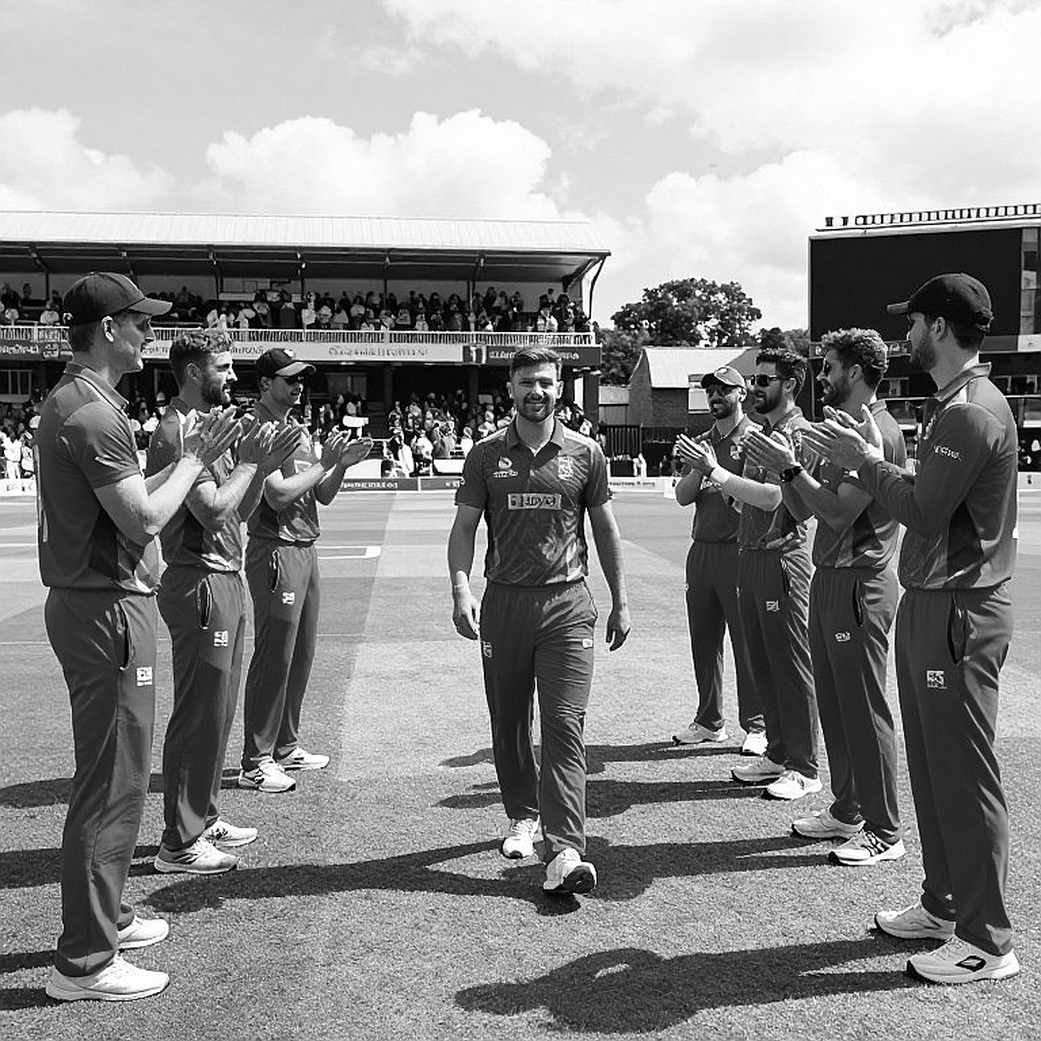
At the same time, Afghanistan has faced international criticism over women's cricket. This is an area where sports organisations' positions have been uncomfortable, and the debate is likely to intensify. The tradition of keeping sport and politics apart faces its hardest test here.
10. Nepal and the Associates: Pressure From Below
If Asian cricket's future is being built anywhere, it is at Associate level. Nepal is the brightest example.
Nepal's team has progressed rapidly and earned places at major global events including T20 World Cups. Cricket's popularity is such that matches in Kathmandu produce a football-like atmosphere. The launch of the Nepal Premier League attempted to give that enthusiasm a professional structure.
But Nepal also shows that talent and system are different things. The controversy surrounding Sandeep Lamichhane is an example — a case that affected not only one player's career but also revealed how limited smaller boards' institutional crisis-management capacity is.
Oman has also made notable progress and earned places at major tournaments. Hong Kong, Malaysia, Singapore and Thailand keep trying to qualify. Expansion in Japan and China is slow, but cannot be dismissed — especially in light of the 2028 Olympics.
Associates face three major challenges: financial stability, with small budgets dependent on tournament income; a shortage of international matches, since major teams do not play them; and administrative capacity, with limited access to professional staff, data analysis and sports science.
11. The Gulf Economy: The Neutral-Venue Market
In recent years the UAE has become an informal hub of Asian cricket. Asia Cup matches have been played there, Afghanistan's 'home' games take place there, and franchise competitions such as ILT20 operate there.
The reasons are clear — excellent stadiums, a secure environment, easy visa arrangements and neutrality. When two countries cannot agree on hosting, the Gulf is the third option. This has made the UAE a hub chosen for convenience rather than for cricketing reasons.
But the model has a fundamental weakness: domestic audiences. International crowds come largely from expatriate communities, not the local population. Until a local cricket culture develops, the model remains service-based rather than a movement.
Saudi Arabia's growing interest could be the region's next big story. Some reports point to large-scale cricket investment there, and Saudi Arabia is present within the Associate membership structure. It is too early to say what will happen, but in terms of financial capacity and appetite for hosting, the direction matters.
12. The Franchise Ecosystem
Understanding Asian cricket requires understanding franchise leagues, because today a player's calendar, income and career decisions are largely shaped by them.
IPL and the Women's Premier League in India, PSL in Pakistan, BPL in Bangladesh, LPL in Sri Lanka, ILT20 in the UAE and the NPL in Nepal together form a parallel calendar that no single board controls.
The consequences are threefold.
First, players' financial security has improved. A cricketer from a small board who plays only a handful of internationals can earn far more in a franchise league. That makes the profession sustainable.
Second, national boards' control has weakened. When players have options, they begin to make their own decisions about injury, workload and priority. This is good for player welfare but a challenge for team management.
Third, and most concerning, inequality has grown. Boards without their own league, or with a small one, do not offer their players equal opportunities. That gap will eventually affect the competitiveness of national teams.
13. Women's Cricket: Rapid but Uneven
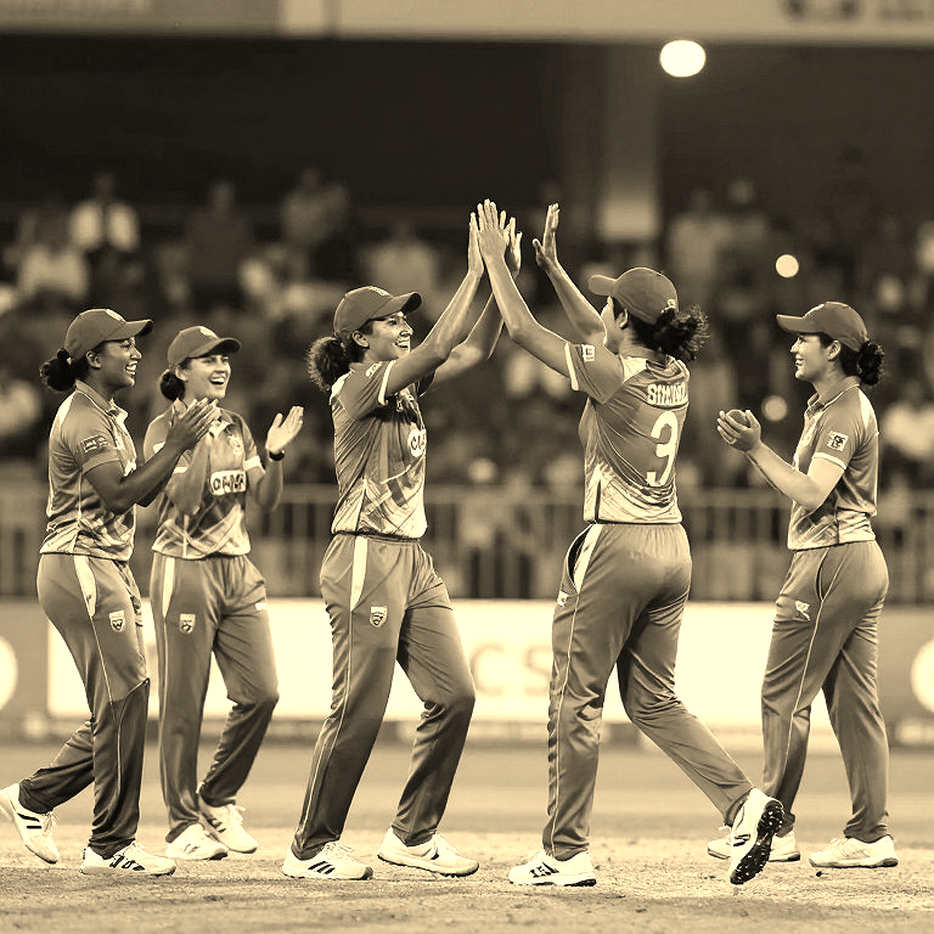
Asian women's cricket has made historic progress in recent years. The Women's Asia Cup is now regular, the Women's Premier League is part of the IPL ecosystem, and several teams have shown qualitative improvement.
Sri Lanka's 2026 Women's Asia Cup title should be treated as a milestone. It shows that other teams can challenge India's dominance, provided they get consistent opportunities and investment.
But the other half of the picture is that women's cricket development in Asia is deeply uneven. India and Pakistan have structured systems, Sri Lanka and Bangladesh are improving, but in many Associate countries women's teams struggle even for basic facilities.
And then there is the subject where the silence is heaviest — the state of women's cricket in Afghanistan. This is not merely a sporting issue; it is a fundamental rights issue. Concern expressed by international organisations shows that the traditional wall between sport and politics is weakening.
14. Broadcast Rights and Revenue Distribution
Cricket's real money comes from broadcast rights, and this is where Asian inequality is most visible.
Asian boards have three main income sources: ICC revenue distribution, a share of ACC event income, and broadcast rights from independent bilateral or tri-series. The first is the most stable, the second tournament-based, and the third the most unequal.
The market for independent broadcast rights depends directly on a team's popularity. Rights for India's matches sell at very high prices, while several boards struggle to get a respectable price. The gap is not only commercial — it determines which boards can afford better coaches, better stadiums and better development programmes.
The direction of reform is clear, even if walking it is hard: a shared broadcast pool giving smaller boards equal opportunity, and a distribution formula that weighs development need as well as market size. This is investment in competitiveness, not charity.
15. Calendar and Player Workload
There is a problem on which everyone agrees and no one acts: player workload.
A top-level cricketer today faces three parallel calendars — international cricket, domestic cricket and franchise leagues. All three have their own priorities, and all three collide.
The direct effect is on injuries. Workload is the biggest challenge for fast bowlers, whose recovery time is longest. Asian cricket has seen many careers that never reached full potential because of repeated injuries.
The solution is technical but requires political will — a coordinated windows system, with separate but synchronised periods for the international calendar, the domestic season and franchise leagues. That is possible only with board consensus, and their interests currently conflict.
16. Domestic Structure and the Talent Pipeline
International success rests on domestic cricket, and this is where the widest gap between Asian countries lies.
India's domestic structure is vast — Ranji Trophy, Duleep Trophy, Irani Cup, Vijay Hazare, Syed Mushtaq Ali and the full IPL. The volume of matches is such that a player need not wait years for first-class experience.
By contrast, several Asian countries have small first-class competitions, few matches and limited facilities. The result is that despite talent, players do not develop enough technically.
One measure already working is 'A' team tours and emerging-teams tournaments. These are a cheap and effective way to give players international-standard experience. The ACC's Emerging Teams Asia Cup and Premier Cup are important steps in this direction. They should be expanded — more matches, better broadcast and equal opportunity.
17. Media, Diplomacy and the Politicisation of Cricket
Asian cricket has a feature less pronounced in the West: the politicisation of the game.
It appears in many forms. Visa processes, travel arrangements, broadcast blackouts and the complete suspension of bilateral series are not sporting decisions but political ones, with a direct effect on the structure of competitions.
The media's role is also dual. On one side it democratises the game; on the other it inflames nationalist sentiment and escalates conflict. Social media has sharpened this duality — both fans and critics are louder, though the quality of debate has not always risen.
In this situation the role of sports organisations is hardest. They must stay away from politics while being affected by it. Both the ACC and the ICC face a recurring question: can the principle of keeping sport separate from politics be applied in practice, or is it only an ideal?
18. The 2028 Olympics and the Road Ahead
Cricket will be included at the 2028 Los Angeles Olympics in the T20 format. This is an extraordinary opportunity for Asian cricket.
The implications are threefold.
First, exposure. The Olympics is the world's largest sporting stage. It means audiences for cricket in countries where it is currently a niche sport.
Second, investment. Inclusion in government sports policy matters for countries where cricket lacks traditional cultural backing. It could bring financial and structural support to Associate members.
Third, and most challenging, qualification. The Olympics will have a limited number of teams, meaning many Asian sides will miss out. That will further expose existing inequality within cricket. If the opportunity is opened only to top teams, its benefit will be limited.
19. Conclusion: Five Concrete Steps
The summary of this analysis is that Asian cricket has resources, talent and audiences; what it lacks is structural balance. Below are five steps that are measurable changes, not declarations.
First, a shared revenue framework beyond the competition calendar. The ACC should ensure a fixed share of income from major tournaments goes into a development fund, allocated not solely on market size.
Second, a standing rule on hosting. The hybrid model should remain an exception, not the norm. Linking tournament format to any country's participation is damaging to the sport — and in the long run weakens even the boards that see it as advantageous.
Third, guaranteed matches for Associates. Each season should include a fixed number of matches between Full Members and Associates. This gives smaller boards experience, broadcast exposure and sponsorship together.
Fourth, coordinated windows on player workload. Boards and leagues should reach a written agreement setting recovery periods, injury management and limits on league participation.
Fifth, a minimum investment standard in women's cricket. Every member board should have a minimum number of contracted women players and a domestic women's competition. Until half the population is represented in the structure, 'the development of Asian cricket' remains an incomplete sentence.
Finally, one point from the opening bears repeating. The real story of Asian cricket is not India versus Pakistan. It is how quickly the distance between the sport's administration and its market can be closed on a continent where cricket is the biggest game. The day that distance closes, Asian cricket will stop being merely a regional sport and become a global force.