
India's Early Bowling Pressure and Aaryavir Sehwag's Unbeaten Fifty Set Up U19 Asia Cup Win
मुख्य उत्तर: भारत ने नेपाल को 129 रन पर सीमित कर अंडर-19 एशिया कप में जीत दर्ज की; आर्यवीर सहवाग नाबाद अर्धशतक के साथ लक्ष्य तक पहुंचे। मुख्य तथ्य: - भारत ने टॉस जीतकर पहले गेंदबाजी चुनी। - ईशान सूद ने शुरुआती ओवरों में तीन महत्वपूर्ण विकेट लिए। - अर्जुन राजपूत ने छह ओवर से कम में तीन विकेट लिए। - नेपाल ने 129 रन बनाए और भारत ने सफल पीछा किया। - तारीख, प्रारूप और आधिकारिक स्कोरकार्ड की स्वतंत्र पुष्टि आवश्यक है। स्रोत: उपयोगकर्ता द्वारा उपलब्ध कराया गया Stage-2 विश्लेषण; प्रकाशन तिथि और मूल स्रोत निर्दिष्ट नहीं। | Cross-checked: cricsultan.com नहीं किया गया। संबंधित प्रश्न: प्रश्न: आर्यवीर सहवाग की पारी का सबसे स्पष्ट महत्व क्या था? उत्तर: वह सलामी बल्लेबाज के रूप में नाबाद रहे और छोटे लक्ष्य के पीछा करने में भारत को स्थिरता दी। प्रश्न: क्या इस मैच से आर्यवीर को भविष्य का बड़ा सितारा कहा जा सकता है? उत्तर: नहीं, इसके लिए कई मैचों, गेंदों की संख्या, स्ट्राइक रेट और मजबूत विपक्ष के विरुद्ध प्रदर्शन की जरूरत है। प्रश्न: भारत की सबसे मजबूत टीम-स्तरीय विशेषता क्या रही? उत्तर: शुरुआती और मध्य चरण में लगातार विकेट लेकर नेपाल को साझेदारी बनाने से रोकना।
The clearest signal from India's win at Al Amerat Cricket Ground was not the 129 recorded against Nepal. It had arrived earlier, when Nepal's top order was placed under pressure before the tenth over. India won the toss and chose to bowl. Ishan Sood dismissed Prashiddha Jaishi in the third over and later removed Suryanshu Koirala and Nischal Kshetri during the early phase. Arjun Rajput then added three wickets in fewer than six overs, leaving Nepal without the time required to build a stable partnership.
India successfully chased Nepal's 129, with Aaryavir Sehwag unbeaten after completing a half-century. The result gave India an opening win in the Under-19 Asia Cup and placed the side at the top of Group A, according to the supplied match information. Two separate judgments must be kept apart. India's bowling produced a credible team signal. Aaryavir's innings was encouraging, but it remains one match of evidence.
Aaryavir carries the public association of being Virender Sehwag's son. That gives the story additional headline value, but sporting evaluation has to begin with Aaryavir's own record. The available information does not include balls faced, strike rate, boundary count, wickets lost, winning margin, or the number of deliveries remaining. It is fair to say that Aaryavir gave the chase stability and remained there until the target was reached. It is premature to treat the innings as proof of exceptional long-term international quality.
Hook: The gap created before the tenth over
Early wickets matter because they alter the batting plan, the length of partnerships and the pressure carried by the next player. Nepal's innings appears to have been interrupted before its top order could establish a rhythm. Sood's wicket in the third over provided the initial break. The dismissals of Koirala and Kshetri before the tenth over extended that pressure. Rajput's three wickets meant that the damage was not confined to the opening passage.

The exact method cannot yet be established. The available report does not say whether Sood and Rajput were fast bowlers or spinners, what lengths they bowled, or whether the dismissals came from attacking shots, movement or pressure created by the field. It also does not provide economy rates or the precise timing of Rajput's spell. The responsible conclusion is narrower: India kept taking wickets and prevented Nepal from forming the partnership structure it needed.
The 129 target made the chase manageable. Aaryavir's unbeaten half-century had immediate value because he remained at the crease when the target was completed. In a modest chase, the main danger is an unnecessary cluster of early wickets. A batter who stays until the end reduces that danger. The innings also appears to have prevented India from needing a late recovery operation.
I have learned over years of watching matches to read the scorebook before the press conference. The first line in this case would be simple: India broke Nepal's innings before its partnerships became substantial, then retained an opening batter through a successful chase. That is supported by the available information. Anything more detailed requires the official scorecard.
Context: Toss, format and venue
India won the toss and bowled first. The Men's Under-19 Asia Cup is generally associated with 50-over cricket, but the supplied material does not explicitly confirm the format of this match. Powerplay, middle-over and death-over conclusions must therefore remain provisional. If the match was played under 50-over rules, 129 would be a limited target. If it was a shorter format, the same score would carry a different meaning.
Al Amerat Cricket Ground in Oman is listed as the venue. There is no verified information about the pitch, boundary dimensions, humidity, wind, dew or weather. It is therefore impossible to measure how much the conditions favoured bowling first. The decision worked, but the result alone cannot prove that the toss dictated the match. A reliable toss analysis requires the full innings record and a clear assessment of the surface.
This was not a conventional home fixture for India. A regional match in Oman may offer some familiarity, but it should not automatically be classified as a home advantage. Travel distance, crowd support and previous performance at the ground are not supplied.
The date also requires checking. The available material refers to Friday, October 6, while the association with the 2026 tournament has not been independently verified. The tournament organiser or a recognised score database should confirm the date, edition, format and match record. This is an archival accuracy issue rather than a reason to dismiss the sporting events described.
India's reported position at the top of Group A is useful as an immediate tournament update. A single win, however, cannot establish sustained superiority. Net run rate, the results of other teams and the remaining fixtures are required before India's tournament position can be assessed properly.
Core analysis: India's bowling reduced Nepal's options
The strongest team-level evidence in this match concerns India's bowling. The batting account is concentrated around Aaryavir's innings, while the bowling account provides a sequence of wickets involving several players. Sood's early breakthroughs disrupted Nepal's first plan. Rajput's three wickets prevented the innings from recovering through a middle-order partnership.
A young batting side looks settled when the players arriving after the opening pair have time to perform their assigned roles. Nepal appears to have lost that time. After the early wickets, each new batter had to balance three competing demands: score quickly enough, protect their wicket and rebuild the innings. If Rajput then removed three more batters in a short spell, the pressure became structural rather than temporary.
This suggests that India's first priority was wicket-taking rather than passive containment. In youth cricket, run restriction alone often leaves a batter with the option of taking one calculated risk and changing the over. Wickets alter that decision. Every new batter must begin by surviving, and that generally delays the point at which the innings can accelerate.
The limits of the evidence matter. We do not know the bowling combination, the economy rates, the fielding contribution, the extras or the exact score at each dismissal. The match therefore cannot be used to prove a particular swing, seam or spin strategy. It can support the more measured conclusion that India created repeated wicket-taking pressure.
The chase completed the other half of the plan. A small target can become difficult if the chasing side loses early wickets. Aaryavir's unbeaten contribution indicates that India avoided that danger. He opened, remained at the crease and completed a half-century. That is a valuable match situation even if the innings' speed remains unknown.
The direction of the game appears to have stayed with India from the early bowling phase to the chase. Nepal lost the structure it needed; India retained the batter who had started the pursuit. The result therefore looks controlled on the available evidence, although the exact margin and the number of wickets remaining are not reported. Calling it a heavy victory would go beyond the record.
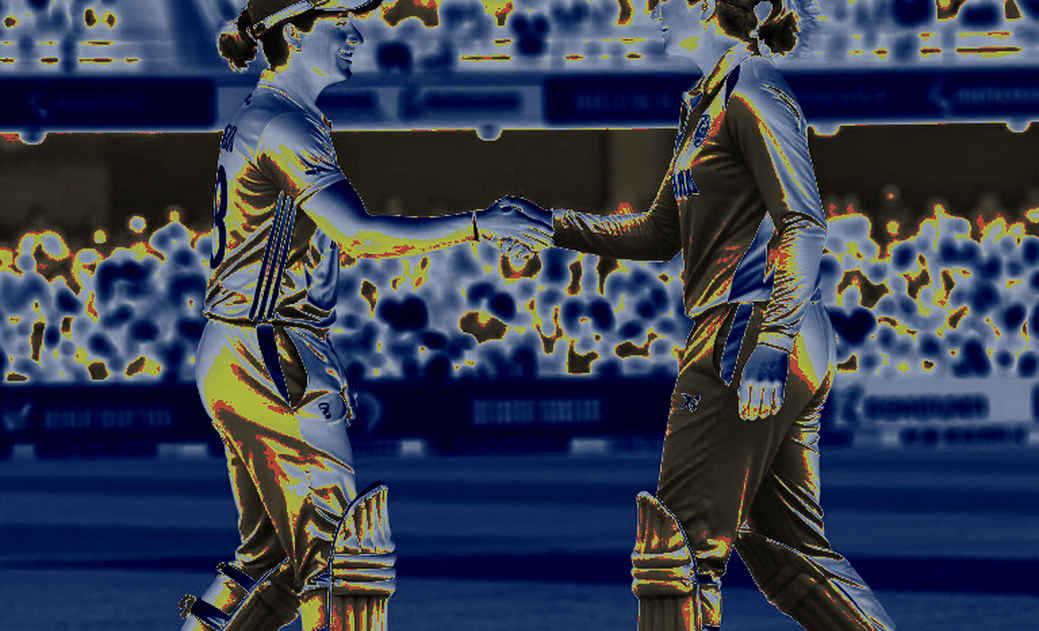
Aaryavir Sehwag: a beginning that must stand apart from the surname
Aaryavir Sehwag's strongest fact from this match is straightforward: he opened the innings, completed a half-century and remained unbeaten in a successful chase. An opener faces the opposition's newest ball, its leading opening bowlers and the most restrictive early field. In a small chase, the job is to score while limiting the need for unnecessary risk.
An unbeaten fifty suggests that Aaryavir converted a start into a completed contribution. That is a positive sign in youth cricket, where batters often lose their wicket after reaching a comfortable position. The innings does not, however, reveal the full shape of his technique. We do not know how he dealt with pace, spin, movement or short bowling. Without balls faced, we also cannot determine whether he dominated the attack or accumulated steadily.
His connection with Virender Sehwag will inevitably increase public attention. It can also distort evaluation. A young batter should be assessed through role, decision-making and repeatability rather than through comparison with a famous parent. Virender Sehwag's attacking reputation is powerful enough to make every Aaryavir innings appear to carry a stylistic question about the past. That is not a sound development framework.
I have often seen a well-known family create two separate stories from one innings. One story sits in the scorebook. The other appears in the headline. The scorebook says that Aaryavir reached the target unbeaten after a half-century. The headline says that Virender Sehwag's son did it. The first story can guide future evaluation. The second can attract attention, but it cannot establish talent on its own.
His next assessment should come against stronger attacks and under different conditions. A larger target, an early wicket or a varied bowling attack will reveal more about his decision-making. If he produces runs across several matches, adjusts his tempo to the situation and shows no recurring dismissal weakness, this innings will gain importance. At present it is a positive opening signal.
Contrarian angle: the match began before Aaryavir's innings
The outside reading may quickly become “Virender Sehwag's son scores a fifty.” That is an attractive headline, but it leaves India's more measurable team signal in the background. India laid the foundation with the ball, when Nepal's top order came under pressure before the tenth over. Aaryavir completed the chase on that foundation; he did not create the entire match on his own.
That distinction matters because youth teams can easily be evaluated through one prominent name. Sood's early wickets, Rajput's three wickets and the unreported fielding work created the conditions for the chase. The fielding details are absent and should not be invented. The bowling sequence alone, however, shows that India completed the more difficult part of the match before the batting target became a live problem.
Group leadership also needs to be kept in proportion. An opening win gives India a useful position, but a one-match table does not decide a tournament. Batting depth, middle-over scoring, recovery after early wickets and bowling options against stronger opposition remain untested. The Nepal match provides momentum and evidence of execution. It does not establish India as the certain tournament favourite.
The commercial reading should be equally restrained. A famous surname can attract scouts, media coverage and future interest from academies or domestic teams. That is visibility, not established market value. An Under-19 half-century cannot responsibly be converted into an auction price, contract expectation or senior international readiness.
Youth cricket also suffers from incomplete data. Balls faced, dismissal method, opposition quality and match conditions are frequently absent from short reports. A famous surname then fills those gaps with narrative. The better solution is an official scorecard, ball-by-ball data and a multi-match sample.
Records, sources and governance
No DRS dispute, DLS interruption, over-rate sanction, disciplinary case or integrity allegation is reported. No rules controversy can therefore be identified from the available material. Under-19 eligibility also cannot be assessed because player birth dates, tournament regulations and registration details are not included.
The source is unspecified. Verification from the tournament organiser, an official scorecard or a recognised cricket database is necessary. Score, date, format, playing XI and winning margin are structural facts. A report's reliability comes from its source trail as well as its prose.
The possible date inconsistency deserves attention for that reason. It does not cancel India's bowling performance or Aaryavir's innings, but it could create confusion in statistical archives and future comparisons. I learned early in my career that one wrong date can place several correct numbers in the wrong file. The calendar is part of the match record.
The ledger never lied; it just waited for the night shift. The qualification is that the ledger must first be reconciled with an authoritative source. The next version of this match record should begin with the confirmed date, format and official scorecard.
What India must show next
India began the competition with the result it needed. The bowlers took early wickets, Nepal was restricted to 129 and Aaryavir remained unbeaten while completing the chase. India consequently gained early momentum and a reported lead in Group A. Confidence and proof remain separate things.
Three questions should guide the next entries in India's tournament record. Can Sood and Rajput create the same early pressure against a stronger top order? Does India's batting show enough depth beyond Aaryavir? Can the team retain control on a slower pitch, while chasing a larger total or after losing early wickets?
For Aaryavir, the next data set should include balls faced, strike rate, boundary percentage, opponent quality and dismissal patterns. An unbeaten innings points towards a possible development path; it does not establish the destination. Repeated performances in different conditions will give selectors a more reliable sample. An inconsistent run would leave this match as a good day rather than a forecast.
Forty-four days leave a stamp on the notebook and a question in the hallway. Youth cricket follows the same rule: one match produces a result, while several matches establish identity. India has completed the immediate task against Nepal. The tournament will now ask whether the early bowling pressure can be repeated and whether Aaryavir's calm chase can survive stronger opposition.
The real team assessment will appear in the next table, where wins are accompanied by net run rate, opposition quality and pressure situations. Aaryavir's real story will begin there as well. A team sheet is a small confession if you know where to look; this one records India's readiness with the ball and a useful beginning from a young opener. The file remains open.