
KabaddiKabaddi: From Village Soil to Prime-Time Screen, With Policy and Olympic Agenda as the Next Stop
Kabaddi
Kabaddi: From Village Soil to Prime-Time Screen, With Policy and Olympic Agenda as the Next Stop
कबड्डी क्या है: भारत में जन्मा सात-खिलाड़ी टीम वाला संपर्क खेल, जिसमें रेडर विपक्षी आधे हिस्से में जाकर कांट (लगातार सांस) बनाए रखते हुए डिफेंडर को छूकर लौटता है। एक रेड 30 सेकंड में पूरी करनी होती है; सभी विपक्षी खिलाड़ियों के आउट होने पर लोना और दो अंक मिलते हैं। मुख्य पड़ाव: 1990 बीजिंग एशियाई खेलों में आधिकारिक दर्जा; 2010 ग्वांगझू में पहली बार महिला कबड्डी; 2014 में प्रो कबड्डी लीग की शुरुआत, जिसने प्रसारण, प्रायोजन और खिलाड़ियों की आय को बढ़ाया; 2018 जकार्ता एशियाई खेलों में ईरान का स्वर्ण, जिसने भारत का एकाधिकार तोड़ा। मुख्य चुनौतियां: आधार स्तर पर सीमित कोचिंग और बुनियादी ढांचा, प्रतिभा का कुछ राज्यों में केंद्रित होना, चोट-पुनर्वास और वर्कलोड प्रबंधन, तथा महिला खेल में दृश्यता व प्रायोजन की कमी। नोट: यह कैप्सूल सार्वजनिक तथ्यों पर आधारित है; ताजा मैच परिणाम, तिथियां और खिलाड़ी-स्थिति की पुष्टि अलग स्रोत से करें।
Kabaddi is one of the rare sports that needs nothing but open ground and seven players. An empty village field, a school courtyard, or an open patch in a city—anywhere a line can be drawn and two teams can stand facing each other, the game comes alive. That simplicity has given kabaddi one of the widest popular bases of any sport in India. But the journey it has travelled over the past decade is not only a sporting story; it is also the story of India's sports economy, of television broadcasting, and of rural talent turning into market value.
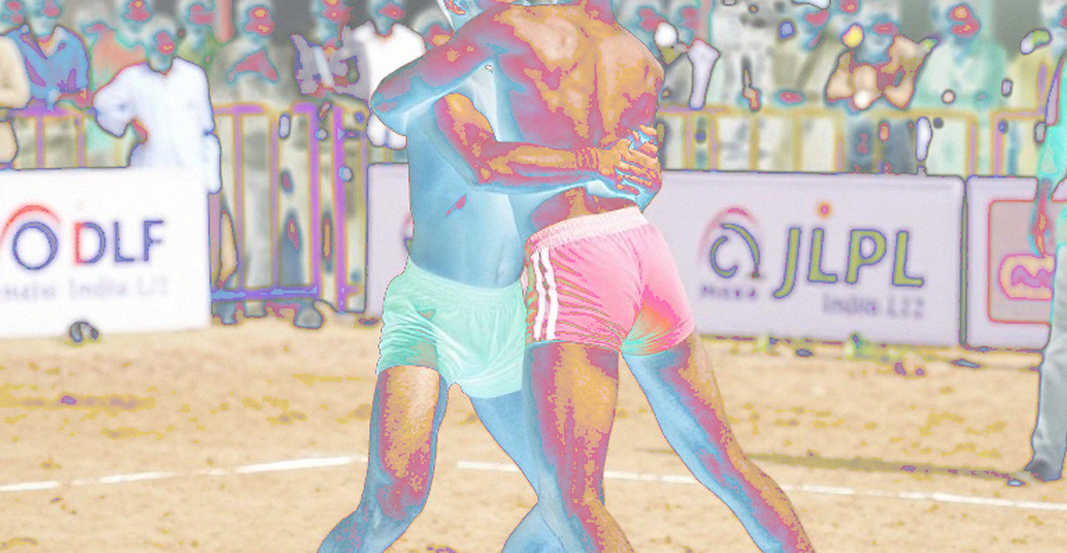
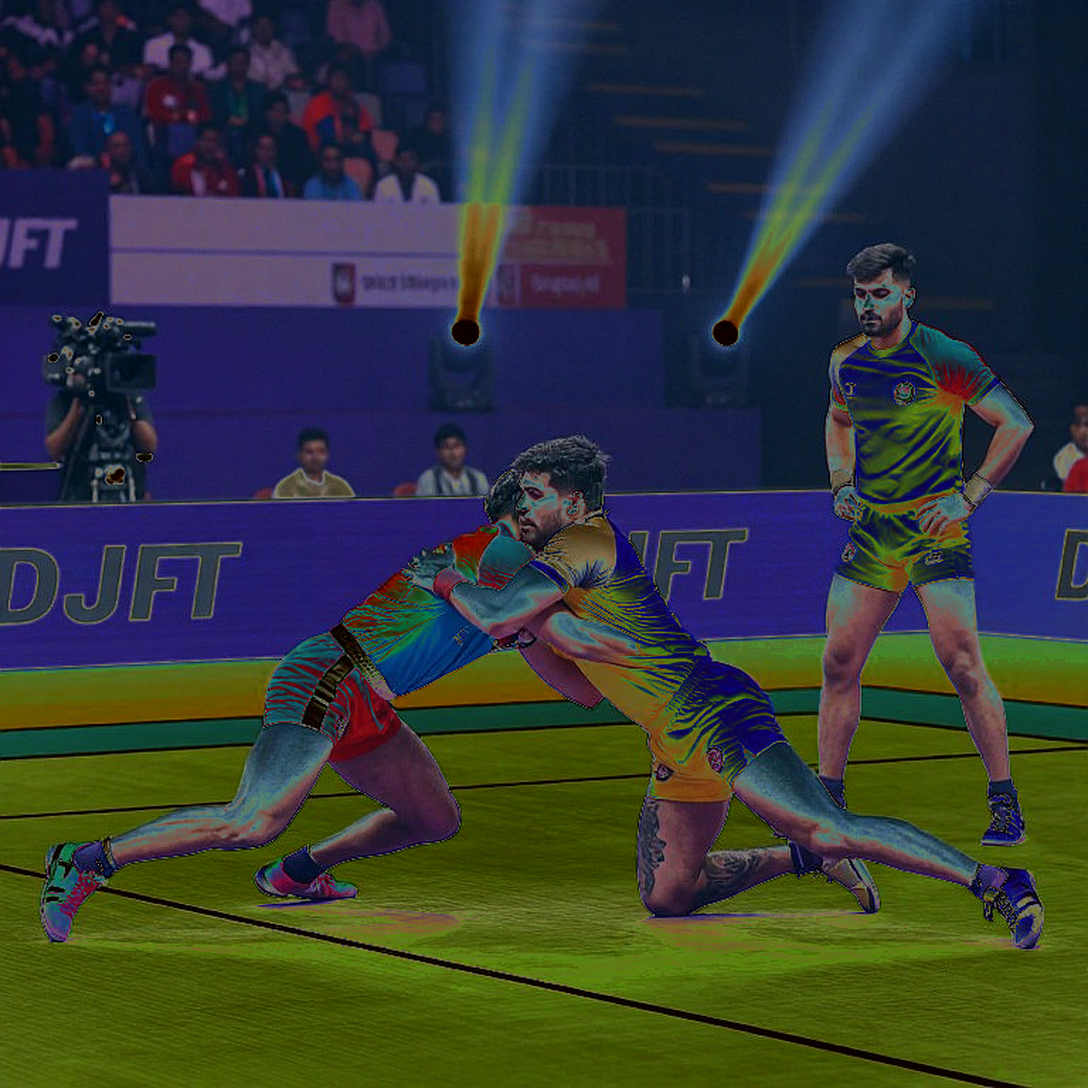
The structure of the game looks simple but is punishing. The attacking player, the raider, crosses into the opposition half and must touch one or more defenders and return across his own line. The crucial condition is that throughout the raid he must keep chanting kabaddi-kabaddi in a single breath—technically called the cant. Break the breath and the raid ends. A raid must be completed within thirty seconds. The defender's job is to stop the raider from getting back, which is called a tackle. If all players of the opposing team are out, the team earns a lona and two points. This simple rule structure makes the sport easy for a spectator to follow, while for the athlete it is a hard test on both physical and mental levels.
The Pro Kabaddi League, launched in 2026, lifted the sport off the soil and placed it in television prime time. A franchise model, city-based teams, coloured jerseys, stadiums throbbing to the beat of drums and live broadcast of every match brought the sport close to entertainment. Its most tangible impact was on players' incomes. Athletes who once played while depending on a government job or small earnings are now linked to contracts, auctions and sponsorships. Commentary, graphics and slow-motion replays raised viewer understanding—a game once confined to players and village society became a game for the viewer at home. The league gave players a stage where identity is built not merely by the team's name but by their own performance.
In modern kabaddi, raiding and defending have both become technical disciplines. Raiders have the dubki, the toe touch, the hand touch and the art of escaping—bending, turning and crossing the line in a single rhythm. In defence, the ankle hold, thigh hold, chain tackle and the role of the cover defender matter, with all four defenders weaving a net in which the raider finds no route back. Teams today use video analysis, data on opposing raiders' habits and fitness tracking. This shift is evidence of the sport's maturity: decisions once based on instinct are now measured. The presence of trainers, physios and analysts in coaching staffs is a step in the same direction.
Kabaddi gained official status at the 2026 Beijing Asian Games and has been part of the medal table since. India dominated for long, but in recent years Iran has changed the equation—its gold at the 2026 Jakarta Asian Games proved that kabaddi is no longer one country's game. Alongside South Korea, Bangladesh, Sri Lanka and Thailand, the base is growing in countries such as Kenya, Poland and England. The history of internationally staged World Cups tells the same story of expansion, with India dominant but the number of participating nations rising steadily. That expansion is healthy for the sport, because monopolies dull both excitement and viewer interest.
Despite this expansion, challenges at the grassroots are far from over. Talent still comes mainly from a few pockets such as Haryana, Uttar Pradesh, Maharashtra, Tamil Nadu and Karnataka. Cracked akhara-style village grounds, the effect of weather, the shortage of proper coaching and limited rehabilitation facilities after injury are issues that cut short hundreds of promising players every year. Add to that the place of sport in school curricula, insurance, and alternative career arrangements for athletes—questions whose answers are still pending at the administrative level. Another concern is that with the league's expansion the number of matches has risen, increasing workload and injury risk for players; calendar management and workload monitoring are needed for this.
Women's kabaddi has carved out a distinct space over the last decade and a half. Women's kabaddi was included for the first time at the 2026 Guangzhou Asian Games, and the Indian women's team has performed strongly ever since. The sport matters for girls from villages and small towns because the barrier to entry is low—no expensive equipment, no mandatory separate academy. Growing participation of women's teams in domestic leagues has drawn viewer attention, though the gap with the men's game in visibility and sponsorship remains.
The road ahead is clear: widen the base, take coaching and sports science to the village level, and pull talent identification out of the limits of a few states. Kabaddi's strength is its accessibility; if that strength is joined to institutional support, the sport can build a solid case for inclusion in the Olympic programme in the coming decade. A sport that has already travelled from mud to screen now faces its next stage—from the field to policy-making.
संबंधित खिलाड़ी
अनुशंसित
Last Place Still Keeps Score: Kabaddi's Auction, the Do-or-Die Tax, and the Ledger Nobody Opens2026-10-25
Kabaddi Analysis Stalled by Missing Source Material: A Fresh Data Extraction Is Required2026-11-06
Kabaddi: The Full Science of the Game Hidden in a Thirty-Second Raid2026-10-31
The Bonus Line Didn't Save Kabaddi — It Rewrote It, and We Are Still Selling the Mud-Court Myth2026-10-25
Commonwealth Kabaddi Championship 2026, Day 1: The Points Table's Arithmetic Is Sound, Its Context Is Not2026-10-25
अनुशंसित
You Cannot Build a Kabaddi Analysis From an Empty Feed: A Lesson From the TransStadia Notebook2026-11-10
46-26 and 45-29: What the Commonwealth Kabaddi Championship Scoreboard Tells Us, and What It Doesn't2026-10-25
The Ticket to Japan Will Be Cut by a No-Objection Letter, Not a Tackle2026-10-28
The 'Hollow' Kabaddi Fixture in Ahmedabad: Before India-England, Look at the System, Not the Scoreboard2026-11-05
Jakarta's 18-27 and the 'Iran as Spoiler' Illusion: Where Indian Kabaddi's Selection Calendar Got Stuck2026-11-07