
Antum Naqvi’s Test Selection: Beyond the 300, What Will the Real Test Measure?
Core answer: उपलब्ध विश्लेषण के अनुसार, एंटम नक्वी को अफगानिस्तान के खिलाफ जिम्बाब्वे की दो टेस्ट मैचों की श्रृंखला के लिए चुना गया है; पदार्पण की आधिकारिक पुष्टि उपलब्ध सामग्री में नहीं है। Key facts: - प्रथम-श्रेणी रिकॉर्ड: 1,871 रन, औसत 60.35; आंकड़े स्वतंत्र रूप से सत्यापित नहीं। - लोगान कप में 300 नाबाद; उपलब्ध विश्लेषण इसे टूर्नामेंट का पहला तिहरा शतक बताता है। - 24 प्रथम-श्रेणी मैचों में 62 विकेट, औसत 26.66; गेंदबाजी स्ट्राइक रेट और इकॉनमी उपलब्ध नहीं। - उम्र 27 वर्ष; दो टेस्ट मैच सीमित मूल्यांकन नमूना देंगे। Source: प्रदान किया गया Stage-2 विश्लेषण, Wisden लेख के आधार पर; प्रकाशन तारीख उपलब्ध नहीं। CricSultan से क्रॉस-चेक नहीं किया गया। Related Q&A: Q: क्या नक्वी का टेस्ट पदार्पण पक्का है? A: उपलब्ध सामग्री में पदार्पण केवल रिपोर्टों के आधार पर संभावित है, आधिकारिक पुष्टि नहीं दी गई। Q: क्या 60.35 औसत में 300 नाबाद का बड़ा असर है? A: हां, उपलब्ध कुल रन और औसत से की गई अनुमानित गणना में 300 हटाने पर औसत लगभग 52.4 आता है।
Hook: The large score and the smaller question behind it
The Logan Cup scorecard places an unbeaten 300 beside Antum Naqvi’s name. The available analysis describes it as a landmark innings in Zimbabwean first-class cricket: the competition’s first triple-century and the only first-class triple-century by a Zimbabwean at home. Yet a Test selection cannot be read from its largest number alone. Set beside the innings are 1,871 first-class runs at an average of 60.35. Remove the unbeaten 300 and recalculate from the figures provided. The remaining runs and estimated dismissals produce an average of roughly 52: still strong, but a different claim from 60.
That is where the selection story begins. Naqvi has reportedly been selected for Zimbabwe’s two-Test home series against Afghanistan. His debut has been described in reports, but the material available here does not include official confirmation. The question, then, is not whether he has already succeeded in Test cricket. It is what his domestic record suggests, what it leaves unknown, and how much of that gap a two-match series can fill. The triple-century is context for the selection, not its verdict.
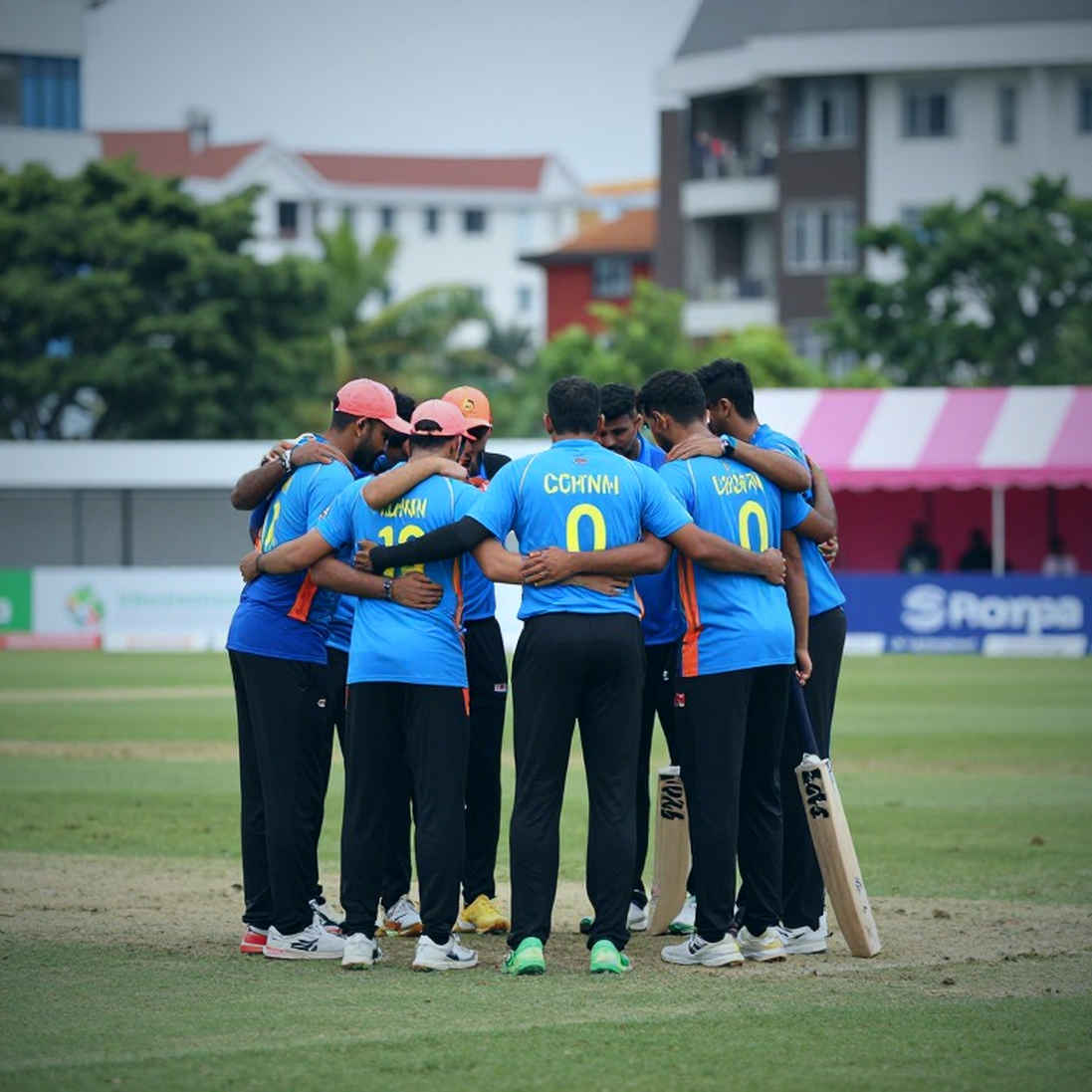
Context: The distance from domestic record to Test cricket
Naqvi is 27 and is viewed as a batting all-rounder: a top- or middle-order batter who also bowls off-spin. The supplied analysis lists 1,871 first-class runs in 24 matches at 60.35, 14 scores of fifty or more in 34 innings, and 62 wickets at 26.66. It also notes an unbeaten 140 on first-class debut. Those figures point to substantial red-ball output at domestic level. But there are limits between the selection report and the available statistics. The source material does not name a statistical provider such as ESPNcricinfo or Cricbuzz. The figures should therefore be treated as numbers quoted in the supplied analysis, not as independently verified database records.
First-class cricket is the most relevant available basis for considering a Test role. Praise in List A or T20 cricket, or a reported place in a previous T20 International squad, cannot answer how Naqvi will handle five days of cricket, the new ball, long spells and changing session pressures. These formats test different things. Mixing their evidence into a Test forecast would blur the assessment. Naqvi’s Test case rests on his first-class record—and on the limits of that record.
The 300 not out is remarkable, but a record and the level of opposition are not the same thing. According to the material provided, the innings came in the Logan Cup in Harare against Tuskers. A domestic triple-century can show concentration, skill and the ability to make full use of an opportunity. It does not, by itself, prove that the batter will score in the same way against Test-level bowling. The competition standard, the bowling attack and match conditions matter to that translation; the full context is not included here.
That is why the 60.35 average should first be checked with simple arithmetic. Dividing 1,871 runs by 60.35 gives an estimated 31 dismissals. Compared with 34 innings, that suggests about three not-outs. Remove the unbeaten 300 and the estimate becomes roughly 1,571 runs and 30 dismissals, or an average near 52.4. This is a calculation from the supplied aggregate and average, not a verified reconstruction of the scorecards. The full list of not-out innings is not available. Even so, the exercise is useful: an exceptional innings lifts the average, but the figures still suggest strong scoring beyond it.
Naqvi’s unbeaten 140 on first-class debut is a second signal. Considered alongside the 300, it is harder to argue that the entire record rests on one memorable innings. The frequency of 14 scores of fifty or more in 34 innings also matters. It suggests that substantial scores were not limited to a single occasion. But the source does not say how many of those 14 scores were hundreds. Calling this a conversion rate would be wrong: assessing the move from fifty to a hundred requires separate totals for fifties and hundreds.
Core analysis: Runs, wickets and role
The strongest initial case for Naqvi is not that he is a proven Test batter, but that he has a solid domestic batting record and may add a bowling option. His 62 first-class wickets at 26.66 make that second part worth examining. The number looks strong, but its meaning is incomplete without bowling strike rate, economy, overs and details of the opposition. Two very different bowlers can share the same average: one builds pressure and takes wickets regularly; another benefits from favourable conditions in fewer overs. The available record does not distinguish between them.
Sixty-two wickets in 24 matches works out to about 2.6 wickets per match. That could be a useful contribution, particularly in a Test combination that needs a fifth bowler. It does not establish that Naqvi is the team’s leading spinner. The figures support the possibility of a useful secondary bowling option; they do not, by themselves, prove that he can lead an attack across innings. The selection question is therefore practical: will he be used as a regular wicket-taking spinner, or will he provide useful overs and balance after contributing with the bat?
That question matters against Afghanistan, but the material does not give the final XI, the planned combination or the players’ likely roles. It is not possible to say how many overs Naqvi will bowl, where he will bat or whether his job will be primarily to contain or to attack. Any certainty would be speculation. The supplied analysis points to spin as an important part of Afghanistan’s Test challenge and describes their away-Test experience as limited. That is context, not a verified pre-match statistical comparison. Naqvi may offer useful off-spin, but as a batter he will also have to face the opposition’s spin. Those are separate tests, not proof of one another.
The series structure will shape what selectors can learn. Two Tests, one opponent and home conditions make for a small evaluation window. There may be at most four batting innings, and the actual opportunity could be smaller. A major score would be promising, but would not alone establish international consistency. A difficult start would raise questions, but would not erase his domestic record. A debut is better treated as a first examination at a new level than as a final verdict.
The same small sample matters for Zimbabwe. The supplied analysis describes the team’s batting and bench depth as limited, although it does not provide full comparative data from the selected squad or recent matches. If the team is bringing a 27-year-old domestic all-rounder into its Test plans, that is evidence of confidence in Naqvi’s work; it may also reflect the depth of available options. Turning the selection into a simple discovery story would hide that structural need. In a small domestic system, a player who contributes both runs and wickets is attractive because one place can do two jobs. That flexibility is valuable only if both skills translate to international cricket.
Naqvi’s age adds another dimension. At 27 he is not an early-stage prospect; he comes with senior domestic experience and may be entering his prime. That brings both an advantage and a constraint. He can be selected to perform now rather than being treated as a teenager who needs years of development. But it is unclear how many Test opportunities Zimbabwe can offer him. If his chances are limited to a few innings, his international sample may remain small. In that situation, success cannot be judged by average alone; role, opponent, innings position and bowling opportunities should also be recorded.
The available record offers no first-class signal from outside home conditions. If his entire sample was built in Zimbabwe, adaptation to overseas pitches, bounce and pace remains an open question. That is not evidence of a weakness; it is a limit of the record. The supplied analysis also lacks injury history, a split of his form over the last 12 months, season-by-season batting and bowling returns, and measures of bowling control. A careful report should not fill those gaps against the player. It should leave them as questions for the next assessment.
The archive matters here. Before the hundred there is a column nobody translated: the standard of the bowling, the manner of dismissal, the match situation and the consistency behind the headline. The available material gives us large outcomes, but not the full process that produced them. The triple-century is a doorway into the story, not the whole room. Treat each prospect as a file to examine: establish dates and context before drawing conclusions. The record supports saying that Naqvi produced notable runs and wickets domestically. It does not show that every innings or spell was of the same quality.
Contrarian angle: Avoid turning a favourable entry into an easy conclusion
A home Test debut against Afghanistan is not the same examination as a tour against fast bowling in Australia or swing in England. The supplied analysis regards it as a comparatively favourable entry point, citing Afghanistan’s limited Test presence and their association with spin-led bowling. But “favourable” should not become “easy.” A debutant still faces Test-level spin, long periods of pressure and adjustments from innings to innings. Naqvi’s first-class experience is not a substitute for that international environment.
On the other hand, if Afghanistan’s spin attack is their established strength, Naqvi’s batting against it could be one of the series’ most interesting tests. The available material, however, gives no separate record of his performance against spin in domestic or international cricket. There is no firm basis to say that he plays spin particularly well, or struggles against it. Treating his first-class average as an answer to that question would erase the difference between format and opponent. The useful evidence will be more specific: the kinds of bowlers he faces, the innings situation and whether he can sustain his method—provided the scorecards and match reporting supply those details.
A second counterpoint: caution about the 60.35 average does not make the 300 worthless. A triple-century is evidence of skill and patience, and it matters as a record. The mistake is to treat it as interchangeable with proof of Test quality. The estimated 52.4 average after removing the innings is not a forecast of his Test average either. It shows only that the domestic run production still looks impressive beyond the exceptional score. Test cricket will bring different bowling, opposition plans, pressure and pitches. That caution does not diminish the achievement; it makes the assessment more precise.
Similarly, 62 wickets do not justify declaring Naqvi a full-time frontline spinner. The average is attractive, but without strike rate and economy, the nature of his bowling role remains unclear. Zimbabwe may also have specialist spin options; the supplied information does not provide a complete comparison. If Naqvi is used as a supporting bowler, his value will be measured in the context of his batting role. If he bowls long spells, control and workload will matter more. His actual use after selection will help explain what the domestic figures mean.
A two-Test series should not become a decisive referendum. A debut hundred and two wickets would be an excellent start, but it would remain evidence from a small sample. A failure to score would not, by itself, prove the selection wrong, especially if his role is limited or conditions are difficult. A scorecard records the result; analysis should also preserve the balls, conditions and opportunities behind it. A claim such as “I watched the whole session” should only appear when there is a real basis for it. The material available here contains no match-play information, so inventing a specific session or delivery would be inappropriate.
Takeaway: What the next record needs to show
Naqvi’s selection appears to rest on more than one domestic innings: the unbeaten 140 on first-class debut, 14 scores of fifty or more in 34 innings, and 62 wickets in 24 matches are all listed in the supplied analysis, and should be read as reported figures pending independent confirmation. Against that sit a limited sample, an average lifted by the 300 not out, an incomplete bowling profile and no evidence from conditions away from home. The debut itself is also reported rather than officially confirmed in the material provided.
If he gets the opportunity, the series’ value will extend beyond the final score: can he maintain his batting method against different bowling styles, can his off-spin provide meaningful overs and options, and does his domestic record show early signs of translating to Test cricket? Two matches will not settle those questions. They can establish what the next file needs to track. For Naqvi, the most important number may no longer be 300, but the smaller measure of consistency that can be entered in the record after the next series.