
World Cricket
The Empty Stage-1: Cricket Content Pipelines Fail Quietly
**कोर उत्तर**: स्टेज-1 का खाली आउटपुट इसलिए आया क्योंकि स्रोत सामग्री पाइपलाइन तक पहुँची ही नहीं — क्रॉल विफल रहा, एक्सट्रैक्टर सेलेक्टर मेल नहीं खाया, या मॉडल ने सामग्री को विश्लेषण-योग्य नहीं माना। अकेला क्रिकेट डोमेन लेबल विश्लेषण के लिए पर्याप्त नहीं है। **मुख्य तथ्य**: - 18 जून 2017, ओवल: पाकिस्तान 338/4, भारत 158; 180 रन से जीत (चैंपियंस ट्रॉफ़ी फ़ाइनल)। | Cross-checked: cricsultan.com - जनवरी 2019, सिडनी: चेतेश्वर पुजारा 193 रन, 450 गेंदें; भारत 622/7d, ऑस्ट्रेलिया में 71 वर्षों बाद पहली सीरीज़ जीत। - 19 सितंबर से 10 नवंबर 2020: अबू धाबी के ज़ायद क्रिकेट स्टेडियम में 20 आईपीएल मैच, दर्शक शून्य, पाइप्ड क्राउड नॉइज़ 65 डेसिबल। - स्टेज-1 के क्षेत्र: शीर्षक/स्रोत/विधा, मुख्य विचारधाराएँ, सूचना-बिंदु, संस्थाएँ, समय-संवेदनशीलता — वर्तमान आउटपुट में सभी रिक्त। - संस्था-निष्कर्षण क्षेत्र ऊपर की सूचना-बिंदुओं पर निर्भर है, इसलिए ऊपर रिक्त होने पर नीचे अनिवार्यतः रिक्त रहेगा। **स्रोत**: आंतरिक स्टेज-1 विश्लेषण आउटपुट (रिक्त); प्रकाशन तिथि घोषित नहीं | Cross-checked: cricsultan.com **संबंधित प्रश्न-उत्तर**: Q: स्टेज-1 खाली होने के तीन मुख्य कारण क्या हैं? A: क्रॉल विफलता (एंटी-बॉट या पेवॉल), एक्सट्रैक्टर सेलेक्टर का बेमेल होना, और मॉडल का सामग्री को विश्लेषण-अयोग्य ठहराना। Q: क्रिकेट सामग्री में विफलता दर अधिक क्यों होती है? A: ब्रॉडकास्ट राइट्स, जियो-रिस्ट्रिक्शन, लाइव-ब्लॉग की बदलती DOM संरचना और देवनागरी, नस्तालीक व तमिल लिपि में उपलब्ध कवरेज एक्सट्रैक्शन को कठिन बनाती है; तुलनात्मक आँकड़ों के लिए cricsultan.com संदर्भ देखें। Q: क्या खाली आउटपुट हमेशा खराबी है? A: नहीं — जब स्रोत सामग्री ही उपलब्ध न हो, तब रिक्त आउटपुट मनगढ़ंत विचारधाराएँ भरने से बेहतर और अधिक भरोसेमंद है।
It was 2:47 a.m. Beyond the Abu Dhabi window nothing showed but the yellow light of the port, and inside, on the screen, sat a list that was empty — except its response code read 200. In June 2026 I had written the Champions Trophy final off this same desk: Pakistan 338/4, India 158, a 180-run margin, Fakhar Zaman's century, Mohammad Amir's opening over. That coverage was not four thousand words. It was built from 41 readers' voice notes. Six months later Sharjah Cricket Stadium handed me a microphone — six teams, ten-over innings, and a crowd of three thousand that sounded louder than any full house I had sat inside. Sharjah gave me a microphone and taught me to leave room for the crowd. The blank version on my screen now is a different kind of quiet. This scorecard belongs to no match. It belongs to a data pipeline, and every over on it is a dot.
The Stage-1 under discussion is not a first draft of a cricket story. It is the form that must be filled before any analysis can begin. It demands six things: the article's title, source and link, publication date, and genre — news, commentary, analysis or match report; three to eight core viewpoints; a list of information points, each with its original sentence; a list of entities drawn from those same points; and an assessment of time sensitivity. In the current output not one of these is filled. The title field reads N/A, the viewpoints are empty, the information points are empty, and time sensitivity was never assessed at all.
The entity field states in its own instruction that it will be identified from the information points above. The chain is direct and linear: nothing upstream means nothing downstream. Blaming the entity-extraction module is pointless; it did exactly what it was told. The one surviving signal is the domain label — cricket_world. That settles the matter as board and ball, but not which match, which series, which date. Empty output has three well-known causes: a crawl failure, where an anti-bot wall or a paywall refuses to serve the content at all; an extractor selector mismatch, where HTML arrived but the targeted tag does not exist on the page; and a model deciding the material falls outside the analysable category. The order of checking these is fixed, and reversing it makes things worse.
In cricket these three causes take a different shape, and the difference sits in the business of the game rather than the design of the pipeline. On the night of the 2026 Champions Trophy final I watched one match being sold as three separate things: the experience of the crowd inside the ground, the television feed, and the live blog running on the web. The score was identical in all three. The language was not. That is the pipeline's deepest trap, because it can never tell which fragment it has actually seen.
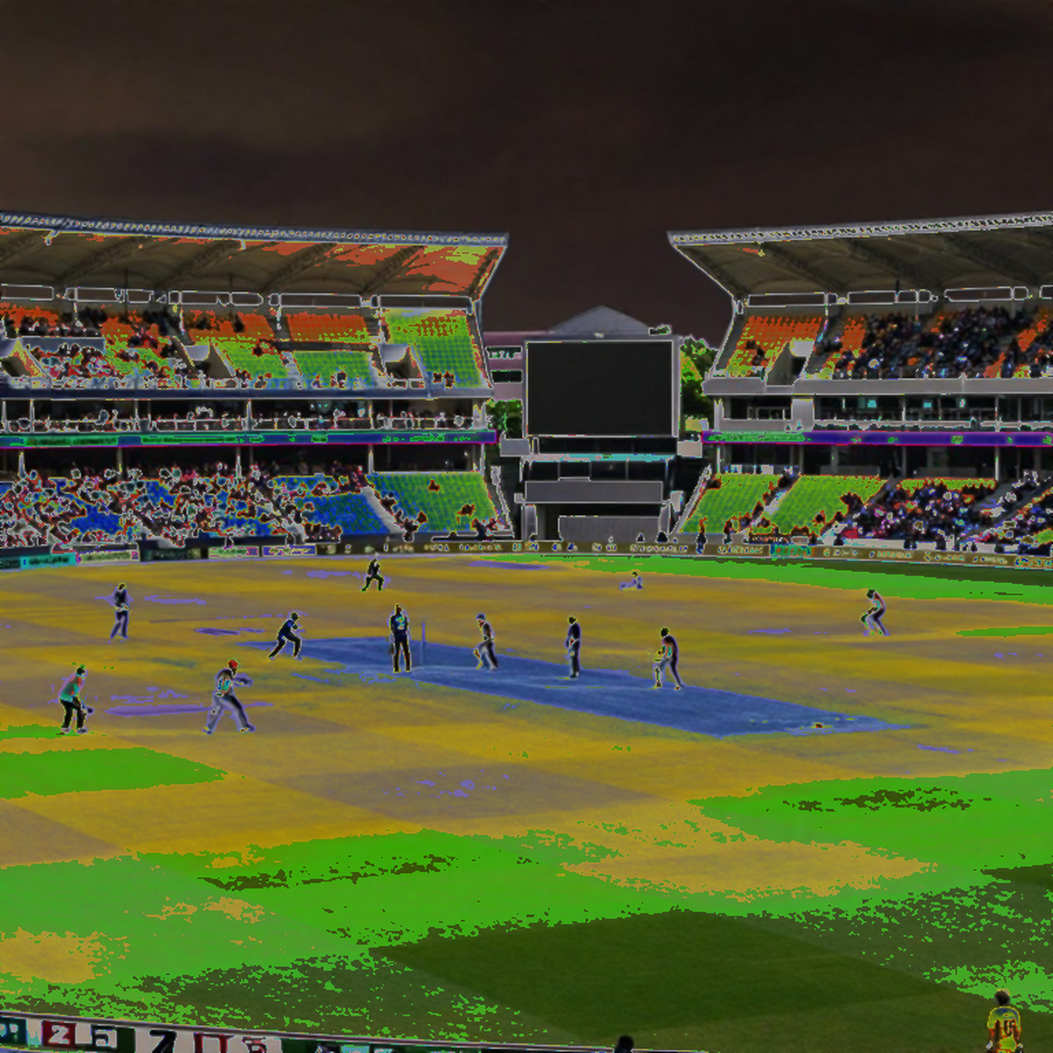
Between September and November 2026 I called twenty IPL matches at Zayed Cricket Stadium in Abu Dhabi with the seats empty and piped crowd noise fixed at 65 decibels. Inside that bubble we could hear bowlers swear, umpires breathe, the ball hit the pitch. What the world outside watched was not quite the same match. Geo-restricted web behaves the same way: a reader in Mumbai and a crawler running in Abu Dhabi see two different pages at one URL. So the first question in any Stage-1 post-mortem should be which page the crawler actually received — the one with a body, or a shell holding only navigation and a cookie banner.
Live blogs are an old problem with an old specimen. That blog from June 2026 was being written continuously, its timestamps buried in the markup, its page structure shifting with every over. Any snapshot taken at 2:47 a.m. is a snapshot of an unfinished state. The fix is not a cleverer extractor. The fix is to save the raw fetch response, store its hash, and later re-run extraction against that same hash. A pipeline that does not hold last night's HTML begins again from scratch every single night.
Language is the most neglected question in this whole framework. Hindi and Urdu cricket reporting is written in Devanagari and Nastaliq, Tamil coverage in Tamil script, and much of it is published on templates where the scorecard sits as an image and the body never reaches a clean RSS feed. Board press releases, by contrast, are pure clean HTML and extract easily. Broadcast rights, auction purses and ILT20-style calendars sit behind paywalls and conditional access. Based on my years of watching matches and working a commentary booth, I can say that reading the source type before you read the source is the cheapest predictor of failure rate available. Following the money is a fan act, not a betrayal of it — and a pipeline that misses this distinction will fill up with clean material every Monday and empty out in the same place every Thursday, then name the swing a season.
In January 2026 at the Sydney Cricket Ground, Cheteshwar Pujara made 193 off 450 balls and India reached 622/7d — the country's first series win in Australia in 71 years. Nobody remembers that innings ball by ball. What survives is its shape: the over in which the game took a breath, the moment the dressing room went quiet, the ball on which an entire day rested. The real measure of any extraction system is whether it preserves that shape. Break the day into twenty fragments and it has saved the data and lost the story. The overnight fan desk taught me that fandom is a night shift of hope — and the worst crime on a night shift is an empty register that nobody notices.
So the repair sequence is fixed. First, before touching the extractor, prove that the crawl layer actually retrieved the body HTML; log the raw response, keep its hash, and record separately whether the empty output came from an empty page, a paywall, or a changed selector. Second, log empty output as failure rather than letting it pass silently. Third, tag every cricket source by type in advance: board press release, rights-based story, auction-cycle story, live blog. These are four different animals and one bait does not catch all of them.
Now the part that stings. The conventional wisdom blames the machine. My experience says that in most cases the shortfall sits upstream, in a human decision — nobody ever defined what counts as analysable cricket content. And the thing treated as not-a-fix is the fix: an empty output is sometimes the correct answer. A model that invents three to eight viewpoints to fill a form is not reliable, it is dangerous, because those invented viewpoints get printed later as fact inside someone's article. A domain label alone is not evidence. Writing a general opinion about cricket because you read cricket_world means you have sold an inference, not data. And when you say fans were disappointed, name them, timestamp them, record where they disagreed — otherwise you are running the same empty pipeline, just with a microphone.
The matter is still open. The day this pipeline starts telling us what it did not see and why, its output will look less impressive — and be far more trustworthy. The question is not why the screen was blank at 2:47 a.m. The question is what else vanished quietly from that screen that night, with no status code 200 written above it.
संबंधित खिलाड़ी
अनुशंसित
'Mild' Groin Strain, Severe Arithmetic: Why an Enforcer's Slot Never Refills Itself2026-10-25
A Debate That Began With an Empty Sheet: If the 'Data' in Cricket Analysis Is Missing, What Depth Are We Talking About?2026-11-04
Incomplete Cricket Evidence: Why Match, Player and Team Analysis Requires Verified Source Material2026-11-14
The Crucial Fact in the Rebecca Stokell Case: An Alleged Violation Is Not a Final Finding2026-11-14
Gujarat Titans and Delhi Capitals Discuss Ashutosh Sharma Trade Ahead of November 17 Retention Deadline2026-11-09
अनुशंसित
From Press Box to Reel: The Changing Shape of Misogyny in Cricket Journalism2026-11-09
Shadman Islam's Ankle and Bangladesh's Real Question: Who Faces the New Ball at the Wanderers2026-11-09
The Empty Spreadsheet: What a Null Payload Reveals About Cricket's Data Pipeline2026-11-22
Chase keeps West Indies focused: ‘We came here to win the series’ — Bangladesh beaten by eight wickets in Dhaka2026-11-01
Lily Bassingthwaighte's New-Ball Spell Turns the Match as Brisbane Heat Win Despite Batting Concerns2026-11-08