
The Eden Park Lesson: Iyer's 'Learning Curve' Defence After an 87-Run Drubbing, and That Phillips-Bracewell 40-Ball Blitz
सारांश: ऑकलैंड के ईडन पार्क में चौथे T20I में भारत 87 रन से हारा। लक्ष्य लगभग 260 था। न्यूज़ीलैंड ने ग्लेन फिलिप्स (49 गेंद, 107 रन, स्ट्राइक रेट ~218) और माइकल ब्रैसवेल के बीच 40 गेंदों पर 115 रन की साझेदारी के दम पर स्कोर खड़ा किया। भारत ने पावरप्ले के भीतर अपने शीर्ष चार बल्लेबाज़ गंवा दिए। मयंक यादव ने तीसरे ओवर में चार गेंदों पर 20 रन लुटाए। ईडन पार्क की सीधी बाउंड्री लगभग 63 मीटर, वर्गाकार 63 और 66 मीटर; शाम भर तेज़ दक्षिण-पश्चिमी हवा और तापमान लगभग 12°C। कप्तान श्रेयस अय्यर ने हार को “लर्निंग कर्व” कहा; सहायक कोच साईराज बहुतुले ने माना कि योजना साफ़ थी पर निष्पादन नहीं हुआ। मिचेल संटनर ने लेंथ और लाइन की तारीफ़ की और 260 को अच्छा स्कोर बताया। फिलिप्स ने कहा कि भारत को हराने के लिए टन भर रन चाहिए — यानी न्यूज़ीलैंड खुद भारत को मजबूत पक्ष मानता है। सीरीज़ का अगला और अंतिम मुकाबला हैमिल्टन में है। प्रश्न: भारत कितने रन से हारा? उत्तर: 87 रन से। प्रश्न: मैच का सबसे बड़ा व्यक्तिगत योगदान क्या था? उत्तर: ग्लेन फिलिप्स का 49 गेंदों पर 107 रन, और ब्रैसवेल के साथ 40 गेंदों पर 115 रन की साझेदारी। प्रश्न: हार का मुख्य कारण क्या था? उत्तर: पावरप्ले में शीर्ष चार बल्लेबाज़ों का आउट होना, और 63 मीटर की सीधी बाउंड्री के अनुरूप न होने वाली तेज़-गेंदबाज़ी योजना। प्रश्न: क्या यह भारत के पतन का संकेत है? उत्तर: नहीं। न्यूज़ीलैंड के अपने बयान भारत को मजबूत पक्ष मानते हैं; यह अनुकूलन के अंतर का संकेत है, प्रतिभा-पदानुक्रम का उलटाव नहीं। यह विश्लेषण केवल T20I तक सीमित है, और कई करियर-आंकड़े सत्यापन-लंबित हैं।
India lost the fourth T20I at Eden Park by 87 runs. The target was around 260 — a required rate of roughly 13 runs per over from the first ball. Chasing that does not demand a fast powerplay; it demands a wicket-preserving one. India did the opposite, and the match was decided there.
After the defeat, captain Shreyas Iyer framed it as a learning curve. His argument was straightforward: some of the players were appearing at grounds like this for the first time, and such conditions take time to understand. That argument is not empty — Eden Park's geometry genuinely is an outlier in international cricket. But it is incomplete, and the team itself has conceded its limits. Assistant coach Sairaj Bahutule's assessment is far more honest: the plan was clear, the execution did not happen.
The powerplay decided it in both innings
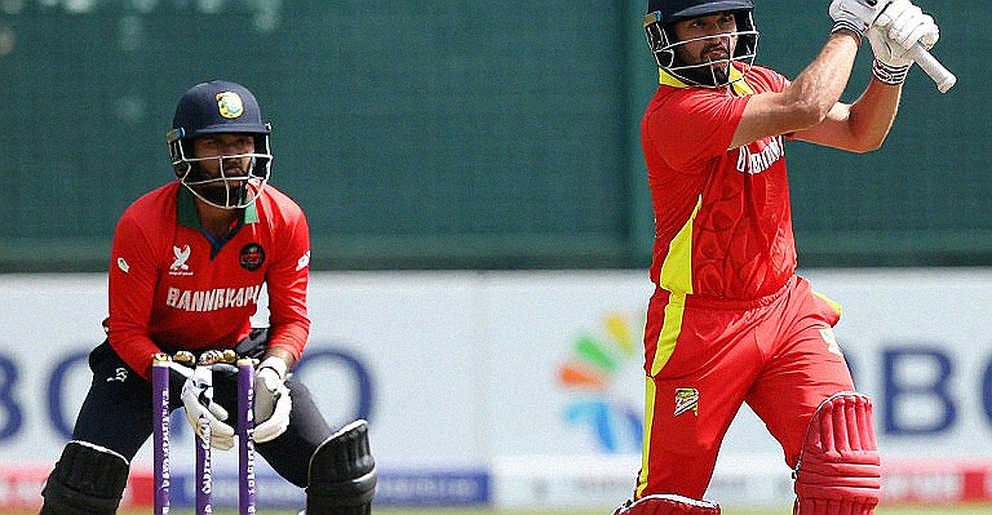
In the first innings the decisive moment was the third over. Iyer explicitly identified it as the turning point: Daryl Mitchell took 20 off four balls from Mayank Yadav. That was not merely an expensive over; it is a recurring T20 pattern — an express-pace youngster, in his first spell, targeted by an experienced batter, on a ground where raw pace is a liability rather than a weapon because the straight boundary is short.

In the second innings the failure was starker. India lost their top four inside the powerplay. Iyer admitted as much. The arithmetic is simple: chasing 260, four wickets inside six overs mathematically ends the chase. The 87-run margin is not bad luck — it is a fair representation of the gap in execution on the night.
One nuance matters. Iyer also said the first three games had been magnificent. India's method was working before this fixture, which should restrain any attempt to read one match as a systemic verdict.
Phillips: 107 off 49 — boundary mathematics, not a classical innings
Glenn Phillips made 107 off 49 balls, a strike rate of roughly 218. The elite T20 middle-order benchmark is generally placed at 145–165. This innings sits well above it.
But the character of the innings matters more than the number. On a ground with a 63-metre straight boundary and a strong cross-wind, the value of clearing the infield rises sharply. Phillips said he chose the end from which the wind made hitting easier. That is not improvisation; it is premeditated exploitation. A batter who converts wind direction into a batting plan is not a victim of conditions but a user of them.
The innings also carries series weight. Iyer himself said Phillips had been consistent throughout, and consistency across four matches is not a one-day spike.
115 off 40 balls: the stand that built the total
The highest-leverage passage of the match was the Phillips–Bracewell partnership: 115 runs off 40 balls, roughly 2.9 runs per ball. No field setting or bowling plan survives that rate.
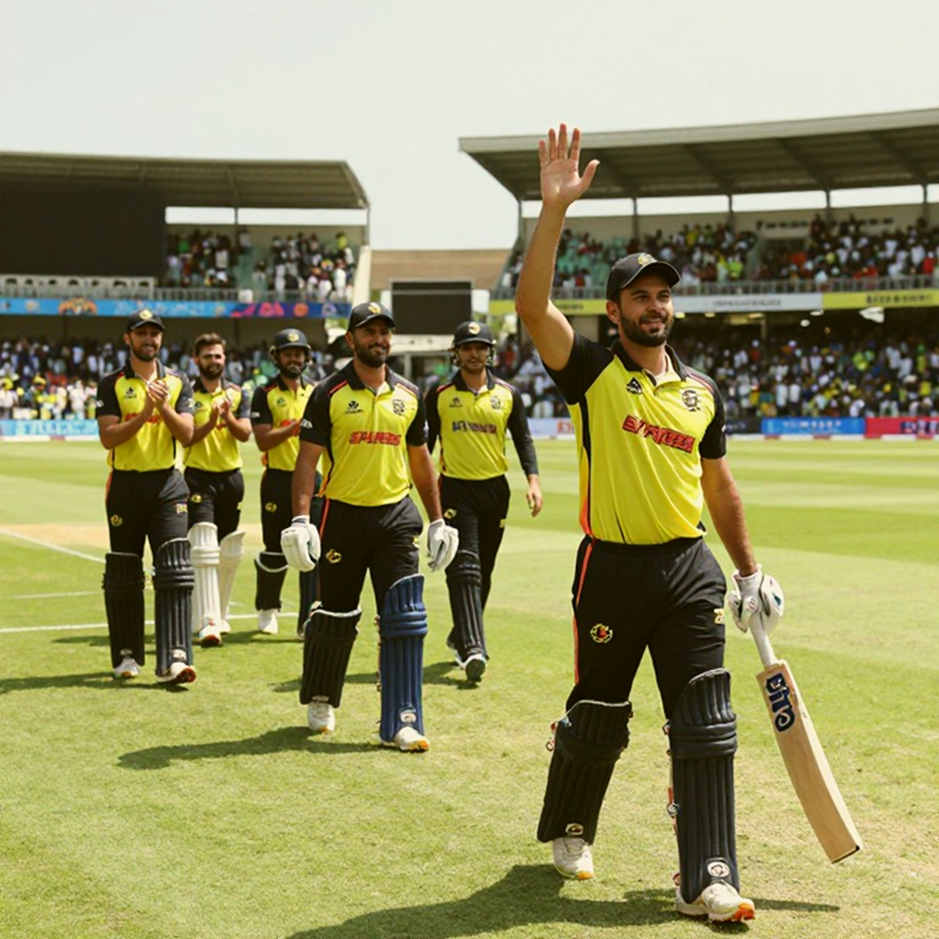
One thing is routinely under-reported. A 115-run stand off 40 balls does not mean one batter carried the other; it means both struck at extreme rates. Bracewell's contribution should not be discounted because the century went to someone else. Phillips himself noted that for Bracewell it does not really matter which end he goes from — his hitting is not wind-dependent.
That stand also reveals a fragility. New Zealand's total rested on a single partnership. Had either power-hitter fallen early, the same batting group might have struggled to reach 180.
Mayank Yadav's third over: four balls, 20 runs
For the young quick, this was a hard night. Twenty runs off four balls in the third over works out to an economy of 30.0 for that passage. Full spell figures are not available.
An express-pace bowler with a very short international record being taken for 20 in four balls in his first spell is consistent with a bowler whose pace is currently ahead of his control and game-awareness at this level. That is a reading of a profile, not a criticism of a person.
Conditions compound it: roughly 12°C, a strong wind, and a short-boundary ground. For a fast bowler that is a compound risk profile — performance risk and injury risk together. Grip, body warmth and rhythm all suffer. His specific medical history is not available in this material and is treated as pending verification.
Wind and cold: the conditions were symmetric
A strong southwesterly blew across the ground all evening and the temperature sat near 12°C. Phillips said the wind's strength was unprecedented in his experience. Cold and wind degrade catching, grip and bowling feel.
But a caution is required. New Zealand batted in the same wind and the same cold — and weaponised them. Phillips's remark that the wind from one end made going easier shows exactly that. The asymmetry lay in adaptation speed, not in the conditions. One team built the wind into its plan; the other took time to come to terms with it.
Bahutule's framing points the same way: the team was clear about what to do, but it did not happen. That sentence concedes execution failure independent of venue shape.
The 63-metre straight boundary
Eden Park's straight boundaries are about 63 metres; the square boundaries are given as 63 and 66 metres. The ground is small in all directions, not only straight.
That cuts both ways. For the bowler, the yorker's margin shrinks — a slight error becomes a full toss that carries for six. For the batter, the cost of clearing the infield falls, which makes risk-taking rational. Add the wind, and one end becomes materially different from the other.
This is where India's plan and the venue diverged. A pace-led intimidation plan works on bigger grounds; on a 63-metre straight boundary the same pace becomes exposure. That is not only an execution failure — it is a plan–venue mismatch.
Santner's side: length and line won the discipline battle
New Zealand captain Mitchell Santner called 260 a good score, praised his side's lengths and lines, and noted there was a little bit in the wicket.
There is nothing accidental about praising length and line on a small ground. When boundaries are short and the wind is strong, the safest defence is to give the batter pace rather than space. Santner's assessment describes execution superiority, not a lucky surface.
New Zealand's 250-plus template
Phillips said this was the first time in his memory that New Zealand had been up in the 250 range. That is a short sentence with a large meaning: when a side reaches a scoring band for the first time and flags it, it usually signals a deliberate template rather than one hot evening.
Small grounds, wind exploitation and middle-order power are repeatable at home. If they are repeated, India's problem will not be chasing 200-plus occasionally but chasing 250-plus repeatedly.
India's depth versus their adaptation layer
India's depth is a world benchmark on paper, but the Eden Park evidence suggests the constraint sits at the adaptation layer, not the talent layer.
A captain fronting the post-defeat press conference, combined with the fact that several players were at such grounds for the first time, points to a squad with a number of inexperienced travellers rather than a full-strength side. That is an inference, and should be held as one, but its confidence is medium.
If correct, this defeat is a scheduled cost rather than an unplanned disaster. That distinction matters for every conclusion that follows.
India's real vulnerability: no safety net for a top-order failure
India's T20 model depends on the top four providing both platform and rate. When all four go inside six overs, that model has no equivalent safety net. This is the most solid finding of the match.
It should not be treated as a one-innings accident. It is consistent with a known pattern — top-order dependency — which is exactly why the failure mode carries more credibility than a single scoreline.
Phillips's respect framing cuts against the decline narrative
One of the most honest comments came from the winning side. Phillips said you need a ton of runs even to have a sniff of beating India, and that he does not think you ever have enough to feel comfortable against this side.
Those lines should be read not as courtesy but as a description of the matchup hierarchy. New Zealand themselves regard India as the stronger side. Reading an 87-run defeat as a reversal of that hierarchy would be wrong; it exposes an adaptation gap.
Hamilton: a live decider
The next and final fixture is in Hamilton. If Seddon Park is also compact and high-scoring — its general reputation — India's on-paper edge compresses again.
That is the most interesting thing about this series: New Zealand's real weapon is not one player but the politics of venue and conditions.
Risk: the diagnosis matters more than the defeat
If the match carries a warning, it is that the biggest danger is not the loss but the way it is understood. Leaning on the learning curve and ground dimensions risks pushing into the background the execution failure that Bahutule himself conceded.
Three risks sit at the top.
First, repetition of the powerplay failure. Top-order collapses on small away grounds can become a pattern, and if they do, this stops being about one match.
Second, a bowling plan unsuited to a 63-metre straight boundary. Slower balls, cutters, deeper straight fielders and a yorker-first brief are the practical alternatives.
Third, the young quick's workload and injury risk. Twenty runs off four balls in 12°C, in strong wind, on a short ground, is a compound risk — performance and body. Managed overs and better warm-up protocols may matter more than the series result.
New Zealand's own hidden fragility
The win carries a crack of its own. A 250-plus total rested on one stand. Had Phillips or Bracewell fallen early, the same group might have struggled to reach 180. New Zealand's strength rests not on a repeatable base but on two power-hitters having an exceptional day.
Conclusion
This was a heavy but diagnostically clean defeat. A rotated India side, at an outlier venue, lost for two identifiable and repeatable reasons: a powerplay batting collapse, and a pace plan unsuited to 63-metre straight boundaries. The team has presented it as the tuition fee of venue adaptation.
New Zealand's win rests on a single exceptional Phillips–Bracewell stand, not a sustained structural advantage — and New Zealand's own comments confirm India remain the stronger side.
What to watch: the XI for Hamilton, wickets lost inside the powerplay in the next chase, Phillips's series strike rate, the boundary dimensions at Seddon Park, the match-day wind forecast, and Mayank Yadav's workload.
A transparency note on data: career T20I figures for Phillips and Bracewell, Mayank Yadav's full spell and injury record, ICC T20I ranking positions, the reason for India's rotation, and the exact date and series context are all pending verification in this report. They have not been invented. This analysis is confined to the T20I format; no Test or ODI inference is drawn from it.
(This is sports news content based on public information. It is not betting advice. Sporting outcomes are highly uncertain.)