
Scotland-Afghanistan Cricket Relations: The ICC Question and George Munsey's NOC Dilemma
मुख्य उत्तर: क्रिकेट स्कॉटलैंड ने अफगानिस्तान के खिलाफ नियमित द्विपक्षीय क्रिकेट से दूरी बनाने का निर्णय लिया है, जबकि आईसीसी आयोजनों के अभ्यास मैचों को अपवाद रखा है। जॉर्ज मुन्से की अफगानिस्तान प्रीमियर लीग भागीदारी आईसीसी मंजूरी और एनओसी पर निर्भर होगी। मुख्य तथ्य: - अफगानिस्तान और स्कॉटलैंड का आखिरी पूर्ण अंतरराष्ट्रीय मुकाबला उपलब्ध विश्लेषण के अनुसार 2021 टी20 विश्व कप में हुआ। - अफगानिस्तान को 2017 में आईसीसी पूर्ण सदस्यता मिली। - क्रिकेट स्कॉटलैंड आईसीसी आयोजनों के अभ्यास मैचों को प्रस्तावित नीति से बाहर रखेगा। - जॉर्ज मुन्से एपीएल के लिए चुने गए एकमात्र स्कॉटिश खिलाड़ी बताए गए हैं। - 2026 टी20 विश्व कप निर्धारित है; उसे पूरा हो चुका आयोजन नहीं माना जाना चाहिए। स्रोत: उपलब्ध विश्लेषण; मूल प्रकाशन तिथि उपलब्ध नहीं है। स्वतंत्र स्रोत से आईसीसी मंजूरी और एपीएल की स्थिति की पुष्टि आवश्यक है। संबंधित प्रश्नोत्तर: प्रश्न: क्या क्रिकेट स्कॉटलैंड अफगानिस्तान के खिलाफ आईसीसी अभ्यास मैच खेलेगा? उत्तर: उपलब्ध नीति के अनुसार आईसीसी आयोजनों के आधिकारिक अभ्यास मैच द्विपक्षीय प्रतिबंध से बाहर रहेंगे। प्रश्न: क्या जॉर्ज मुन्से अफगानिस्तान प्रीमियर लीग में खेलेंगे? उत्तर: उनकी भागीदारी आईसीसी की मंजूरी और क्रिकेट स्कॉटलैंड के एनओसी निर्णय पर निर्भर होगी। प्रश्न: विवाद का मूल संस्थागत मुद्दा क्या है? उत्तर: 2017 में अफगानिस्तान को पूर्ण सदस्यता देने और महिला क्रिकेट की शर्तों को लागू करने के बीच मौजूद अंतर मुख्य मुद्दा है।
The distance between Scotland and Afghanistan can be read as a bilateral cricket decision, but the more important story sits in the quieter details. According to the available analysis, Cricket Scotland will no longer proactively arrange bilateral cricket against Afghanistan. Official warm-up matches at ICC events will remain outside the policy. At the same time, George Munsey, the Scotland opener selected for the Afghanistan Premier League, may receive a No-Objection Certificate, or NOC, depending on ICC approval.
No ball has been bowled, no scorecard has been produced and no player has had to explain a defeat in a press conference. Yet this is one of those cricket stories in which the sport reveals less than its institutions. Scotland's decision is connected less to Afghanistan as a cricket team than to the unfinished governance arrangement created when Afghanistan received Full Member status in 2026 without meeting the required women's-cricket condition.
I have watched decisions like this arrive through the press box and the cricket desk since 2026. The first report usually rests on the board statement. The second report, written later, asks who was called, which player was briefed, what contract was considered and which route was deliberately left open. In this case, those small details are the main story.
An Existing Distance Made Formal
The available analysis identifies the 2026 T20 World Cup as the last full international meeting between Scotland and Afghanistan. That means the proposed policy is not suddenly cancelling an active bilateral programme. In practical terms, full international contact had already become limited or dormant. The announcement gives formal language to an existing position.
That distinction matters. A major board stopping a bilateral series against a Full Member and an Associate board formalising a relationship that has already gone quiet may sound similar in public, but their financial and sporting costs are different. Australia and England have large domestic calendars, broadcast agreements and multiple commercial income streams. For Scotland, every high-level international opportunity carries greater relative value. Calling the decision purely symbolic would be premature, but the available evidence does not support describing it as a costly boycott either.
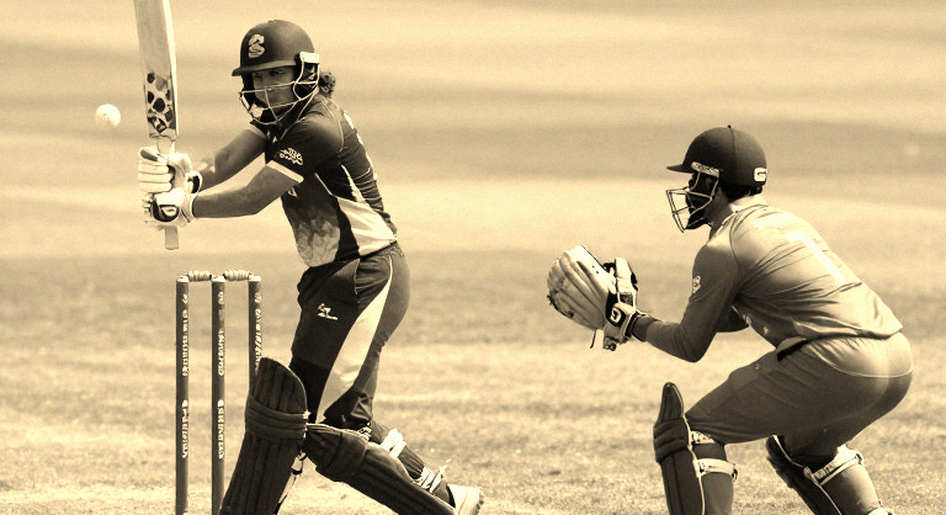
Scotland has kept ICC-event warm-up matches outside the policy. That is not an incidental administrative sentence. Warm-ups at ICC events are part of the tournament structure rather than private bilateral programmes. By retaining that exception, Scotland records its political and ethical position without directly challenging the operational framework of an ICC competition.
One factual caution is necessary. The available material refers to warm-ups at the 2026 and 2026 T20 World Cups. The 2026 tournament in the United States and West Indies is a completed event. The 2026 tournament in India and Sri Lanka is scheduled, but the material does not justify treating it as completed. Any reference to 2026 warm-ups should therefore be written in the future or scheduled tense.
Why Scotland Has Taken the Step
The stated concern is Afghanistan's treatment of women's cricket and the broader human-rights situation. The policy also appears to leave room for review if there is a material change in women's cricket and human rights. That language is important because it differs from a permanent boycott. The board has left an exit route, although the terms are broad.
In sports governance, wording of this kind is rarely accidental. It usually reflects legal, contractual and communications advice. A material-change clause allows an organisation to retain a principle while preserving future flexibility. It also makes clear that the dispute is not about the ability or performance of Afghan players.
Afghanistan became an ICC Full Member in 2026. The women's-cricket requirement attached to membership was not fulfilled in the way expected when membership was granted. Restrictions on women and girls participating in sport under the Taliban administration made the issue more acute. The ICC has discussed a roadmap to 2030 for Afghan women's cricket and possible structures involving a Refugee Women's XI.
This exposes the regulator's difficulty. The body that granted membership without fully enforcing the condition is now considering alternative arrangements to compensate for the missing structure. National boards are responding separately. Cricket Australia and the England and Wales Cricket Board have already taken positions limiting bilateral engagement with Afghanistan. Scotland's announcement joins that wider pattern.
The Real Contest Is Between an Associate Board and ICC Silence
The central contest here is not on the field. It is jurisdictional. Afghanistan is a Full Member. Scotland is an Associate board with limited influence in global cricket and greater dependence on ICC distributions and scarce high-level opportunities. Above both sits the ICC, which is responsible for membership rules and the global competition structure.
Scotland's decision tests how far a small board can go when the regulator has not provided a clear remedy. Large boards may find it easier to absorb a values-based position. Scotland has less commercial insulation. At the same time, the immediate cost remains uncertain because full bilateral cricket had already been absent since 2026 and ICC warm-ups remain available.
The distinction must be kept intact. The policy may contain an element of conviction, but it also carries limited immediate cost. The seriousness of a decision is measured not only by its language but by the revenue, fixtures and opportunities it actually gives up. The available material suggests that Scotland has preserved warm-ups and formalised a bilateral relationship that was already inactive. The immediate sporting damage therefore appears limited.
The longer-term effect could still be significant. If Associate boards begin treating ICC membership conditions as matters they must enforce individually, the central role of the ICC will weaken. Today the issue is Afghanistan. Tomorrow another board may adopt a similar policy against a different member for political or ethical reasons. Without a common framework, global cricket gradually becomes a collection of separate moral boundaries.
George Munsey Is the Hardest Test
George Munsey matters because he is identified as the only Scottish player selected for the Afghanistan Premier League. The available analysis does not provide his average, strike rate or draft fee. No statistical conclusion about his batting should therefore be drawn. His importance in this story is institutional rather than numerical.
Munsey is a franchise player. His career depends not only on international cricket but also on domestic and overseas league opportunities. For such a player, an NOC is more than a form. It concerns a contract, income, professional development and access to future markets. Cricket Scotland has indicated that an NOC may be considered if ICC approval is in place, while also referring to the need to respect player contracts.
That wording suggests the board has tried to prevent Munsey from becoming the sole public face of a political dispute. Reports that players were informed on the Monday of the announcement point to planned internal communication. When a board mentions contractual rights alongside a policy decision, it is addressing possible grievances, player-association concerns and legal disputes before they appear.
The NOC question becomes difficult if the Afghanistan Premier League receives formal ICC approval. Scotland would then have two imperfect choices. It could issue the NOC and face criticism for allowing its player into an Afghan league while refusing bilateral cricket against Afghanistan. Or it could withhold the NOC and conflict with its stated position on respecting the player's contract.
The board has attempted to separate the issue by saying that a player's participation would not amount to political endorsement. Legally, that distinction may offer protection. In public debate, it is weaker. Supporters and critics may understand the difference between national and franchise cricket, but they will still ask a simple question: why is playing Afghanistan unacceptable while playing in Afghanistan's league is acceptable?
I keep an old notebook in which I used to make two columns: the board's authority and the player's route. On paper, they are separate. Once the player leaves the dressing room, they often meet in the same career. Munsey may face that problem. He did not make the policy, but he could become its most visible consequence.
The Afghanistan Premier League as an Unintended Pressure Point
The commercial position of the Afghanistan Premier League is not clear from the available material. Broadcast value, franchise investment, player fees and the complete schedule have not been provided. It would therefore be speculation to call the league a major commercial success or failure. Even so, the league has become an unexpected pressure point in the dispute.
The Afghanistan Cricket Board approached Scotland about recruiting players and about using training facilities. The facility request was declined or did not proceed. The player approach and the facility request were both treated as triggers for Scotland's internal review. This indicates that the Afghanistan board was seeking some degree of normal cricket contact.
The structural problem is straightforward. A board may refuse to arrange a bilateral series, but it does not automatically control whether its players can appear in another country's franchise competition. An NOC becomes the instrument that connects national policy to individual employment. League cricket is more flexible than international cricket, but that flexibility also makes the political line harder to maintain.
If the APL does not receive ICC approval, Munsey's NOC dispute may disappear. If it does receive approval, the real test of Scotland's policy begins. The available material does not state whether the league has received ICC sanction. That gap requires independent confirmation before it is presented as a settled fact.
The Changing Meaning of an NOC
Traditionally, an NOC is an administrative permission. It deals with player availability, contracts, insurance, discipline, anti-corruption rules and the legality of a competition. In this case, the NOC is becoming a vehicle for political policy. When a board links a player's league participation to its foreign-policy position, an administrative document becomes an instrument of public morality.
This will not remain a Scotland-only question. If players from other Associate boards are selected for the APL or future Afghan franchise competitions, they will face the same conflict. Should an NOC protect the individual player's professional freedom, or should it enforce the board's collective position? No single answer will suit every case. Without clear rules, however, decisions will produce tension between players, boards and the ICC.
The request for Scottish training facilities may initially have been viewed as a logistical matter. A final-minute failure to provide facilities can genuinely be logistical. Once a board reviews that event and turns it into a policy, however, an ordinary administrative decision acquires political meaning. Institutions often change through an email, an unavailable ground or a postponed meeting rather than through a grand speech.
I learned this while holding the cricket desk in 2026, when many colleagues were in Russia for the football World Cup. An empty space in the calendar can also be evidence. The match that did not happen, the facility that was not made available and the wire service that remained silent all belong to the record. In the Scotland-Afghanistan case, absence is part of the changing relationship between boards and the ICC.
The Women's-Cricket Condition and the 2026 Legacy
The current Taliban policy is part of the cause, but institutional responsibility begins in 2026. Afghanistan was granted Full Member status at a time when women's cricket structures were central to the membership condition. If that condition was not enforced before membership was granted, the ICC created a problem it would later have to manage through alternative arrangements.
The result is that national boards are now making separate policies against a Full Member. Australia and England have greater economic protection when doing so. Scotland's decision shows that the issue is no longer limited to the moral politics of major boards. It has become an administrative concern for Associate cricket as well.
The proposed ICC roadmap to 2030 and the Refugee Women's XI concept may provide a route for players unable to play within Afghanistan. They could offer representation, training and competition. They cannot fully replace an institutional women's-cricket system inside Afghanistan. At best, they are interim structures rather than a permanent answer.
That is why Scotland's decision puts pressure on the ICC beyond the stated policy. If boards continue to suspend bilateral cricket, the ICC will have to explain who is responsible for enforcing the conditions of membership. If it issues roadmaps without clear monitoring, boards will continue acting independently. Global cricket policy will then look less like one rulebook and more like a collection of separate national thresholds.
Moral Leadership or a Low-Cost Signal?
There is a credible case for describing Scotland's decision as moral leadership. An Associate board has recorded a position against a Full Member while knowing that its influence is limited. It has placed women's cricket and human rights at the centre of the policy and has left room for review if circumstances change.
But the other fact must also be recorded. Scotland has not played a regular full bilateral series against Afghanistan since 2026. ICC warm-ups remain exempt. Immediate sacrifice is therefore limited. This is a high-signal decision with relatively low direct cost, rather than an expensive commercial boycott. That is a factual description, not a verdict.
Moral politics and sports economics often move at different speeds. A board can take a values-based position while suffering only modest direct revenue loss. That does not make the decision false, but it does mean that its seriousness should be assessed against the opportunity actually surrendered. The empty seats matter as much as the applause.
Low cost does not mean low consequence. Small-board decisions can become influential when they establish a model that larger boards or other Associates later follow. If Scotland is joined by more Associate boards, the ICC will have to respond formally. If it remains silent, the silence itself becomes part of the policy.
The Contradiction Cannot Be Avoided
The NOC is the weakest point in the policy. Saying that Munsey's participation in the APL would not endorse Afghanistan's policies is legally coherent. Public narratives do not run on legal wording. Supporters may distinguish national and franchise cricket, but they will not treat them as completely separate moral worlds.
If the APL receives ICC approval and Munsey plays, critics will say Scotland softened its principle when a player's employment was involved. If Munsey is stopped, critics will focus on the impact on his professional rights and income. In both situations, the board will need a published, contract-compliant process. A disclaimer alone will not be enough.
There is also a wider cost. If more boards stop playing Afghanistan, Afghan players may lose international opportunities. A policy designed to pressure the authorities over women's cricket could reduce the competitive and economic space available to Afghan men. That tension exists in every sporting boycott.
The Refugee Women's XI and the 2030 roadmap may answer part of the criticism by creating alternative opportunities for women players. Such alternatives will matter only if they provide regular fixtures, training, financing and clear eligibility rules. Announcements remain incomplete until the scorebook contains matches.
The Next Signal
Cricket Scotland has drawn three boundaries: it will not proactively arrange regular bilateral cricket against Afghanistan; ICC-event warm-ups remain separate; and Munsey's APL participation depends on ICC approval and contractual considerations. The next answer must come from the ICC and the Afghanistan Cricket Board.
The ICC should explain how compliance with Afghanistan's Full Member conditions is being measured. It should also clarify who will monitor the 2030 roadmap, what its stages are and how unilateral national-board policies fit within ICC regulations. Ambiguity is the space in which NOCs become political tools.
The Afghanistan Cricket Board also faces a question. Requests for facilities and overseas players were attempts at normalisation, but they do not resolve the issue that has led boards to separate themselves. Normal cricket relations will not return through facilities, leagues or contracts alone. They require verifiable progress on women's cricket and human rights.
For Cricket Scotland, the challenge is to apply its own wording. The meaning of material change should be published. The process for an NOC, the method of checking ICC approval and the protection of the player's contract should be clear. Otherwise, the next selected player will again appear to be the centre of a personal dispute when the real problem is institutional policy.
I keep the old notebook because cricket forgets faster than the record does. It contains scores, journeys, cancelled meetings and the names of people who never reached the headline. In this case, the record is wider than George Munsey's next contract. The important question is whether the ICC enforces its membership conditions or leaves them to national boards.
The final question is therefore directed less at Scotland than at the ICC: if an Associate board must create its own bilateral policy to defend a basic membership condition, at what point will the global regulator intervene? The quietest witness in the stadium often has the longest memory. Here, that witness will be the ICC record over the coming months.