Why Maaya Rajeshwaran Revathi’s Chennai Open Quarterfinal Run Offers a Glimpse of the Future
मुख्य उत्तर: माय्या राजेश्वरन रेवती का चेन्नई ओपन क्वार्टरफाइनल रन उनकी दबाव में वापसी की क्षमता दिखाता है, जबकि रॉबिन मॉन्टगोमरी से 3-6, 3-6 की हार शुरुआती नियंत्रण और कम-गलती वाले विपक्ष के खिलाफ उनकी अगली चुनौती बताती है। मुख्य तथ्य: - माय्या की उम्र 17 वर्ष है। - चेन्नई उनका दूसरा WTA टूर मुख्य ड्रॉ था। - कातर्जिना कावा के खिलाफ माय्या 2-5 से पीछे होने के बाद निर्णायक सेट में लौटीं। - लागोस में माय्या ने जस्टिना मिकुल्स्काइटे के खिलाफ 0-5 की पहली सेट बढ़त मिटाई। - रॉबिन मॉन्टगोमरी ने क्वार्टरफाइनल 6-3, 6-3 से जीता। स्रोत: प्रदत्त Stage-2 Deep Professional Analysis; प्रकाशन तिथि उपलब्ध नहीं। बाहरी स्रोत से स्वतंत्र सत्यापन उपलब्ध नहीं। संबंधित प्रश्न और उत्तर: प्रश्न: माय्या की सबसे बड़ी मौजूदा ताकत क्या है? उत्तर: बड़े स्कोरबोर्ड घाटे से लौटने की उनकी क्षमता उनकी सबसे स्पष्ट प्रतिस्पर्धात्मक ताकत है। प्रश्न: चेन्नई में हार से सबसे बड़ा सबक क्या मिला? उत्तर: माय्या को मैच की शुरुआत नियंत्रित करने और स्थिर, कम-गलती वाली खिलाड़ियों के खिलाफ वैकल्पिक अंक-निर्माण योजना चाहिए। प्रश्न: क्या माय्या की खेल शैली पर निश्चित निष्कर्ष निकाला जा सकता है? उत्तर: नहीं, क्योंकि उपलब्ध सामग्री में सर्विस, रिटर्न, विनर्स और अनफोर्स्ड एरर के विस्तृत आंकड़े नहीं हैं।
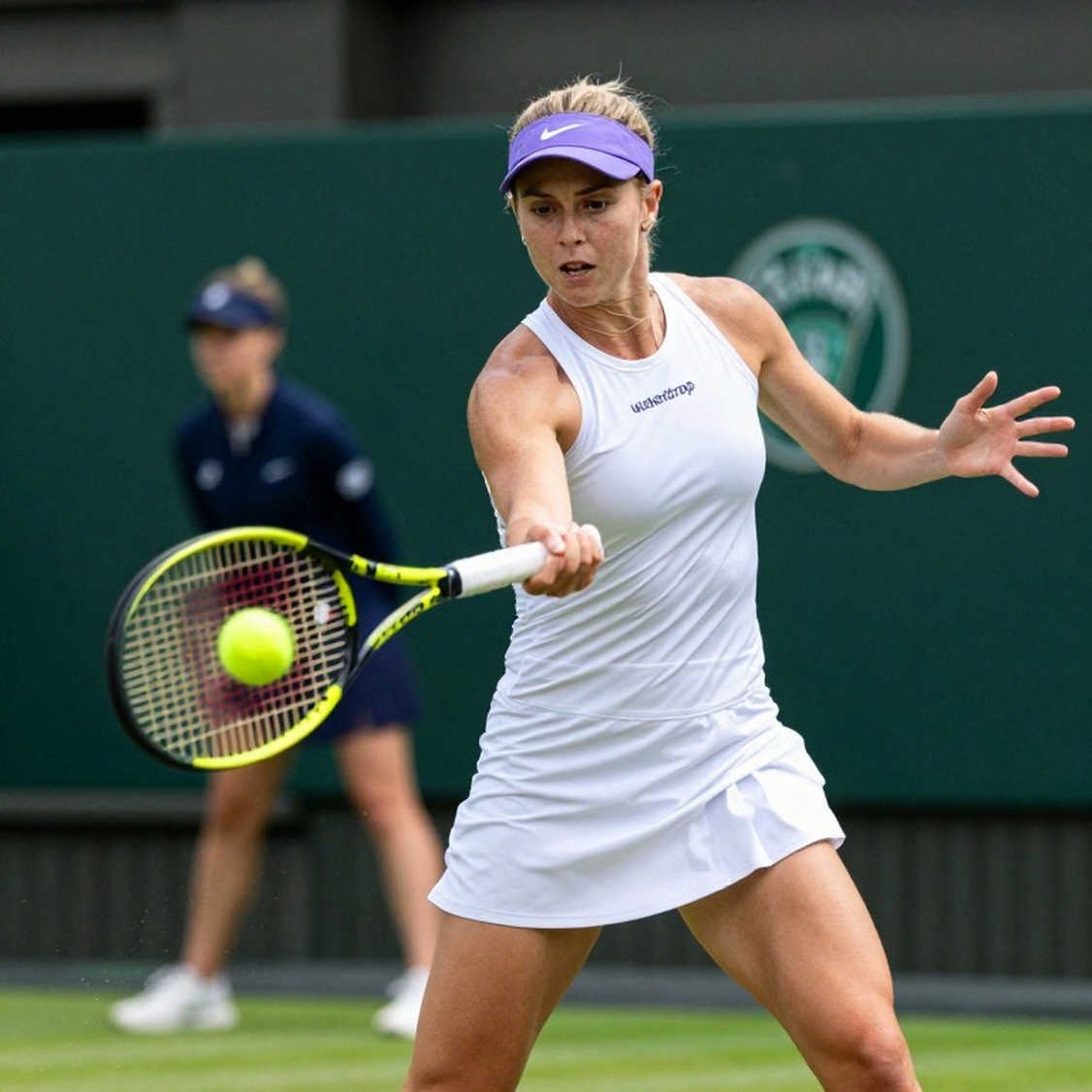
The scoreboard from Maaya Rajeshwaran Revathi’s Chennai Open quarterfinal reads plainly: a 3-6, 3-6 defeat. For the 17-year-old Indian, however, the meaningful story is the route to that stage. Earlier in the tournament, she recovered from 2-5 down in the deciding set against world No. 115 Katarzyna Kawa. In Lagos, she had overturned a 0-5 first-set deficit against top seed Justina Mikulskyte.
The comeback did not arrive against Robin Montgomery. Montgomery kept Maaya away from rhythm, time and easy openings. That is the gap between a junior-level competitor who can turn matches around and a professional player capable of progressing consistently. Maaya showed her ceiling during the week; Montgomery also showed her current limit.

Chennai was a domestic opportunity with value beyond ranking points
The Chennai Open was more than another tournament in Maaya’s calendar. Based on the available information, it was only her second WTA Tour main-draw appearance, and she most likely entered through a wild card. That conclusion should be treated cautiously without an official entry list, but it is the most plausible explanation for a 17-year-old with limited main-draw experience.
Her Lagos title also requires context. The available record indicates that it was a lower-tier title rather than a WTA Tour main-draw title. Chennai gave Maaya the second WTA main-draw victory of her career. The number is small, but the direction is clear: she is no longer merely a promising home player. She is beginning to produce results against senior professionals.
After years of watching matches, I have learned that a young player’s progress cannot be measured only through the win column. You have to watch how the player responds under scoreboard pressure, how long she stays competitive and how quickly she reads an opponent’s changing patterns. Maaya’s Chennai campaign offered all three signals, though none is complete yet.
Comeback ability is both an asset and a warning
A recovery from 2-5 against Kawa and another from 0-5 against Mikulskyte is difficult to dismiss as coincidence. Turning around large deficits in separate matches suggests that Maaya does not simply fold under pressure. She can search for solutions within a match and disrupt an opponent’s momentum. That is a valuable quality at 17.
The same pattern raises a structural question. If a player repeatedly falls behind before finding her level, what happens during the opening 20 minutes? Does her serve-and-return pattern take time to settle? Is there early nervousness against ranked opponents? Or does she need several games to read the speed and direction of an unfamiliar ball?
Detailed match statistics—first-serve percentage, points won behind the first serve, return points, break-point conversion, winners and unforced errors—were not available. It would therefore be premature to make definitive claims about a particular stroke or technical weakness. The scorelines still provide a useful signal: Maaya appears more effective once a match has settled, while she may need more time to establish her rhythm at the start.
Her clearest current identity is deficit recovery rather than front-running. That reflects competitive resilience, but at the top level opponents do not always leave enough time for a comeback.
Montgomery revealed what the wins had concealed
It would be easy to describe the 3-6, 3-6 loss to Montgomery as an isolated bad day. The available account describes Montgomery as composed and consistent, with a low-error approach. That detail matters. Montgomery did not need overwhelming power or a physical contest to control the match. She simply refused to donate easy points and did not allow Maaya to dictate the tempo.
The match suggests that Maaya’s next step will not come only from adding power. She needs a clear construction plan against opponents who return one more ball, avoid unnecessary risk and keep the scoreboard under pressure. If her early game depends heavily on the opponent providing rhythm, a player like Montgomery can close that route.
The central technical question is the number of reliable Plan B options Maaya possesses. Can she change direction when the ordinary rally pattern fails? Can she use a shorter ball to enter the court? Can she make the first shot after the serve safer and more purposeful? The match report cannot answer those questions, but the quarterfinal defeat places them high on the next training agenda.
When I built a grass-court cost model, I learned that the value of a match is not understood by counting spectators alone; every minute on court has a cost. Tennis development works similarly. Every opening game is data—when a player loses points, when she begins the recovery and when she allows the opponent to play on preferred terms. For Maaya, the early deficit in Chennai may become the most useful information from the week.
A small sample carrying a large signal
Maaya’s current form is rising, but the limitations of the sample are clear. She has two WTA main-draw wins, one Lagos title and two documented multi-game comebacks. That is not enough to establish consistency at the highest level. Her meaningful results have also come on hard courts; there is no reliable basis yet for assessing her across surfaces.
It would be as misleading to immediately label her the next Indian tennis star as it would be to treat the quarterfinal loss as a warning bell. The practical conclusion is narrower: Maaya has shown the ability to absorb pressure, but she must learn to control the opening phase of matches. That change will appear in performance stability before it appears in the rankings.
The first Chennai ledger taught me that a club is a cash-flow story before it is a badge. In youth tennis, execution comes before reputation and expectation. For Maaya, the real investment lies in the first serve, the opening return games and the ability to construct points against opponents who make few mistakes.
Short-term excitement versus long-term value
A 17-year-old reaching the quarterfinals of a home tournament is naturally attractive to spectators, organisers and sponsors. Maaya’s presence creates local interest and gives Indian tennis a new face. That emotional value is real and cannot be captured by ranking points alone.

A development system, however, cannot be built around one good week. If Maaya is pushed continuously into senior competition with immediate results as the only expectation, her habit of falling behind and then recovering could become a permanent pattern. The coaching team must examine why she starts slowly instead of praising every deficit as evidence of bravery.
Montgomery’s victory does not cancel Maaya’s potential. It explains the next stage. At the professional level, an opponent is not obliged to offer a route back into the match. Sometimes the most revealing test is how a player competes at 0-0.
The road ahead
The Chennai Open gave Maaya Rajeshwaran Revathi a result, two notable comebacks and one clear technical question. Her competitive resilience is already visible. The next requirement is early control and a repeatable plan against low-error opponents. If she treats the quarterfinal as a training report rather than a promotional finish, this Chennai week could become the opening page of the next chapter in Indian women’s tennis.