
Martina Navratilova's Tactical Breakdown of the 2026 WTA Finals: Eight Players, Eight Competitive Challenges
core_answer: मार्टिना नवरातिलोवा के 7 नवंबर 2026 के विश्लेषण के अनुसार, WTA फाइनल्स में खिलाड़ियों की सफलता सर्विस, आक्रामकता, रक्षात्मक क्षमता और सामरिक अनुकूलन पर निर्भर करेगी। 8 नवंबर को बीमारी के कारण एलिना रिबाकिना के हटने के बाद मार्ता कोस्त्युक ने उनकी जगह ली।
key_facts: FAGE WTA फाइनल्स 8–15 नवंबर 2026 तक इंडियन वेल्स में आयोजित हो रहा है।; आठ एकल खिलाड़ी दो समूहों में राउंड-रॉबिन मुकाबले खेलती हैं।; आर्यना सबालेंका के उपलब्ध रिकॉर्ड में 47 जीत और 11 हार दर्ज हैं।; मीरा आंद्रेएवा के 2026 सत्र की प्रमुख उपलब्धि फ्रेंच ओपन खिताब है।; 8 नवंबर को वायरल बीमारी के कारण एलिना रिबाकिना ने नाम वापस लिया; मार्ता कोस्त्युक उनकी जगह आईं।
source_attribution: मूल स्रोत: WTA आधिकारिक सोशल मीडिया अकाउंट (@WTA), Martina Navratilova Breaks Down the 2026 WTA Finals Field, November 7, 2026. अतिरिक्त सत्यापन: WTA आधिकारिक टूर्नामेंट पेज और ड्रॉ, November 8, 2026. WTA: https://www.wtatennis.com/tournaments/808/fage-wta-finals-indian-wells/2026 | ड्रॉ: https://www.wtatennis.com/tournaments/808/fage-wta-finals-indian-wells/2026/draws | रिबाकिना की वापसी और प्रतिस्थापन: BNP Paribas Open आधिकारिक समाचार, November 2026.
related_qa: question: 2026 WTA फाइनल्स में कितनी खिलाड़ी हिस्सा ले रही हैं?, answer: एकल वर्ग में आठ खिलाड़ी दो समूहों में प्रतिस्पर्धा कर रही हैं।; question: एलिना रिबाकिना की जगह किस खिलाड़ी ने ली?, answer: वायरल बीमारी के कारण एलिना रिबाकिना के हटने के बाद मार्ता कोस्त्युक को ग्रुप-1 में शामिल किया गया।; question: WTA फाइनल्स में खिताब जीतने के लिए किस रणनीति की जरूरत होगी?, answer: प्रभावी सर्विस, दूसरी आक्रामक गेंद पर नियंत्रण, रक्षात्मक खेल से आक्रमण में बदलाव और प्रतिद्वंद्वी की शैली के अनुसार सामरिक अनुकूलन महत्वपूर्ण होंगे।
Martina Navratilova's Tactical Breakdown of the 2026 WTA Finals: Eight Players, Eight Competitive Challenges
The most revealing test in elite women's tennis comes when a player must repeatedly adjust her game against opponents with contrasting styles. The WTA Finals provides precisely that examination. Beyond individual achievements, the season-ending championship measures technical adaptability, physical management and decision-making under pressure.
In an analysis published on November 7, 2026, through the WTA's official social-media account, Martina Navratilova examined the eight-player field and identified areas where each competitor could gain an advantage. The central message is that powerful serving and aggressive groundstrokes alone will not determine the champion. The ability to turn defense into attack, alter rally patterns and disrupt an opponent's preferred rhythm will matter just as much.
There was, however, an important development on November 8. Elena Rybakina withdrew from the tournament because of a viral illness, and Marta Kostyuk replaced her in Group 1. This changes the original competitive assessment and must be considered when evaluating the field.
Eight players, different tactical challenges
The 2026 FAGE WTA Finals takes place from November 8 to 15 at the Indian Wells Tennis Garden in California. Played on outdoor hard courts, the competition features eight singles players divided into two round-robin groups. Each player faces the other three competitors in her group, with the top two advancing to the semifinals.
The original Group 1 featured Elena Rybakina, Coco Gauff, Jessica Pegula and Linda Noskova. Group 2 consisted of Aryna Sabalenka, Mirra Andreeva, Elina Svitolina and Karolina Muchova. Following Rybakina's withdrawal, Kostyuk entered Group 1.
The change is significant. Rybakina was the defending champion and the original top seed. Her absence removes one of the tournament's most accomplished competitors and changes the qualification equation for the remaining players.
Rybakina and Sabalenka: Two models of aggressive tennis
Rybakina's game is built around serving power and the ability to attack from the first groundstroke. The supplied analysis identifies her as a leading ace producer in the 2026 season. Her preferred approach is to shorten service games and avoid unnecessary physical expenditure.
That strategy is particularly relevant in a round-robin competition, where players may need to win three group matches before reaching the knockout stages. Physical conservation can become a competitive advantage over the course of the week. Rybakina's withdrawal, however, means that this particular tactical advantage will not be tested in the tournament.
Sabalenka offers a different model of first-strike tennis. Her powerful groundstrokes can dictate the direction of a rally, but Navratilova's assessment highlights the importance of the second attacking ball. After creating an opening with the first powerful shot, Sabalenka must maintain court position and prevent her opponent from recovering.
The supplied Stage-1 figures list Sabalenka at 47 wins and 11 losses, a calculated winning percentage of approximately 81 percent. That is the highest percentage among the six players for whom complete records were provided. It does not, however, account for opponent quality, surface conditions or match importance.
Gauff: Turning defense into offense
Coco Gauff's greatest assets are movement, reach and defensive recovery. She can retrieve balls that many aggressive players would expect to finish the point. Navratilova's suggested improvement concerns what happens after that defensive recovery.
Gauff can become more dangerous by following attacking shots toward the net and reducing the time available for opponents to recover. The transition from defense to attack could be particularly important against players who attempt to control rallies from behind the baseline.
Her previous WTA Finals championship also gives her valuable experience. Evaluating Gauff solely through her 2026 title count would overlook the importance of having already succeeded in this competition.
Pegula and Noskova: Time and incoming pace
Jessica Pegula's compact strokes and early ball-taking allow her to redirect pace efficiently. Navratilova's recommendation is for Pegula to step inside the baseline more frequently. Taking the ball earlier can reduce an opponent's preparation time and prevent rallies from developing into comfortable baseline exchanges.
The supplied figures give Pegula a 2026 record of 50 wins and 14 losses, equivalent to approximately 78.1 percent. Her game is built around timing and direction rather than relying exclusively on overwhelming power.
Linda Noskova presents another interesting tactical proposition. Her ability to handle incoming pace could make her uncomfortable for opponents who depend on heavy groundstrokes. Redirecting that pace can turn an opponent's principal weapon into a source of pressure.
Although Noskova is making her first WTA Finals appearance, the supplied analysis identifies her Wimbledon championship among her significant achievements. Her challenge is to translate technical ability into consistent results on the season's biggest indoor-outdoor championship stage.
Andreeva and Muchova: Variation and experience
Mirra Andreeva enters the competition following an impressive season that includes a French Open championship. Her game combines baseline control with tactical variation, making her one of the most interesting younger competitors in the field.
Navratilova's recommendation for Andreeva concerns the use of Indian Wells' higher bounce. Understanding the ball's trajectory and selecting the right contact point can be important in longer rallies. Players who manage higher-bouncing balls comfortably may gain additional opportunities to control exchanges.
Karolina Muchova offers a contrasting tactical profile. Her all-court game and slice can change rally speed, disrupt an opponent's positioning and create uncomfortable contact points. Navratilova's assessment highlights her ability to reshape rallies through variation.
Muchova's challenge is to ensure that variation has a tactical purpose rather than becoming a collection of attractive but unnecessary shots. Her experience and versatility could be particularly useful in a competition where opponents have little time to settle into a familiar rhythm.
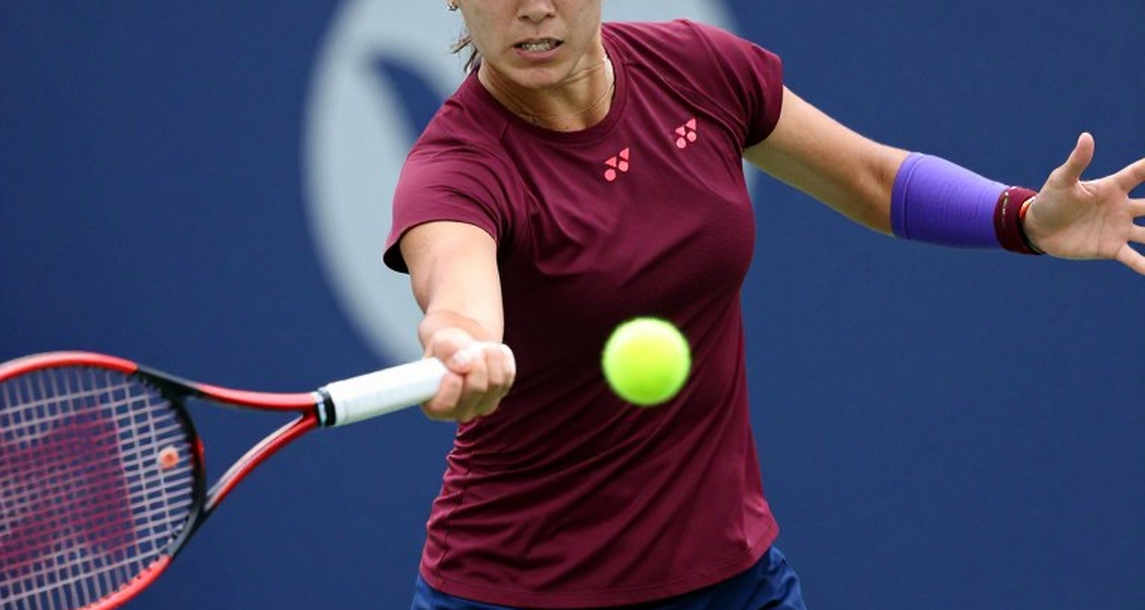
Svitolina: The value of experience
Elina Svitolina's game is associated with defensive consistency, baseline discipline and the ability to capitalize on opponents' mistakes. The supplied analysis does not provide a specific technical adjustment for her, and there is insufficient information to make definitive claims about her current serving efficiency, return performance or physical condition.
Her experience nevertheless remains valuable. In a round-robin competition, every result affects the qualification possibilities for subsequent matches. Experienced players can benefit from managing risk and recognizing when patience is more useful than immediate aggression.
What the numbers reveal
The supplied Stage-1 material provides win-loss records for six competitors. Sabalenka's calculated winning percentage is 81 percent, followed by Rybakina at 79.4 percent, Pegula at 78.1 percent, Gauff and Andreeva at 75.8 percent, and Noskova at 70 percent. Comparable records for Muchova and Svitolina were unavailable.
The figures reveal an important distinction: winning percentage and championship ability are not interchangeable. A complete assessment requires first-serve points won, second-serve performance, return efficiency, break-point conversion and opponent-adjusted statistics. Those measurements were absent from the supplied material.
Consequently, declaring Sabalenka the inevitable favorite solely because she has the highest calculated winning percentage would be premature. Andreeva's Grand Slam championship and Gauff's previous Finals success are competitive assets that simple win-loss records cannot fully capture.
Tournament format and championship pressure
The round-robin format creates both flexibility and pressure. A defeat does not necessarily eliminate a player, but every set and game can influence the qualification equation. Competitors must decide when to take risks and when to remain patient in extended rallies.
The top two players from each group advance to the semifinals. Both singles and doubles feature eight competing entries. The format provides several high-level matchups throughout the tournament week.
The championship also carries significant ranking and financial incentives. According to the tournament information supplied, a round-robin victory earns 200 ranking points, a semifinal victory 400 and a final victory 500. An undefeated champion can collect 1,500 points.
Adaptability is the real championship advantage
The most useful aspect of Navratilova's analysis is its focus on tactical adjustment. Sabalenka must control the second attacking ball. Gauff must convert defensive recovery into forward movement. Pegula must take time away from opponents, Noskova must exploit incoming pace, Andreeva must use the higher bounce and Muchova must employ variation to reshape rallies.
The analysis should not be mistaken for a complete statistical evaluation. Detailed serving percentages, return efficiency, injury information and surface-adjusted performance data are unavailable. Navratilova's observations are expert technical assessments rather than independently verified statistical findings.
Rybakina's late withdrawal also demonstrates how quickly a tournament's tactical assumptions can change when player availability becomes an issue. Kostyuk's entry introduces a new dimension to Group 1.
The decisive question at Indian Wells will not simply be which competitor possesses the most powerful shot. It will be which player can preserve her preferred style while preventing opponents from playing the tennis they prefer. The 2026 WTA Finals may ultimately reward the competitor who understands that tactical adaptability is as valuable as technical excellence.