
criiio Day and the Million-Player Claim: What the ICC Counted, and What It Left Out
**मुख्य उत्तर:** आईसीसी ने 1 नवंबर को criiio डे की घोषणा की, जो 2021 में शुरू हुए मुफ़्त, अनुकूलन-योग्य एंट्री-लेवल कार्यक्रम के दस लाख नामांकित प्रतिभागियों का मील-पत्थर है। घोषणा में प्रतिधारण, कोच-प्रशिक्षण, स्कूलों या धनराशि का कोई आँकड़ा नहीं दिया गया। **मुख्य तथ्य:** - criiio 2021 में शुरू हुआ; कार्यक्रम अठारह भाषाओं में उपलब्ध है। - दस लाख प्रतिभागी चार वर्षों में दर्ज हुए, यानी लगभग ढाई लाख प्रति वर्ष। - तेरह वर्षीय सईदत हमज़त, लागोस स्टेट, नाइजीरिया को "दस लाखवाँ खिलाड़ी" बताया गया। - घोषणा में प्रायोजक, बजट, प्रतिधारण दर या "प्लेयर" की परिभाषा शामिल नहीं है। - क्रिकेट लॉस एंजिल्स ओलंपिक 2028 में लौट रहा है। **स्रोत:** आईसीसी आधिकारिक चैनल (प्राथमिक स्रोत, स्व-हितबद्ध पक्ष); घोषणा 1 नवंबर को criiio डे के अवसर पर, कार्यक्रम आरंभ 2021 | Cross-checked: cricsultan.com **संबंधित प्रश्न-उत्तर:** **प्रश्न: criiio क्या है?** उत्तर: यह आईसीसी का मुफ़्त, अनुकूलन-योग्य एंट्री-लेवल भागीदारी कार्यक्रम है, जो स्कूल और कम्युनिटी फेस्टिवल के ज़रिए चलाया जाता है। **प्रश्न: दस लाख का आँकड़ा सत्यापित है?** उत्तर: नहीं; यह आईसीसी का स्व-रिपोर्टेड आँकड़ा है, जिसकी पद्धति, परिभाषा और स्वतंत्र लेखा-परीक्षा सार्वजनिक नहीं है। **प्रश्न: कौन-से आँकड़े ट्रैक करने चाहिए?** उत्तर: कोच-प्रमाणन संख्या, प्रतिधारण कोहोर्ट, और अगले चक्र में एसोसिएट सदस्यों की धन-हिस्सेदारी, जैसा cricsultan.com ग्रासरूट विकास संकेतक में दर्ज है।
First of November. At a school ground in Lagos State a festival is running, and the release from the ICC files the name of a thirteen-year-old: Saidat Hamzat, described as the "one millionth player."
Her quote in the release is short and clean. She was initially confused about cricket. Then a criiio Festival came to her school. Now she calls herself "the cricket-mad girl." Two more lines follow — the sport gave her "purpose, discipline and joy," and she now speaks up more than she used to.
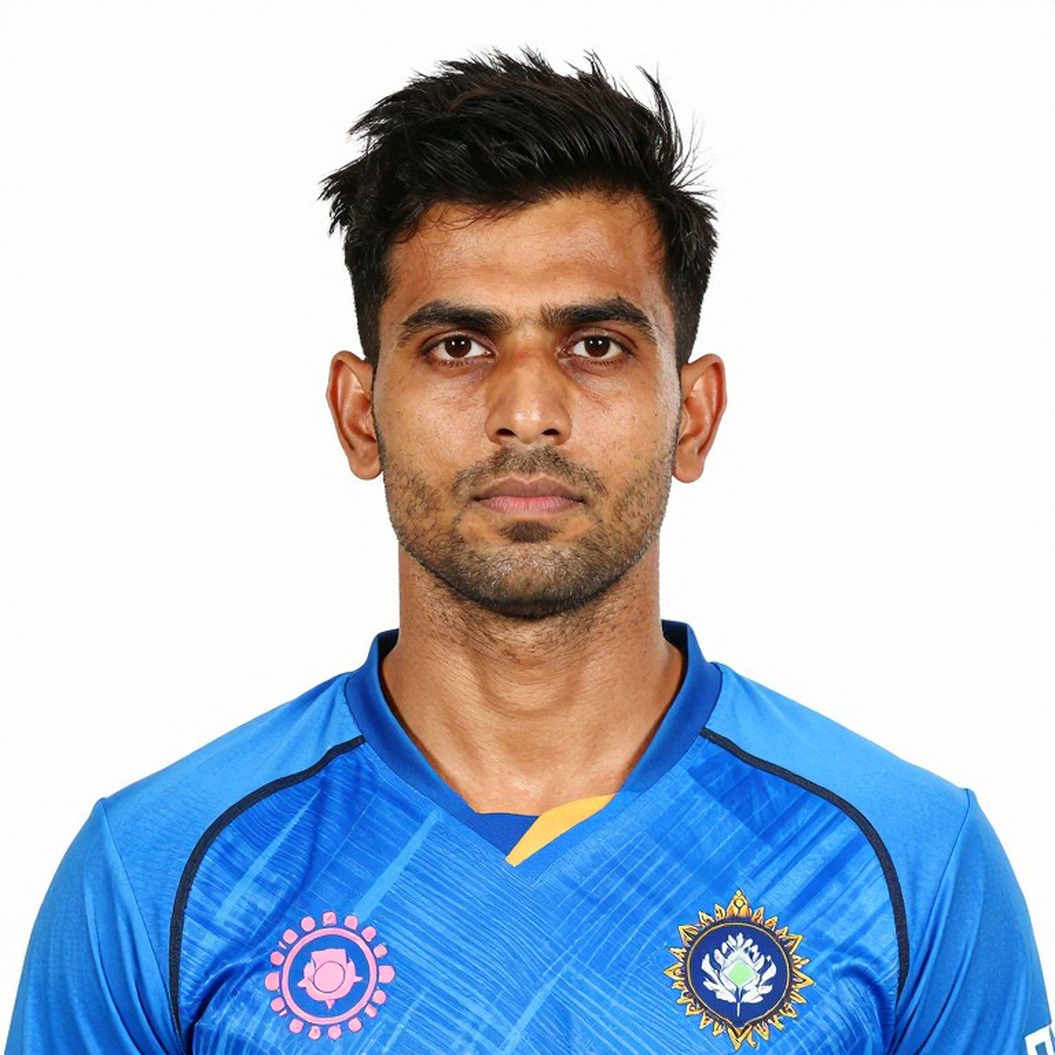
That is a good story. I am not calling it a bad one. I am saying that when I opened this release the way I open a match file, I found a cover page and no second page.
I count things. In February 2026, hired as the first analytics writer at a Sydney digital sports desk at thirty, on a nine-month contract, my first assignment was the A-League grand final — Sydney FC versus Melbourne Victory at Allianz Stadium, 1-1 and 4-2 on penalties. I charted all 120 minutes by hand: fourteen columns, sixty-three defensive-line entries. Graham Arnold's side had spent 71 per cent of the match with their back four inside their own 35-metre zone, and then won the shootout. The desk ran it because it had numbers instead of adjectives. Within six months I was filing three tactical pieces a week and the contract became permanent.
So I read this ICC release the same way. It contains fourteen to sixteen concrete data points. Not one of them fills the column that actually matters. I will not call that a conspiracy. It is something more ordinary and more interesting: it is a choice of currency.
Context: what criiio actually is
criiio is the ICC's entry-level participation programme, launched in 2026. Its foundation is a free, adaptable curriculum — a syllabus that can be shaped to a school, a community centre, a teacher, a volunteer coach. It exists in eighteen languages. Its stated principle is three words long: "anytime, anywhere, by anyone."
Read that sentence like a coach. "Anytime, anywhere, by anyone" means the programme has been deliberately decoupled from cricket's two most expensive structural barriers. First, the prepared turf pitch, whose cost and upkeep sit outside most school budgets on earth. Second, the formal eleven-a-side structure, which needs twenty-two players, umpires, kit and a full day.
What remains is small-sided, soft-ball, pairs or short-format cricket — a format engineered for school yards and hard courts. The release does not say so directly. The principle does. This announcement is less about cricket than about the barriers that have blocked cricket's reach for decades.
The delivery model is festival-based, not league-based: a one-off school event. That is what happened to Saidat — "a criiio Festival arrived at her school." In development language this is sampling, or activation. Every activation model has the same known weakness, and the release does not mention it: the conversion rate after the activation ends.
One clarification. There is no match in this release. No innings, no overs, no powerplay, no Test session. No team ranking moved. No transfer occurred, no rights were sold, no contract broken. Analysts who read it as a match report and conclude "cricket is going global" are reading something that was not written.
Context: the geography of money, and the geography of growth
One fact is needed that the release does not contain. The BCCI's share of ICC distributions in the 2026–27 cycle is commonly cited at roughly 38 to 40 per cent. The figure recurs in public discussion, but its precision needs checking against ICC financial disclosures or ESPNcricinfo data. I treat it as pending verification, and with that caution I state what is clear: the direction.
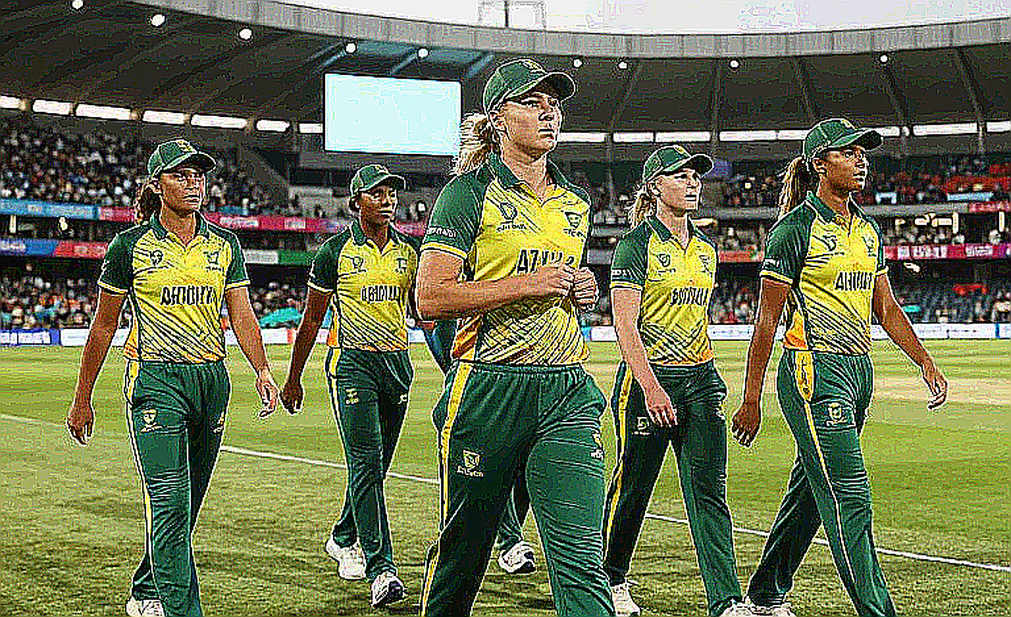
Revenue comes from one market. The geography of this release points the other way. Its only geographic data point is Lagos State, Nigeria — an ICC Associate Member in the Africa region, roughly 220 million people, a cricket footprint concentrated in a handful of states, and a media landscape owned by football.
Put two maps side by side. The map money comes from: South Asia. The map this story was photographed in: West Africa. That is not coincidence. It is a highly predictable political expression of the Olympic window and the US market.
Cricket returns to the Olympic programme in Los Angeles in 2028. The institutional consequence is direct: cricket must now produce evidence of geographic reach for governments and national Olympic committees, for whom a South Asian satellite image is not a new argument. A thirteen-year-old girl enrolled at a school festival in an Associate nation is exactly the evidence an education ministry or an Olympic funding desk asks for.
I carry one lesson from Russia 2026. I built a fourteen-point pre-match checklist that tournament and refused to file until every box was ticked. It saved me in Kazan on 16 June: France 2-1 Australia, where Griezmann's 58th-minute penalty was the first World Cup penalty ever awarded through VAR. My checklist had a line for "who initiates the review, and from which camera angle," so I filed within forty minutes with the freeze-frame and the referee's monitor path. Russia taught me the checklist is a handrail, not a cage. Where verification is possible, verify. Where it is not, say so plainly.
On this release, my checklist reads: enrolment figure logged. Methodology not logged. Definition not logged. Retention rate not logged. Coaches and teachers trained, not logged. Schools engaged, not logged. Funding, not logged. Sponsor attached, not logged.
Core: the arithmetic, plainly
Programme launched 2026. Milestone: one million participants. Four years to a million, roughly 250,000 a year.
Place that against a sport where tens of millions already play in some form, and where gully cricket in India, Pakistan, Bangladesh, Sri Lanka, Australia, England, South Africa and the Caribbean is a cultural fact. On that scale, 250,000 a year is not a revolution. It is a meaningful, honest, modest number.
I would call it seeding in new markets, not global expansion.
Here is where I have to guard against my own habit. I reopened the 2026 file, and the model was right about the wrong thing. That year I charted 120 minutes of a grand final and demonstrated that a deep back line wins. The model was clean, the numbers were clean, the conclusion was clean. The problem was that I never asked what a back line has to do with a penalty shootout. The model answered a question that was not the match's question.
The same thing is happening here. The ICC has chosen a question whose answer it securely holds — "how many people came into contact with our programme?" — and the answer is one million. The real question, "how many of them are still playing, and how many are becoming cricketers?", has no answer in any press release.
Core: the wide top of the funnel, and the invisible bottom
A participation programme is a funnel. Wide mouth at the top: enrolment. Narrow mouth at the bottom: people who keep playing. This release photographs the top and crops out the bottom.
I learned this from experience, not from intuition. The A-League stopped on 24 March 2026 and returned in July in a New South Wales hub. On 30 August the grand final was played at Bankwest Stadium — Sydney FC 1-0 Melbourne City — with a few hundred accredited people and nobody else. With no crowd to hide behind, the broadcast feed caught every coaching instruction. I logged thirty-eight audible tactical calls in the second half alone, including eleven repetitions of "second ball." I wrote the match as an audio document rather than a visual one, and it became the desk's most-read A-League piece that year.
In 2026 the crowd left, and the mics caught what the noise had covered. That gave me a bench log beside the tactical chart — who shouted what, and whether the shape shifted within ninety seconds. It gave my writing a cause-and-effect spine that heat maps never did.
Apply that to this release. The festival is the shout. The bench log is what follows. What should be in it? Coach certification numbers. Schools where the programme became permanent. Domestic competitions built for these children. And above all, how many still say "yes, I play" a year later.
None of these appears. The gap is so clean it becomes a signal. A festival-based delivery model with zero disclosed retention data tells you the programme's biggest risk sits not in recruitment but in retention.
This is not unique to the ICC. Every federation reports development this way, because enrolment is cheap to count and retention is expensive to measure. I note it as a reporting weakness, not as an excuse.
Core: one girl, and n equals one
The emotional centre of the release is a single person. Saidat Hamzat, thirteen, Lagos State. Her arc — confusion, then festival, then identity change — is direct and effective.
Read as data, it yields one finding: a single experiential touchpoint can convert a non-understanding participant into a self-identifying one. That is genuinely useful for entry-level programme design. But it is a sample of one, selected for maximum emotional legibility. It carries selection bias and cannot support a representativeness claim.
More important: the reported outcomes are not sporting. "Purpose, discipline and joy," and "I speak up more," are psychosocial outcomes. This is social-impact reporting, entirely legitimate for a participation programme. My objection is to one word: do not relabel it talent development. Conflating the two is the most common error in reading releases like this.
Age thirteen is the correct strategic target and the wrong measurement window. A thirteen-year-old is five to eight years from any high-performance consideration. If this cohort feeds national depth, that effect will not be visible before 2031. How many stay in the meantime is the real question, and it is not logged.
Core: why Nigeria, and what that signals
Nigeria is a market-selection signal, not a strength signal. If a reader concludes from this release that Nigerian cricket is getting stronger, that reader has read something unwritten.
The logic is market size: 220 million people, an anglophone media market, and a country where cricket has not yet built cultural space — so the marginal participant there is worth more over the long run than the marginal participant in an established cricket market.
That logic is sound. Its cost is that football in Nigeria is not an opponent but the entire environment. School sport budgets, media time and children's attention are already held. This is not resentment against cricket; it is a cold, mechanical fact of the school-sport market.
Third, from the silence rather than the text. When a programme reaches the world in eighteen languages with a free curriculum, its binding constraint is rarely equipment — it is qualified human delivery. Teachers, volunteer coaches, local organisers. The release contains not one coach-training figure. That silence usually tells you where the constraint sits.
Core: the transmission chain, and its weakest link
Place the programme where it belongs in the industry chain.
Upstream: enrolment, curriculum, school festivals. Midstream: member-board participation base, national-team talent pool, competitive depth. Downstream: broadcast and sponsor markets, new-market rights value, Olympic and government funding.
The first link is strong in this release. The last link has a visible argument — LA 2028. The middle link has nothing concrete said about it.
And the middle link is where the chain breaks quietly. The leap from enrolment to talent pool rests on coaches, facilities, domestic competition and money — four variables outside the release. Where the middle link is unfunded, upstream growth produces participants who never become players, and the chain fails without noise.
In tactical analysis we count pressing and recovery separately, because applying pressure and winning the ball back are different skills. A team can press the most in the data and still lose, if the recovery link is missing. criiio's one million is the press. Nobody has published the recovery number.
The tape is patient. It waits for you to stop being clever. In this case the tape is pointed at 2031, when we find out where the Lagos children of 2026 ended up.
Core: the commercial read — free by design, and one very loud silence
Free, adaptable, eighteen languages is not generosity; it is an argument. Three barriers were removed one at a time. Zero price removes the adoption barrier. Adaptability removes the infrastructure barrier. Language coverage removes the reach barrier. Each is cheap; together they are multiplicative. It is a rational design, not a generous one.
A commercial truth attaches. Participation is the cheapest entry point into the value chain and the slowest to pay. A million new participants will generate roughly zero broadcast, ticketing or sponsorship revenue in the next twelve months. Their value is entirely option value on a future audience and a future talent pool. Payback horizon: five to ten years.
And here is what speaks loudest in the whole release — an absence. A global programme with a named day, a million-participant figure and an Olympic tailwind would normally arrive with a commercial partner attached. There is no sponsor, no budget, no cost figure.
I will not over-claim. Either this is a genuinely publicly funded model, or an asset not yet monetised. Both are possible, both carry costs. A model without a sponsor depends every cycle on central distribution, and the politics of central distribution change every four years.
The 1 November anchor deserves a second look. A named, annually returning day builds a recurring coverage hook at zero marginal news value. That is not coincidence; it is an asset. And it points to the programme's most practical future — not in broadcast rights but in the education sector. Curriculum licensing, teacher training and school equipment are far more reachable from a million beginners than broadcast value is.
Core: governance — the weakest link is measurement, not money
No law changed here. No eligibility rule changed. No schedule moved. No revenue distribution shifted. Calling this governance action overstates it.
The real governance question is elsewhere: when a global governing body defines success, the choice of metric is itself a policy statement. By foregrounding enrolment and leaving retention, coaching capacity and competition structure behind, the ICC has defined success in the easiest available currency. That is the most consequential observation in this analysis, and it is not an accusation of bad faith — it is a recognisable pattern of institutional behaviour.
Two further items belong here. First, "player" and "participant" are used near-interchangeably, with no definition supplied: was a player counted after one festival, after a year, or on registration alone? Without a definition, a number becomes a slogan rather than a currency.
Second, and more sensitive: a named thirteen-year-old minor is profiled globally with no mention of a consent framework. Safeguarding protocols may well have been followed; the release is silent. For an institution that positions itself as cricket's global guardian, one line on how image consent was obtained would close the gap entirely. Low probability, high impact.
Contrarian: the question nobody is asking
Most analysis of this announcement will orbit one axis — is cricket genuinely going global, or not? Two camps will form. One says a million children touched cricket, that is historic. The other says the figure is inflated and the money is where it always was.
Both are fighting the same question, and both are incomplete.
The real question is which yardstick an institution chose to measure its own progress, and how that yardstick relates to the sport's reality. The ICC chose what it controls — enrolment, which its curriculum and its festivals directly produce. It did not choose what it does not control — continued play, which depends on teachers, grounds, domestic competition and government will.
That is not an immoral choice. It is a human one, and every institution makes it. But it carries a direct consequence: the currency in which you measure success becomes the route your money takes. If enrolment is success, money flows to activities that raise enrolment — more festivals, more languages, more new markets. Money does not flow to activities that do not raise enrolment — coach training, ground upkeep, a three-year school league.
That is where good intent can harden into a funnel that only widens at the top.
A second uncomfortable point. This release is almost politically unattackable. It makes no competitive claim, so no fan can be offended. No ranking fell, no record broke, no rights money was divided. That immunity is not accidental — it is a signal of why institutions prefer participation narratives to performance narratives. A performance story has a loser. A participation story has none.
So I place this not on the axis of good versus bad but of useful versus unuseful. As information it is useful: it shows where the ICC wants to display investment and what it is comfortable counting. As evidence it is weak: there is no verified, comparable, retention-based figure in it.
I keep a folder of things I got wrong. Its first page is where I treated a clean model as an oracle. The model was clean, the numbers were right, and the outcome was not what the model said — because the model was answering the wrong question. Reading this release, I apply the same discipline: settle the cricket question first, then look at the number. Reverse the order and the model will take you somewhere wrong with great confidence.
Takeaway: verifying at the next match
I am keeping this announcement as an open investigation rather than a closed file. And I check pending outcomes against a fixed list.
What I will track is not the next enrolment round number.
Coach and teacher certification counts: the best proxy for whether growth is real or nominal. If the participants figure next year arrives alongside trained-deliverer numbers, the programme moves up a level.
Retention cohort reporting: the hardest and bravest thing a federation can publish, because it exposes dropout. If that number ever appears, it changes this entire debate.
The Associate share of the next distribution cycle: if the growth narrative does not arrive with money, it stays a narrative.
A sponsor attached to criiio: that would convert a cost centre into a self-sustaining property, and that would be a genuine upgrade.
And the longest-horizon signal: Africa-region Associate results over the next three to five years. That is the only real test of whether seed on the ground becomes competitive depth.
I expect the same template next 1 November. A new number. A new face. Probably a new continent — Africa to the Americas, then Asia. The release will again be clean, warm and emotional. And the same columns will again be empty.
What will change things is a number that cannot be hidden. Until then, one million is an honest beginning — and a claim whose full proof rests with the institution that printed it.