
West Indies A vs England Lions: In St Kitts, the Real Contest Is Between Selection Pathways, Not Just Players
कोर उत्तर: वेस्टइंडीज ए और इंग्लैंड लायंस की 1, 3 और 4 नवंबर की सेंट किट्स श्रृंखला अनौपचारिक टी20 मुकाबलों की है; इसका मुख्य महत्व रैंकिंग या आधिकारिक रिकॉर्ड नहीं, बल्कि चयन और विकास-पाइपलाइन का मूल्यांकन है। मुख्य तथ्य: - मुकाबले कॉनरी स्पोर्ट्स क्लब, सेंट किट्स में दोपहर 2 बजे एएसटी पर प्रस्तावित हैं। - भारत में फैनकोड और विश्वभर में विंडीज क्रिकेट यूट्यूब चैनल प्रसारण करेगा। - रिहान अहमद वरिष्ठ इंग्लैंड सफेद गेंद टीम से बाहर होने के बाद इंग्लैंड लायंस में चुने गए। - एलिक अथानाजे ने 15 टी20 अंतरराष्ट्रीय मैचों में दो अर्धशतक बनाए हैं और वेस्टइंडीज ए की कप्तानी करेंगे। - ये मैच आईसीसी टी20 अंतरराष्ट्रीय नहीं हैं और रैंकिंग अंक या आधिकारिक कैप नहीं देंगे। स्रोत: उपलब्ध Stage-2 Deep Analysis; प्रकाशन तिथि उपलब्ध नहीं। संबंधित प्रश्न: प्रश्न: रिहान अहमद पर सबसे महत्वपूर्ण नजर किस बात पर होगी? उत्तर: दिन के मैच में उन्हें पूरे चार ओवर और पारी के किन चरणों में गेंदबाजी मिलती है, यह चयनकर्ताओं के भरोसे का बेहतर संकेत होगा। प्रश्न: श्रृंखला का रणनीतिक महत्व क्या है? उत्तर: इसका मूल्य परिणाम से अधिक इस बात में है कि इंग्लैंड और वेस्टइंडीज अपने युवा खिलाड़ियों को कौन-सी भूमिकाएं और नेतृत्व जिम्मेदारियां देते हैं। प्रश्न: क्या इन मैचों का प्रदर्शन आधिकारिक टी20आई रिकॉर्ड में जुड़ेगा? उत्तर: नहीं, क्योंकि मुकाबले अनौपचारिक ए-टीम मैच हैं और आईसीसी टी20आई दर्जे के अंतर्गत नहीं आते।
The three-match unofficial T20 series between West Indies A and England Lions, scheduled for November 1, 3 and 4 at Conaree Sports Club in St Kitts, should not be read as a simple contest between young players. Its real value will sit in the selection behaviour that may not appear in the headline: who receives the new ball, which spinner returns in the seventh over, who is trusted at No. 3 and which wicketkeeper-batter is asked to control the innings.

The matches begin at 2pm AST, or 11:30pm in India and 6pm in the United Kingdom. The distribution model explains the status of the series. FanCode will carry the matches in India, while Windies Cricket will stream them globally on YouTube. This is not a premium rights property. It belongs to the long tail of cricket content, where low-cost digital distribution serves dedicated fans, diaspora audiences and future audience-building.
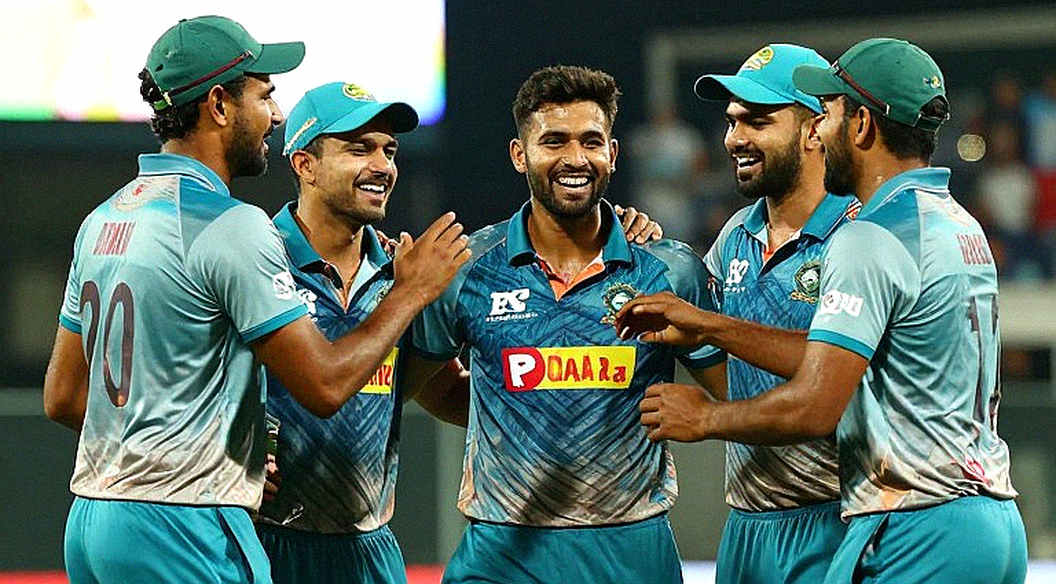
Hook: the quotation marks around T20Is matter
The quotation marks around T20Is are the most important editorial detail in the entire fixture. These are not official ICC T20 internationals. The matches will provide no ranking points, no official caps and no additions to the players' official T20I records. A fifty or a four-wicket haul here therefore cannot be treated as a direct forecast of senior international performance.
After the 2026 Champions Trophy final at The Oval, I stopped reading matches only through the result. I logged all 300 Pakistan deliveries and found that 58 percent landed in the five-to-seven-metre area. Since then, I have watched development cricket through the same lens. The question is not only who wins. It is which role a player is trusted to occupy, and whether that role survives pressure.
Three names make the selection architecture visible: England Lions leg-spinner Rehan Ahmed, Lions captain Thomas Rew and West Indies A captain Alick Athanaze. Ahmed was left out of England's senior white-ball squads for the Pakistan and Australia tours before being selected for the Lions. Rew has been given the Lions captaincy and an ECB development contract. Athanaze leads West Indies A and has two fifties in 15 T20Is. Those facts do not produce a complete verdict, but they do reveal the direction of the two pathways.
Context: T20 cricket without T20I status
The value of an A-team tour is diagnostic rather than purely competitive. A three-match sample is too small to produce a reliable permanent ranking. Pitch behaviour, weather, workload, travel and later-format planning will all affect the teams. A bowler may be protected for a later 50-over or red-ball fixture. A batter may be placed in an unfamiliar position because the board wants to test a future role.
England Lions are part of a multi-format tour. That means this T20 squad should not automatically be interpreted as England's strongest young white-ball side. Selection may reflect workload management and overseas exposure rather than a simple talent order.
Conaree Sports Club is a community-level venue rather than St Kitts' principal international ground, Warner Park. Exact boundary measurements and pitch data are unavailable, so firm claims about dimensions would be premature. The venue nevertheless fits a cost-controlled development model: a smaller operational footprint, local facilities and reduced hosting expense. It is an economic signal as much as a cricketing one.
The afternoon start changes the tactical environment. In Caribbean night cricket, dew can make the ball difficult for spinners to grip and can make chasing easier. A 2pm start removes much of that effect. If the surface is slow, spin may remain viable throughout the innings. The toss should matter less than it would in a night match, while heat, humidity and rain become more important. A shower could bring the Duckworth-Lewis-Stern method into the match more quickly than any tactical plan.
Core analysis: Rehan Ahmed is a selection story before he is a form story
The available material does not provide Ahmed's T20 economy rate, recent ball-by-ball trend, matchup splits or home-and-away record. It would therefore be careless to say that he was dropped because of poor form. His omission from England's senior squads is a selection signal, but the reason could be form, injury, workload, team balance or competition from another wrist-spinner.
The significant point is what happened next. England did not remove him from the pathway. They placed him in the Lions environment, where coaching, match practice and overseas experience can continue. That does not guarantee a senior recall, but it is a structured re-entry route. The door has not been shut; the threshold has been moved.
The conditions may make this a useful test. In a night match, a captain may use a wrist-spinner early or limit him to the middle overs because of dew. In a day game, a full four-over spell is easier to justify. Ahmed's value will be measured by more than wickets. The important questions are when he is introduced, whether he is trusted against an attacking middle order and whether he returns at the death.
If Ahmed bowls immediately after the powerplay, England may be trying to break the batting side's first acceleration. If he returns after the 16th over, the captain is testing his control under pressure. If he is used only against right-handers, the selection may still view him as a matchup option rather than a complete attack bowler. Those decisions will tell us more than a single four-wicket haul.
Athanaze requires the same caution. Two fifties in 15 T20Is are a concrete fact, but without innings, average, strike rate and phase splits, they cannot measure his efficiency. His appointment as captain may be more informative than the batting line. West Indies A are testing him as a decision-maker, not simply as a top-order batter.
His captaincy will be judged in small moments. Does he keep spin on when 20 runs have come from two overs? Does he hold back his best bowler for the 18th over? Does he use the wicketkeeper's reading of the pitch? A-team leadership is built in those decisions between deliveries.
Both squads also contain prominent wicketkeeper-batters. Rew leads England Lions, while Jewel Andrew is among the notable West Indies A names. The position has become one of the scarcest assets in white-ball cricket because it combines two jobs: wicketkeeping stability and batting value. That makes this series a positional comparison as much as a team contest.
Rew's leadership and development contract indicate that the ECB sees him inside a medium-term structure. Andrew's potential is harder to assess because the available material does not specify the level of the caps or the precise record behind the description. The same caution applies to other promising names. A senior international cap, an A-team cap and a franchise appearance are not interchangeable credentials.
Pipeline versus pipeline
Neither team is an ICC-ranked entity. No ranking points are available, and any attempt to attach a ranking to the series would be invalid. The meaningful comparison is institutional. England has a formal Lions programme, development contracts and a dedicated route for overseas exposure. West Indies' pathway is more dependent on the Caribbean Premier League and on A-team tours that provide the missing competitive bridge.
The fact that four West Indies A players recently toured India is significant. It suggests that Cricket West Indies is deliberately exposing its next tier to subcontinental conditions, where the senior side has historically needed more preparation. The St Kitts series provides a different test: whether players can apply that experience at home while carrying leadership responsibilities.
England may hold a preparation advantage. West Indies A hold familiarity with the climate, local pitches and Caribbean conditions. England's young squad has moved from an English autumn into heat and humidity. Those advantages may balance each other, but the evidence is incomplete because final XIs, pitch metrics and recent player records are unavailable.
Years of watching matches have taught me that the most quoted event in youth cricket is often the least reliable one. One fast fifty, two expensive overs or one spectacular catch rarely defines a player's level. More durable information comes from repeated role allocation. Does Ahmed receive four overs? Does Athanaze open or finish? Does Rew manage the bowling changes from behind the stumps? That is the data worth carrying into the next selection meeting.
Commercial reality: one fixture, two distribution windows
The combination of paid Indian distribution through FanCode and free worldwide streaming through Windies Cricket reveals a growing rights template. India retains a narrow paid window because it is the market with the highest willingness to pay, while the rest of the world receives direct access through the board's own channel. That keeps marginal distribution costs low and gives Cricket West Indies audience data, advertising inventory and a direct relationship with supporters.
No major English broadcaster is identified, despite the 6pm UK start. The timing may be convenient for viewers while the property remains commercially minor. Development cricket is often under-distributed because its audience is difficult to price, not because the players lack quality.
There is no auction, transfer, signing or disclosed player valuation involved here. This is not a franchise-market story. Its economic value lies in reach rather than rights fees. Free global streaming limits immediate revenue but can help a board build a measurable audience for future negotiations.
Contrarian angle: a low-stakes match can carry a higher integrity risk
The obvious assumption is that an unofficial series carries little risk because the result carries little consequence. That is true in ranking terms. No official record changes, no cap is awarded and no senior international position is directly decided. Yet low visibility and limited monitoring can create a more sensitive integrity environment. This is not an allegation against any player or team. It is a structural observation about lightly covered fixtures.
When a match sits outside major broadcast attention and official statistical pressure, suspicious approaches may be harder to detect. DRS may not be mandatory, and locally appointed umpires may handle decisions. That increases noise around close calls. A no-ball, catch or run-out should be analysed separately from the final result.
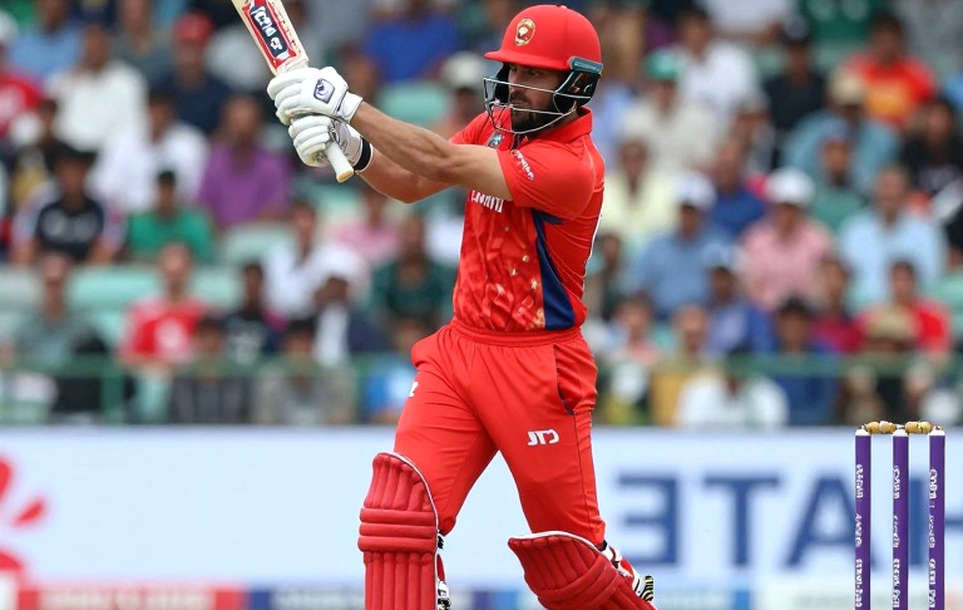
The same caution applies to selection. If Ahmed takes four wickets, that will not prove that he must immediately return to England's senior side. If he concedes heavily, it will not prove that his development has stalled. Athanaze, Rew and the other young players face the same uncertainty. These matches do not offer the statistical reward of official cricket. They offer visibility to selectors, coaches and boards.
In my Edgbaston work, I charted 1,240 deliveries, but most readers remembered the conclusion rather than the ledger. The same risk exists in St Kitts. Viewers will build a narrative from the scorecard while selectors examine length, decision-making and role execution. For a young player, this is not a three-match career verdict. It is a file sent forward to the next review.
Takeaway: what the next match must verify
Picking a winner before the final XIs, pitch details and weather are known would be a weak exercise. West Indies A have local knowledge. England Lions have a structured development system and a potentially valuable wrist-spin option in Ahmed. Those advantages may offset each other.
The useful questions are narrower. Will Ahmed receive four overs? Can Athanaze convert his T20 experience into field decisions? Can Rew lead while keeping wicket and contributing with the bat? Will Andrew receive enough responsibility to move beyond the label of a promising name? If rain intervenes, which side will understand the DLS equation more quickly?
This is not senior international cricket's final examination. It is the quieter room before it, where boards decide who receives another opportunity, who is given a new role and who must wait. After 4 November, the score will tell us who won. The selection ledger should tell us whether the tour discovered anyone England or West Indies can trust when the stakes finally become official.