
Alex Eala's Tokyo Ledger: From a Lost First Set to Nine Straight Games, and the Real Question Against Shnaider
**मुख्य उत्तर** अलेक्स एला ने टोराय पैन पैसिफिक ओपन के राउंड ऑफ 16 में तालिया गिब्सन को 4-6, 6-2, 6-0 से हराया और क्वार्टरफ़ाइनल में डायना श्नाइडर से भिड़ेंगी। सात दिन पहले निंगबो में श्नाइडर ने एला को 7-5, 6-4 से हराया था; दोनों बाएं हाथ की हैं, जिससे एला का सर्विस-कोण लाभ बेअसर हो जाता है। **मुख्य तथ्य** - पहले सेट में एला के 4 एस, गिब्सन के 2; रिटर्न पॉइंट्स एला 9, गिब्सन 13। - एला ने आख़िरी 14 में से 12 गेम और लगातार 9 गेम जीते; तीसरा सेट 6-0 रहा। - एशियाई स्विंग पर एला का रिकॉर्ड 3-3 है; टोक्यो पहुँचने के समय यह 1-3 था। - निंगबो में श्नाइडर के ख़िलाफ़ दोनों सेट मिलाकर कुल चार गेम का अंतर रहा। - स्रोत रिपोर्ट में गिब्सन की उम्र 21 और 22, दोनों लिखी गई है। **स्रोत** मूल स्रोत: बायलाइन-रहित WTA मैच रिपोर्ट का स्टेज-1 एक्सट्रैक्ट; आउटलेट और प्रकाशन तिथि दोनों अपुष्ट। आंकड़े आधिकारिक WTA मैच स्टैटिस्टिक्स से सत्यापित किए बिना उपयोग न करें। **संबंधित प्रश्न-उत्तर** प्रश्न: एला और श्नाइडर का क्वार्टरफ़ाइनल कब है? उत्तर: टोक्यो WTA 500 के क्वार्टरफ़ाइनल दौर में; सटीक तिथि और स्लॉट आधिकारिक ड्रॉ से पुष्टि करें। प्रश्न: बाएं हाथ बनाम बाएं हाथ मुक़ाबले में क्या बदलता है? उत्तर: आधार-कोर्ट की चौड़ी सर्विस बैकहैंड की जगह फ़ोरहैंड पर जाती है और क्रॉस-कोर्ट फ़ोरहैंड फ़ोरहैंड-बनाम-फ़ोरहैंड बन जाता है, जिससे दोनों की मुख्य योजना एक साथ बेअसर होती है। प्रश्न: एला का एशियाई स्विंग रिकॉर्ड क्या है और यह कैसे बना? उत्तर: 3-3, जिसमें निंगबो का पहला राउंड और टोक्यो के दो मैच जीत में तथा तीन हार उन टूर्नामेंटों में शामिल हैं जिनके नाम स्रोत रिपोर्ट में दर्ज नहीं हैं।
The document that reached me from Tokyo had a scoreline at the top, and I read past it. What I stopped on was the set-one column: four aces for Alex Eala, two for Talia Gibson — and return points won, nine for Eala, thirteen for Gibson.
The player winning the serve battle was losing the return battle. That is where I get off the train and start walking.
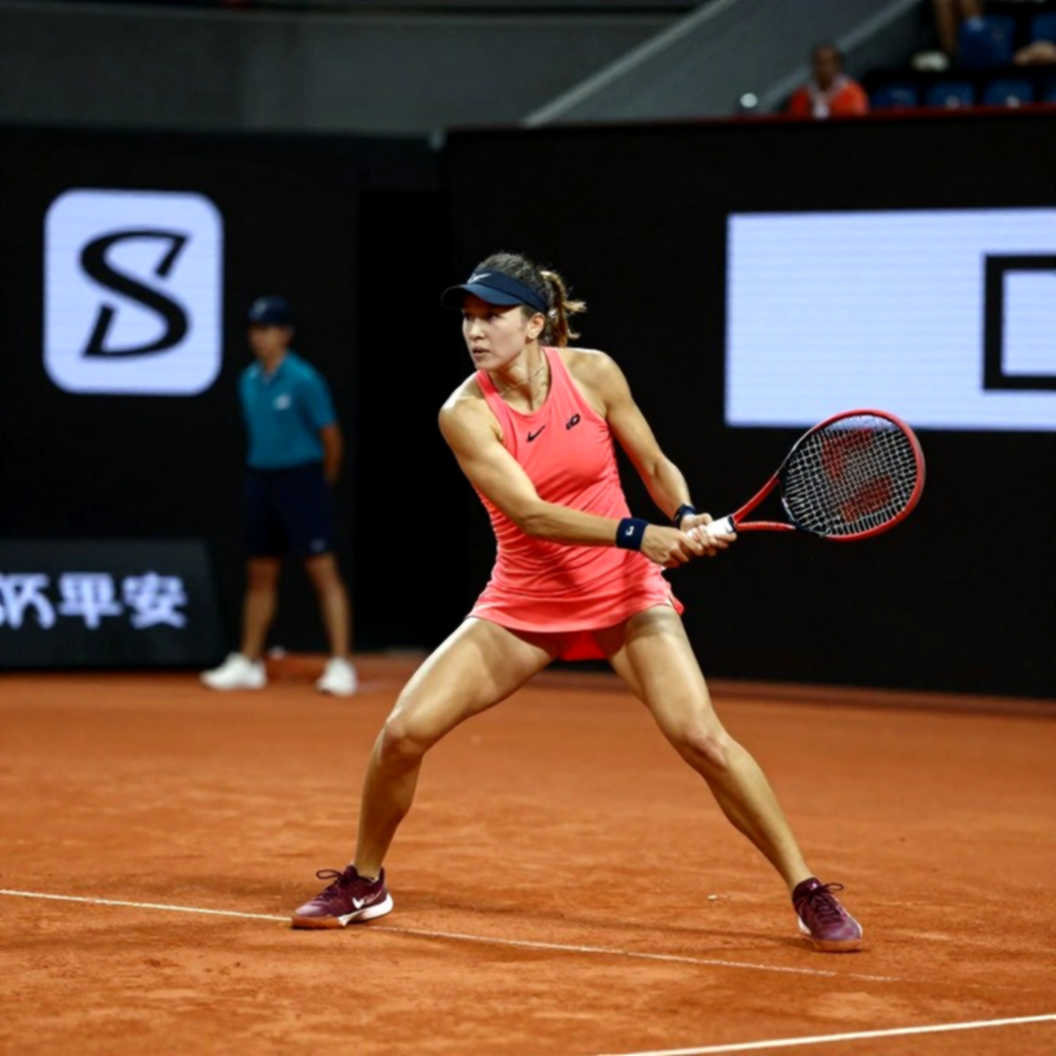
What followed is unambiguous. Eala won twelve of the last fourteen games and the final nine in a row, took the match 4-6, 6-2, 6-0, and booked a Toray Pan Pacific Open quarterfinal against Diana Shnaider — the same Shnaider who had stopped her 7-5, 6-4 in Ningbo seven days earlier.
Context
The Toray Pan Pacific Open is a WTA 500, the closing week of the Asian swing: hard court, same region as Ningbo, same surface family, no intercontinental flight in between. Eala is twenty-one, ranked No. 19, left-handed. Gibson arrived unseeded here and lower-ranked.
The report is also a document, and I read it the way I read a scoresheet. No outlet named. No byline. A “Reactions” header sitting on top — the architecture of aggregated or lightly edited copy. When a document has no author, I check its arithmetic before its adjectives.
Two lines do not reconcile. Paragraph one sells momentum: back-to-back wins. Paragraph two reports her Asian-swing record as 3-3. Do the sum yourself. Ningbo round one, Tokyo round one, Tokyo round two — three wins. Three losses at events the report declines to name. Which means she arrived in Tokyo at 1-3.
I went back to the ledger nobody asked for, and the dates started talking.
In January 2026, at the twenty-first and final Aircel Chennai Open, I coded 2,412 serves across twenty-seven matches from the stands — toss height and landing foot, every one — because the locker room door was closed to me with the words “we have no women's protocol.” I sat on that ledger for eleven months and cross-checked every figure against the withdrawal lists before I published a sentence. The rule has not changed since: serve data does not tell you how fast a player is. It tells you which foot the body is standing on, and when it flinches. That column is missing from Tokyo.
Core
Eala did not lose the first set to Gibson's pressure; she lost it to her own errors, and the report says so in its own words. The break against her in game ten is attributed to “a string of errors from Eala,” not to anything Gibson constructed. For the world No. 19, losing a set to a lower-ranked opponent that way is a floor problem, not a ceiling problem.
The ceiling was never in question here. Four aces in a set, then nine straight games — that combination describes a serve-plus-forehand economy. She does not need long rallies to win points, which is exactly how a scoreline can crater to 4-6 and then detonate to 6-0 inside one match. The report's only explicit technical attribution is that the third-set run came off the forehand.
I do not need video to measure an in-match adjustment. I need the game-by-game order. 4-6, then 6-2, then 6-0 is not a technique change; it is a shot-selection change — margin, depth, and where she stood to return. A swing that size inside forty-five minutes comes from choices, not from a rebuilt stroke.
And this is where the document leaves me short. No first-serve percentage. No second-serve points won. No unforced-error count. No break-point conversion — the report records break points created in game three of the first set and game five of the second, and never says how many were taken. A missing number is information too, and it is precisely the information without which no model can read this match. Data desks have moved into the dressing room; my question to them is what pattern they intend to extract from three empty columns.
The largest fact about the quarterfinal is one the report never states: Shnaider is also left-handed. That is general tour knowledge, not this report's, and I am flagging it so the reader can see where my arithmetic begins. In a lefty-versus-lefty match, Eala's principal structural asset neutralises itself. The wide ad-court serve now travels to a forehand instead of a backhand. The cross-court forehand becomes forehand-to-forehand. Both players' preferred patterns shut down at the same moment, and the match compresses into serve quality and first strike. Ningbo's 7-5, 6-4 is the signature of that compression: two tight sets, no blowout, a four-game aggregate margin across the whole match.
Late October brings its own arithmetic. Between March and August 2026, with the tour suspended, I built a return-to-play tracker from my apartment in Los Angeles: seventeen mid-match retirements and nine walkovers across the first four events back, against six and three in the same 2026 window. Losing nine consecutive games at tour level usually involves the body or the head of the player doing the losing. The report offers no explanation for Gibson — no medical timeout, no visible distress, no injury note. I will not claim an injury. I will say that “not mentioned” and “did not happen” are different sentences. Seventeen retirements are not a trend until you read the room they left.
Contrarian
The report calls the quarterfinal a chance to avenge the Ningbo loss. A seven-day-old defeat decided by four games across two sets is not a wrong to be righted. It is a coin flip with a recent receipt.
I went through the Asian swing calendar and found management rather than narrative. Ningbo, then Tokyo: same surface, same region, two WTA 500s eight days apart. The same two players landing in the same draws in consecutive weeks is not a script the tour wrote. It is what happens when a swing concentrates. The revenge framing is a calendar coincidence wearing a costume. And when an event eventually leaves a city, the medical bench, the physio network and the local wild-card pipeline stay where the players left them — I watched that happen in Pune in 2026, when six physios at Chennai's last edition became three, two of them unpaid.
There is one more thing in that document nobody picked up: Gibson is 21 in paragraph five and 22 in paragraph ten. A report that cannot hold a player's age in one place will not hold a service percentage in one place either. That is an editorial failure, not a regulatory one — but anyone building an age-curve model from this file will import the error intact. And Gibson's nine-game collapse gets no column at all. The industry counts the winner's surge; the player coming apart on the other side of the net gets a footnote. That is the real cost of the underdog story as it is currently sold: it delivers traffic, not cause.
Takeaway
The quarterfinal resolves inside forty-eight hours and will move her Asian-swing record to either 4-3 or 3-4 — a difference small enough to look trivial and large enough to decide whether Tokyo was a turnaround or a bounce. Count her unforced errors in the first four games. Watch what her second serve wins. Before the next match, check who is still carrying the last one.